Curry Chicken Noodles – Part One

chicken for curry chicken noodles

chicken for curry chicken noodles

see also shiok curry chicken noodle @ ah heng on 16.9.2013. 🙂

my friends were talking about doing a hawker food tour.

my favourite is bakuteh (Rong Cheng bakuteh at Sin Min, though lately price went up from $6 to $7 & standard seemed to have gone south – which is usually the case when price goes up, sign! – and Lao Ah Ti at Boon Keng Road, in that order). & my second favourite is Ah Heng curry chicken noodles at Hong Lim. 🙂

bakuteh is easy to do at home, but curry chicken noodle is something else…I googled but there is no internet recipe for curry chicken noodle..the closest I got was a channel 8 面对面 program youtube video on Da Po curry chicken noodles at Golden Mile Beach Road. 🙂 they don’t tell you the recipe of course, but it was mentioned that some special ingredients included dried prawns (虾米) & lemon grass (香茅). 🙂

so it looked like i have to be inventive to reconstruct my favourite Hong Lim curry chicken noodles.

to me the 2 things special about curry chicken noodles (which is NOT throwing noodles into a curry chicken dish) is (1) the chicken which is chicken rice standard (2) the curry. though the curry is somewhat different & sweeter as mentioned in the video, my nonya curry chicken recipe approximates somewhat. so that’s what i did! 🙂

i used my nonya curry chicken recipe, and added (1) 2 lemon grass (white part) to the paste & (2) dried prawns. since I was cooking the chicken the chicken rice way & not the curry chicken way I needed to flavour the soup, so I used the carcase of 1 chicken as stock base. subsequently after i cooked & debone the whole chicken, i use the bones/carcase to add to the soup – so there were 2 chicken bones/carcases to provide the soup stock flavours. 🙂
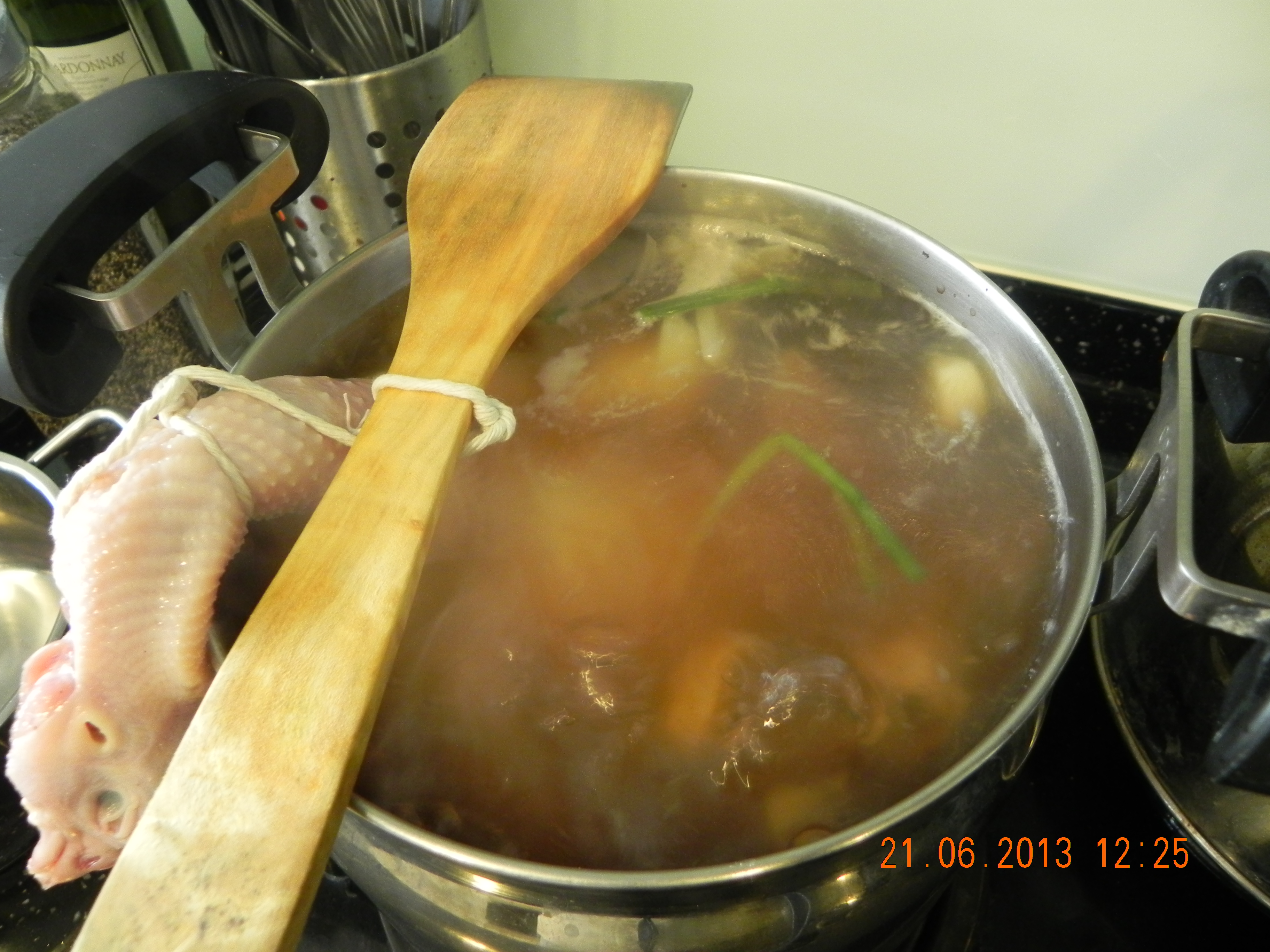
butcher twine to secure & lift chicken

butcher twine to secure & lift chicken

i cleaned the chicken & rub salt on the skin & inside to exfoliate & make the skin ultra smooth. i used a string (butcher twine) to secure the chicken neck & tied it to a ladle so that i can lift the whole chicken when it’s cooked w/o tearing the skin. 🙂 in the above photo, i did not cook curry, so it was just chicken stock with scallions, garlic & ginger.
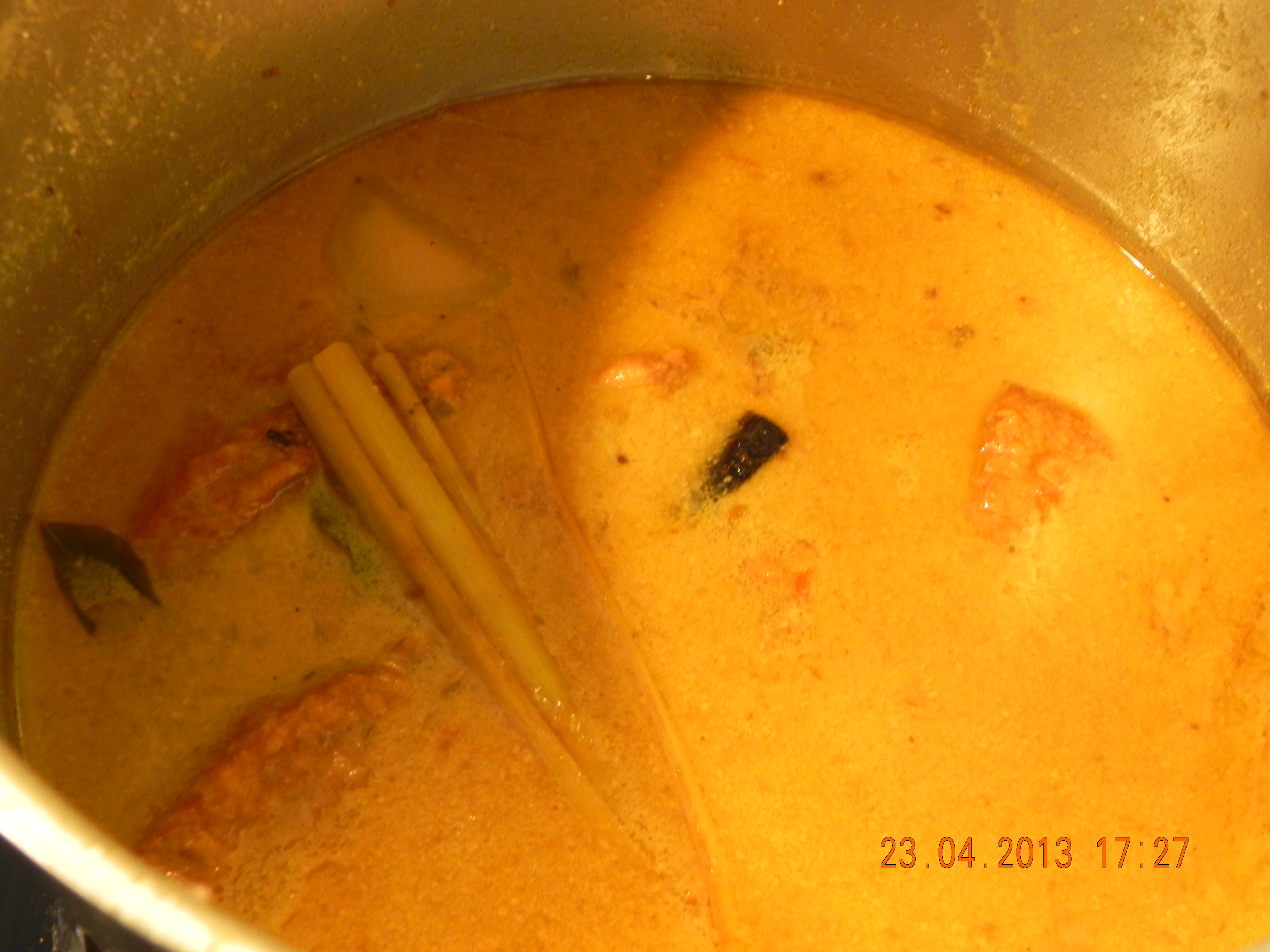
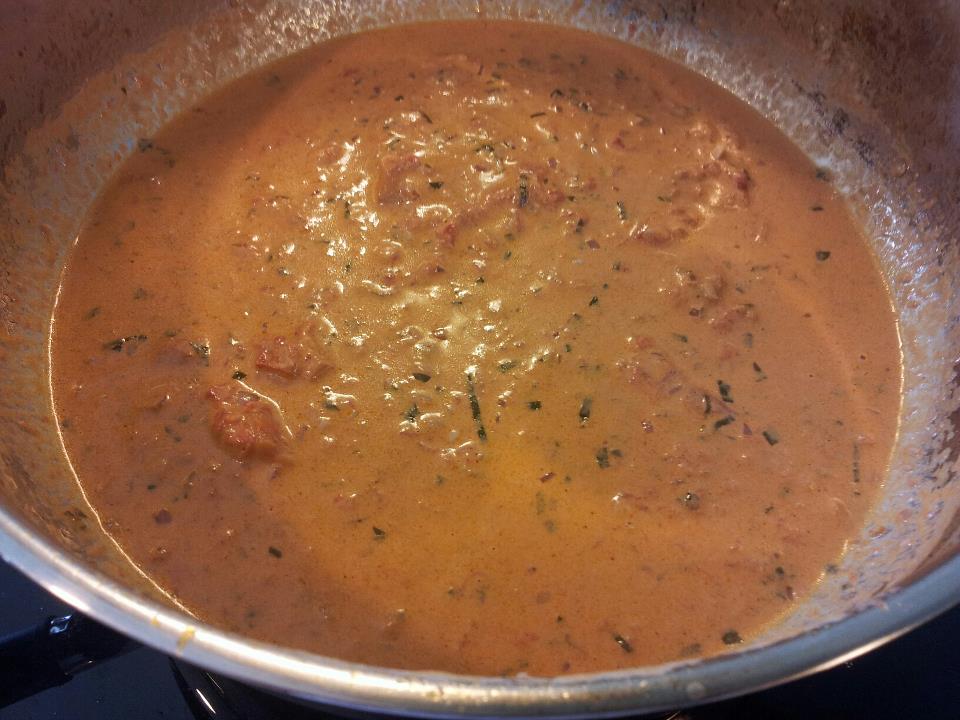
curry for curry chicken noodles

curry for curry chicken noodles

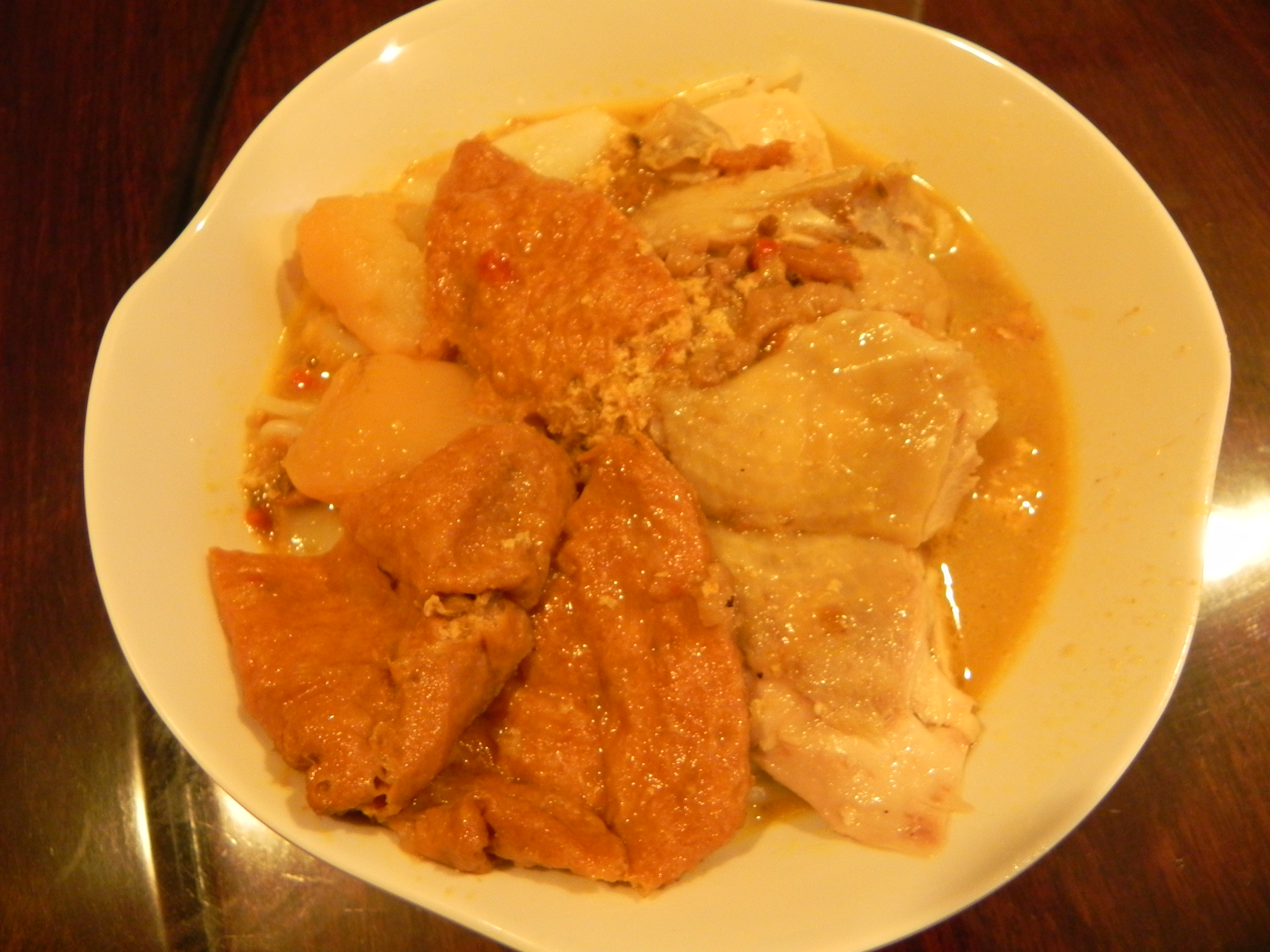
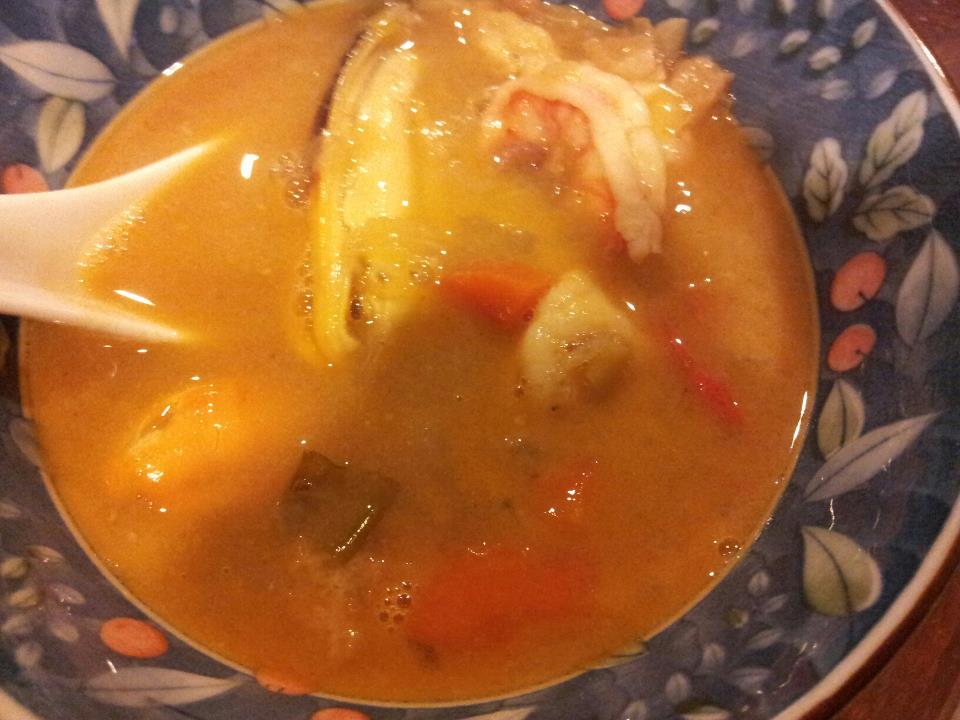
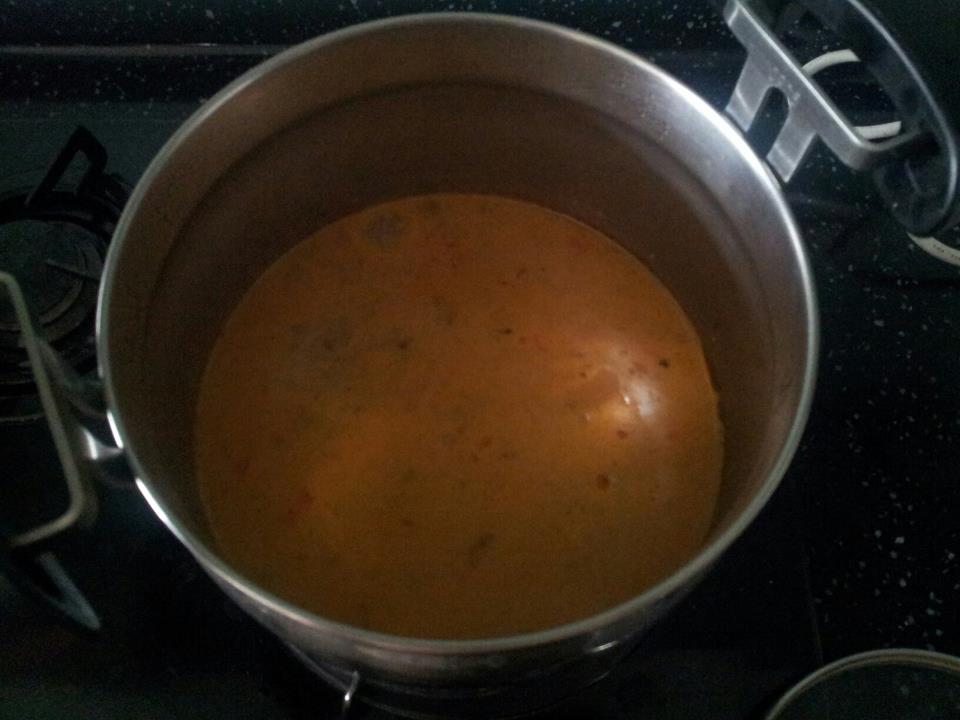
the photo above is the curry soup for the curry chicken noodles. 🙂 I later added (1) dried prawns (2) lemon grass (3) 12 dried chilli instead of using chilli padi in my nonya curry chicken recipe. the soup became redder & it was very tasty just like in my curry chicken recipe. it was still not Hong Lim curry chicken standard of course, but it was pretty ok. 🙂

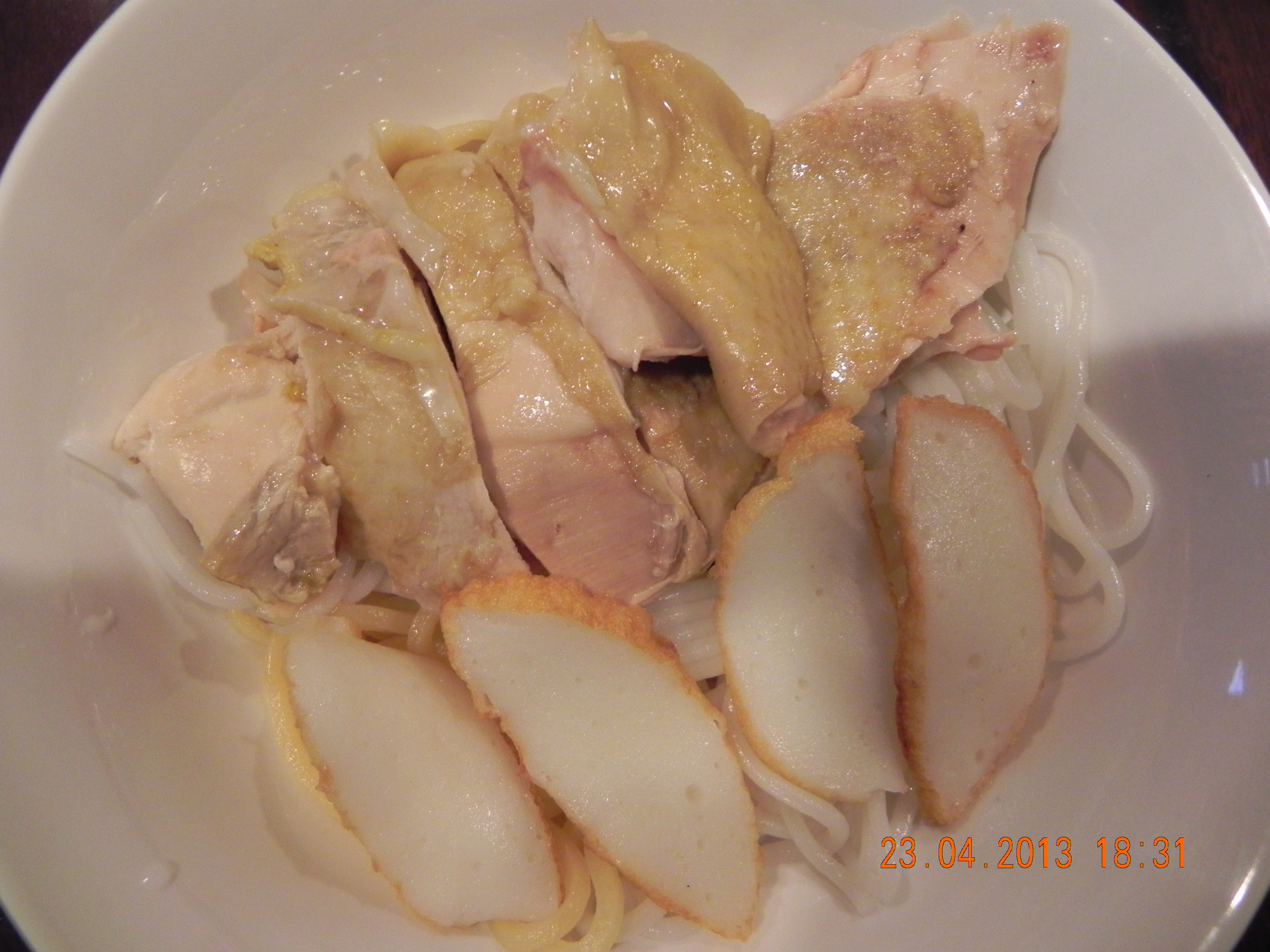
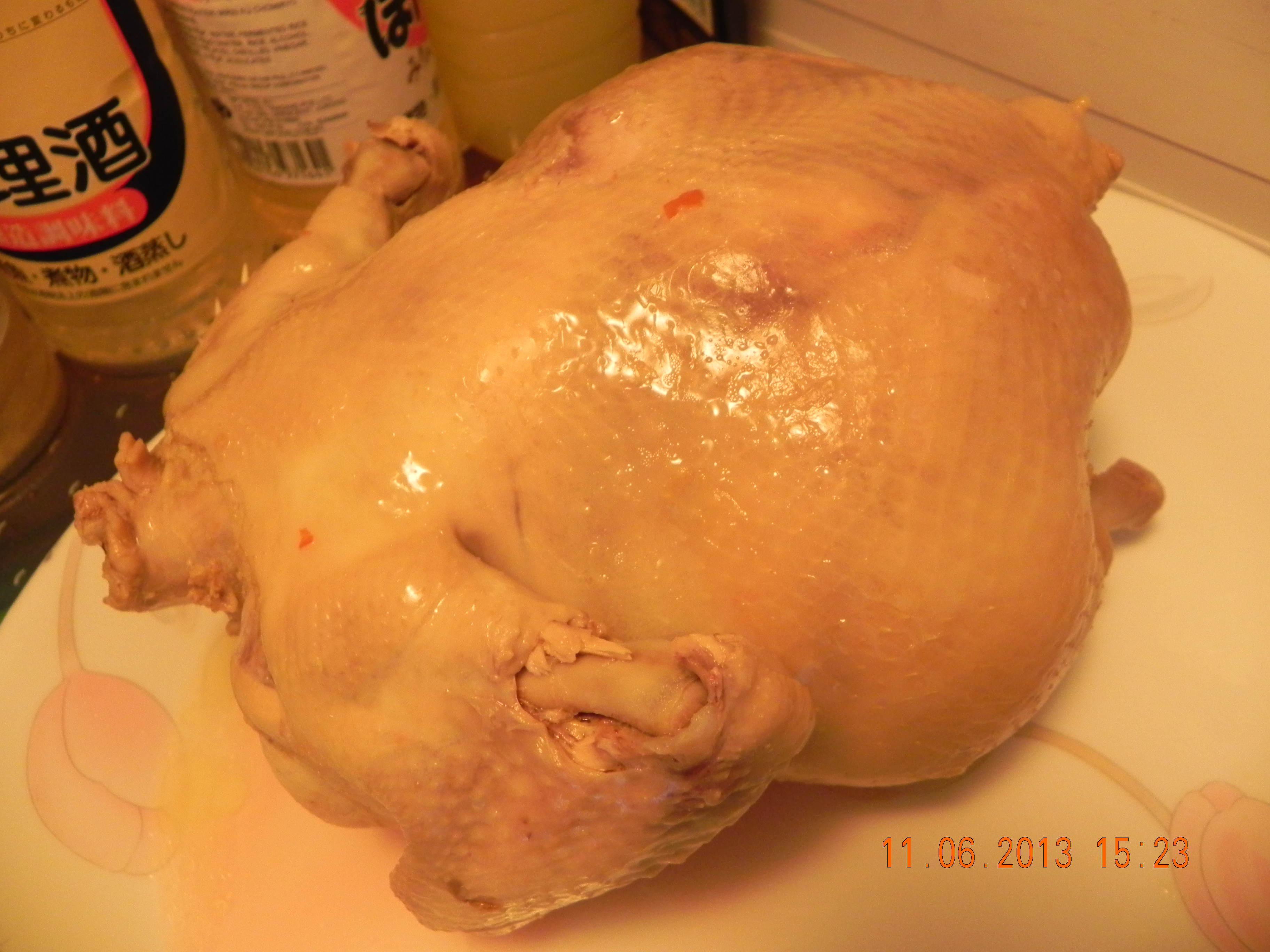
i added enough chicken stock so that when it was boiling on high heat & i lowered the whole chicken, it was just completely submerged. once the soup was boiling again after lowering the chicken, i turned the fire to low & simmer for 1/2hr. i was using a 1.4kg chicken from Giant & 1/2hr was about right. you can also use a meat thermometer & set at 170degF (77degC). 🙂 when chicken is cooked, i lifted it out & deposited it in an ice bath to stop the cooking & to produce a very pretty taut skin (top photo).
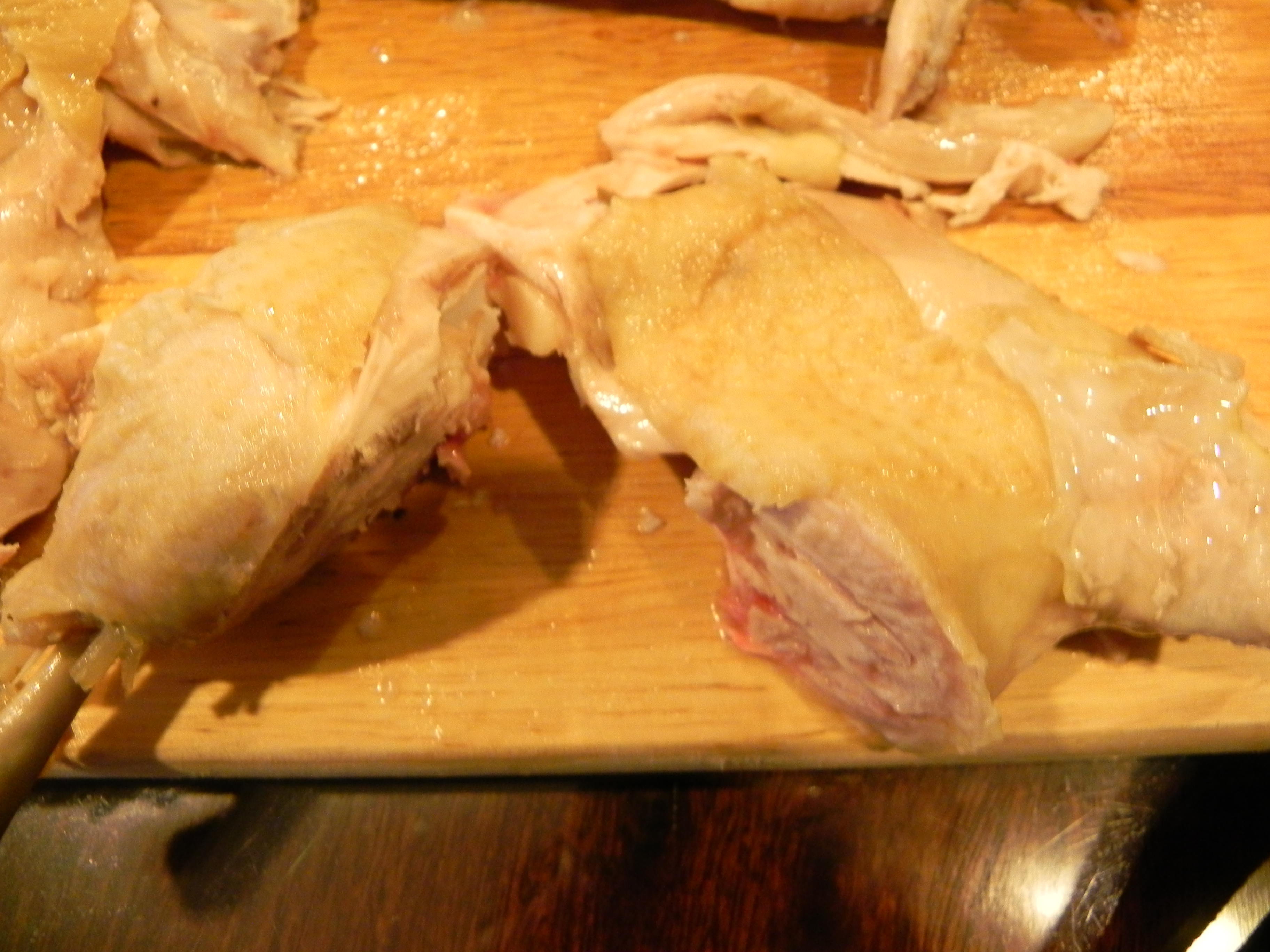
DSCN4553  DSCN4554

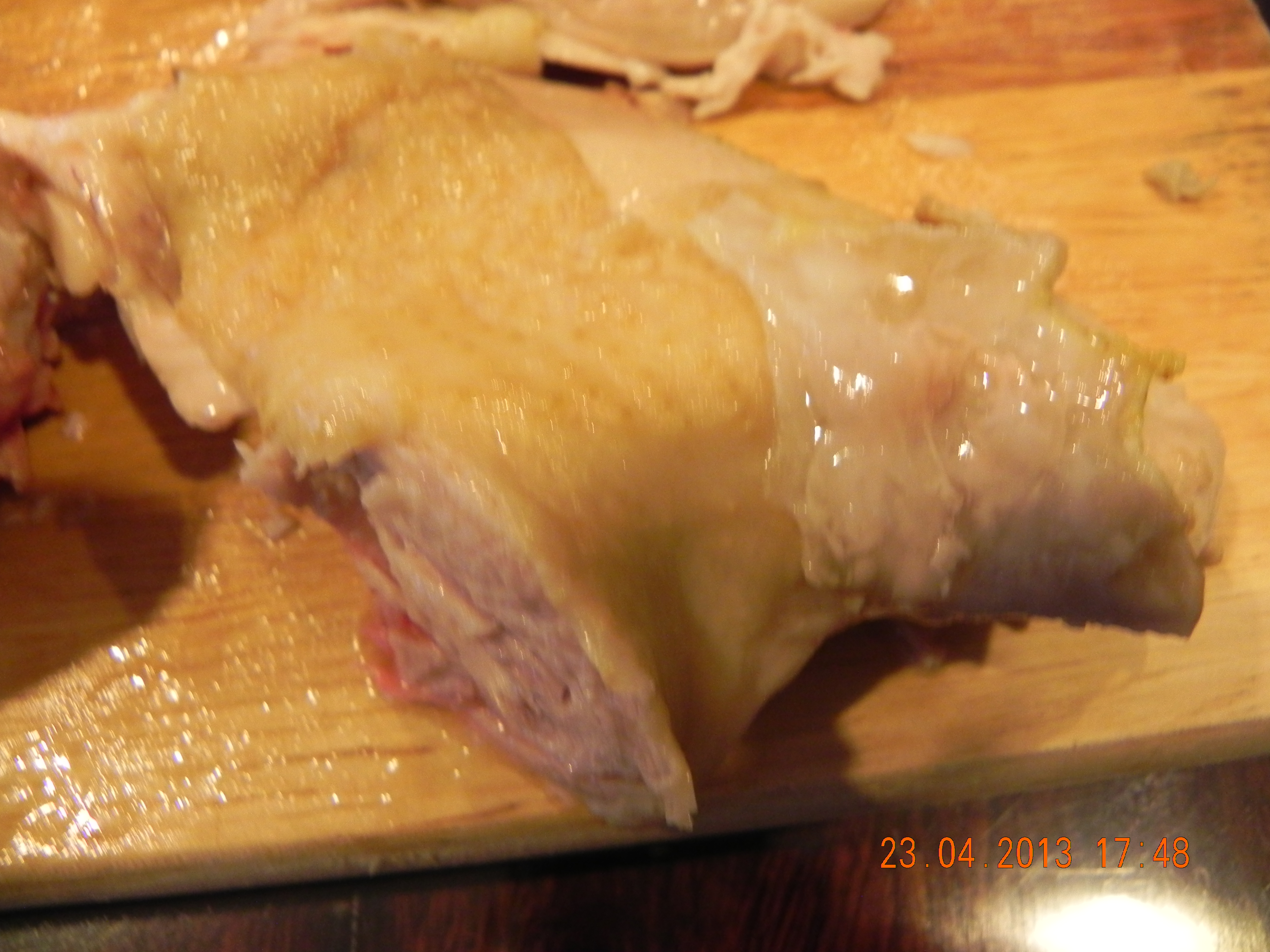
my chicken though, i think, was the same standard as Ah Heng, and as good as most good chicken rice chicken, self-praise haha. 🙂 it was moist, tender, very sweet & tasty. 🙂
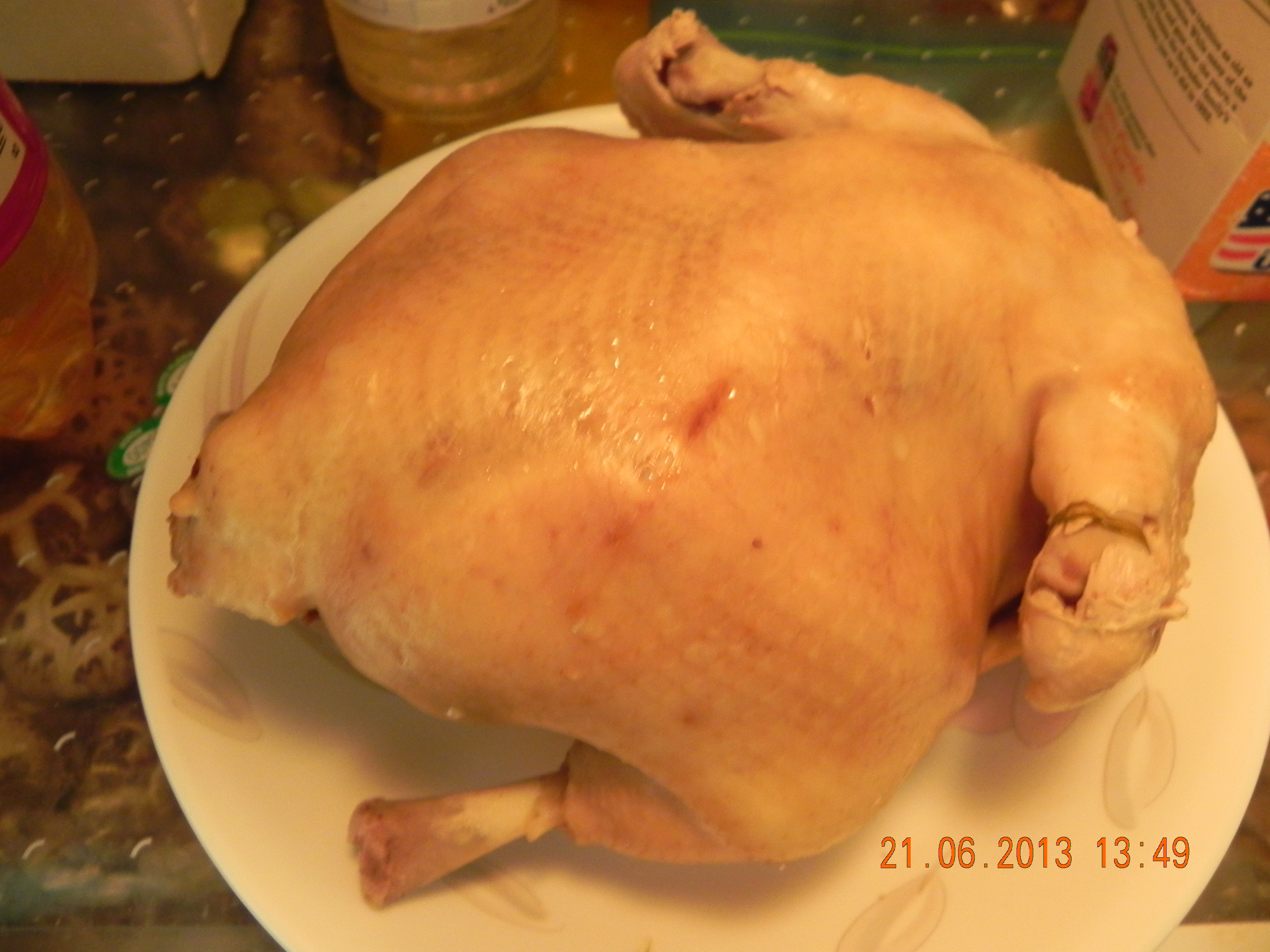
chicken for curry chicken noodles
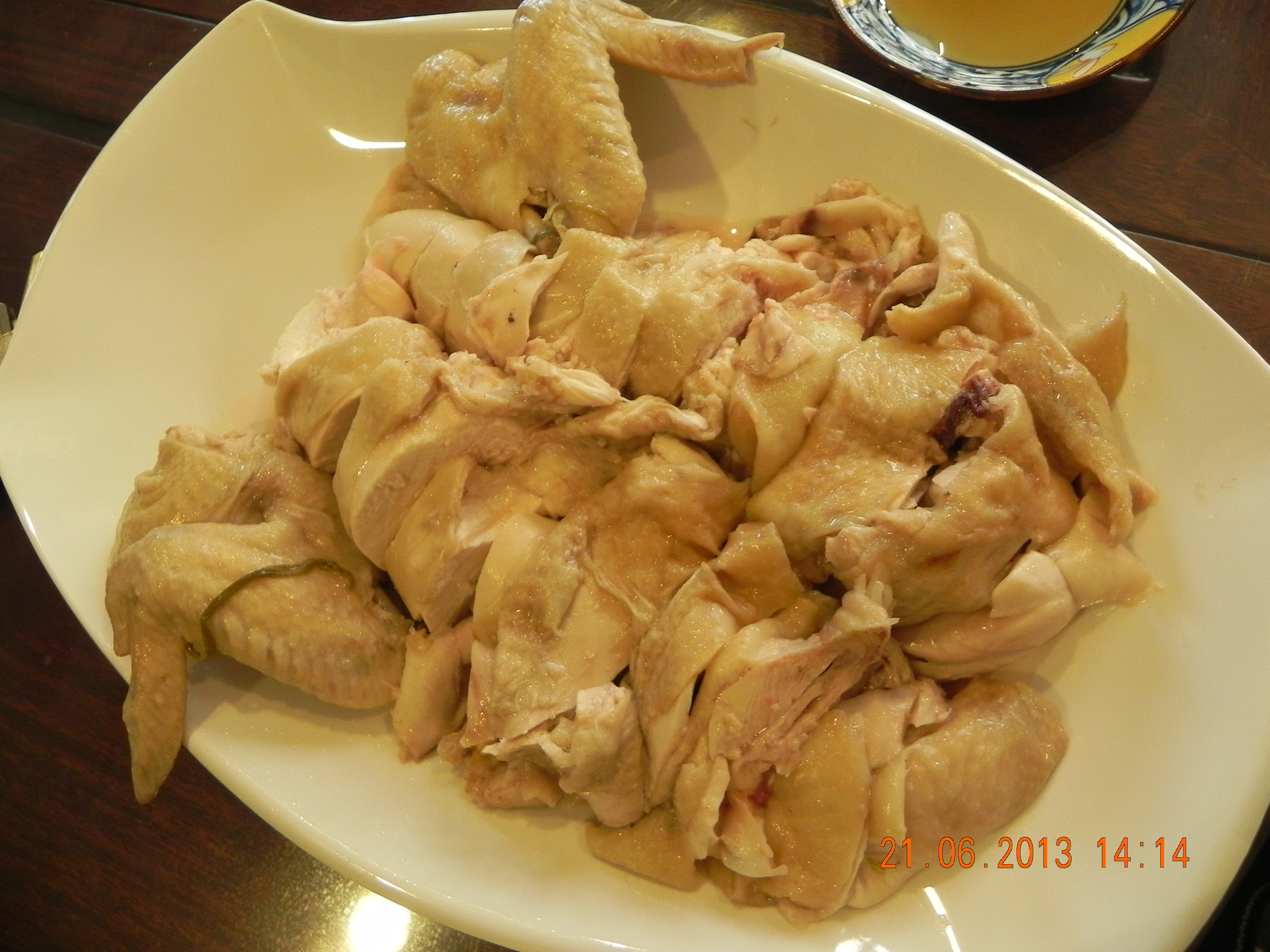
chicken for curry chicken noodles

chicken for curry chicken noodles

chicken for curry chicken noodles

& yes, i am quite proud of my chicken. 🙂
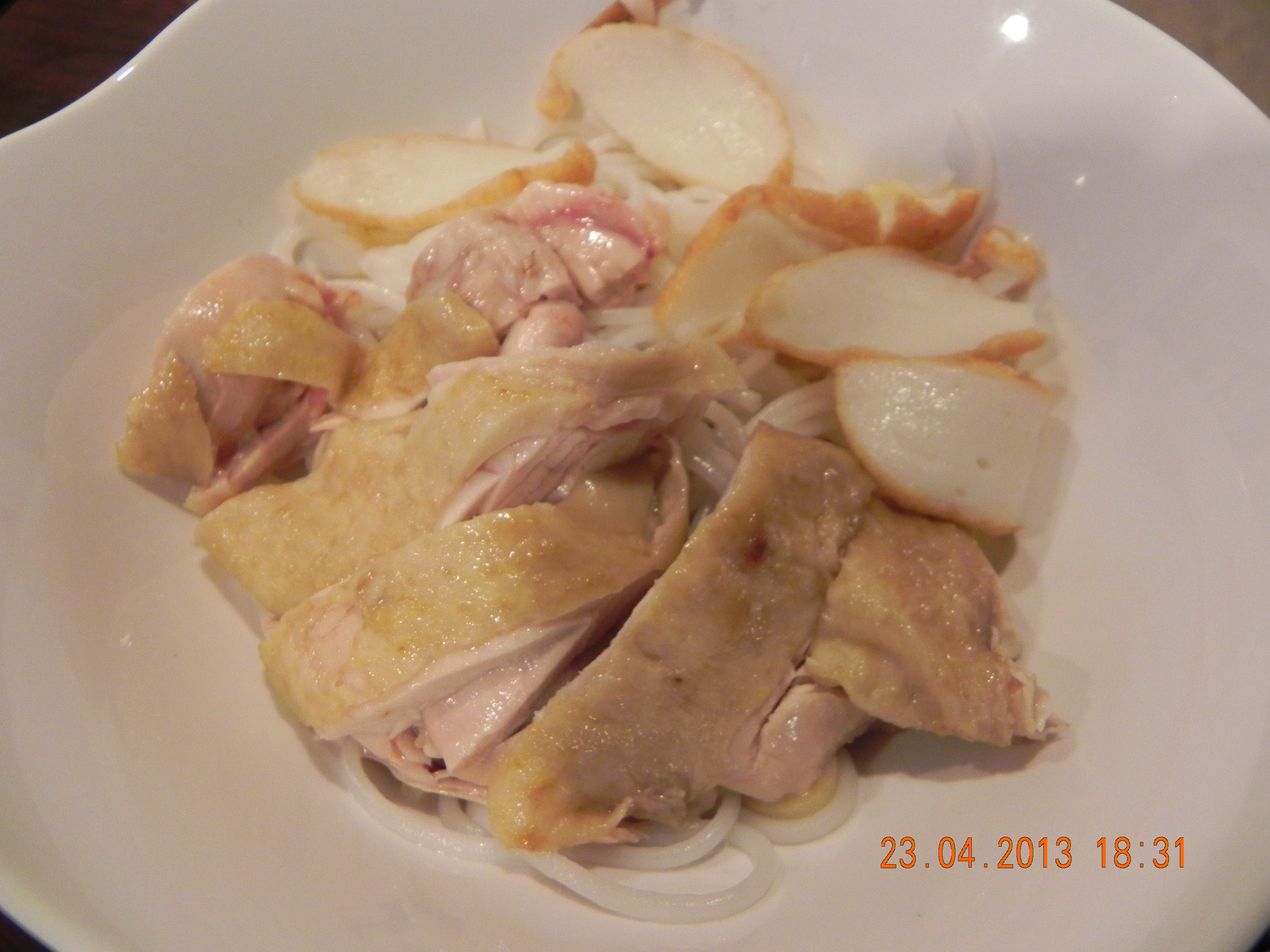
DSCN4558 DSCN4560

i prepared the ikan parang (西刀鱼) fish cake – grilled them in my toaster oven, let them cool & then slicing them.
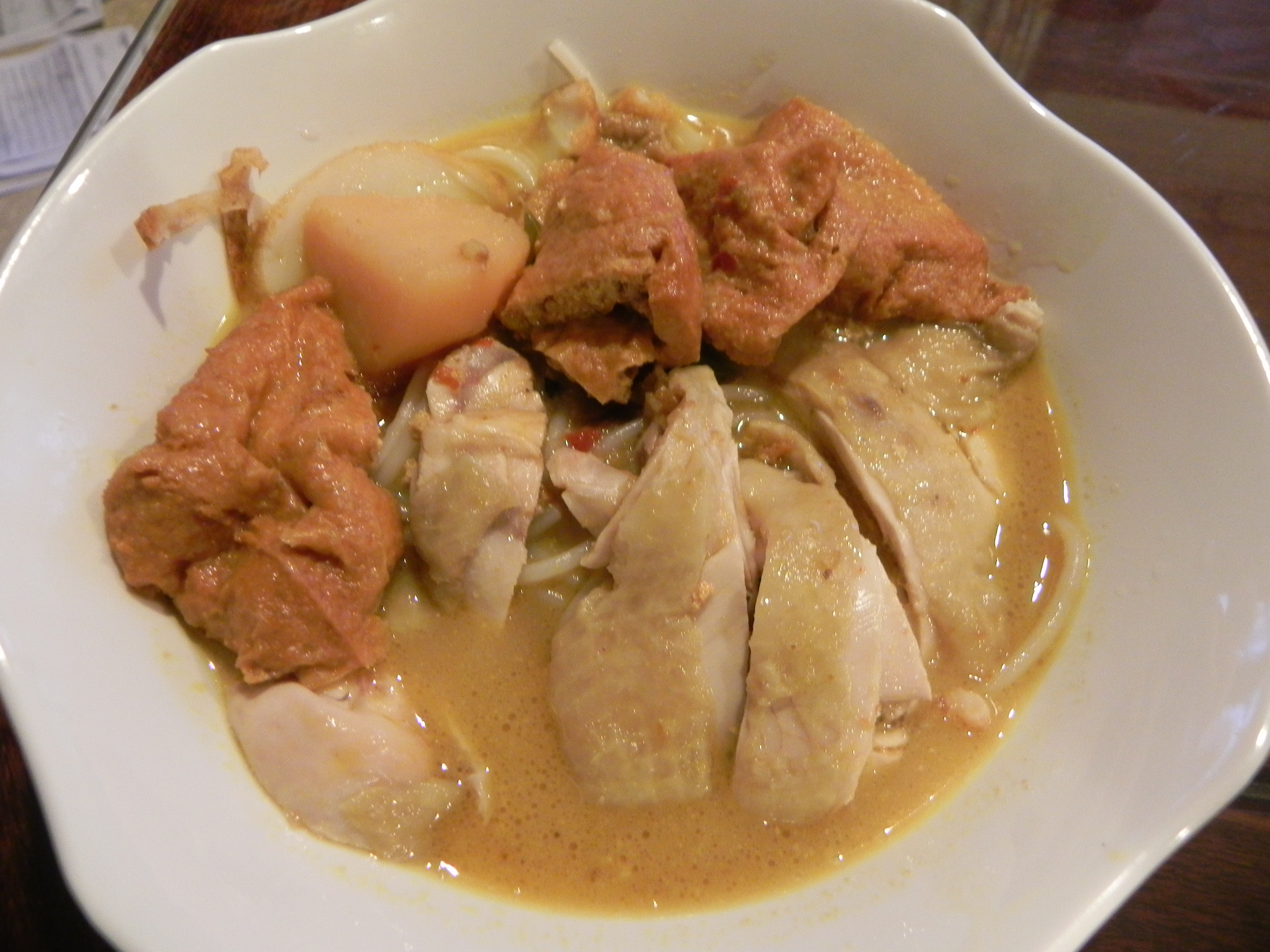
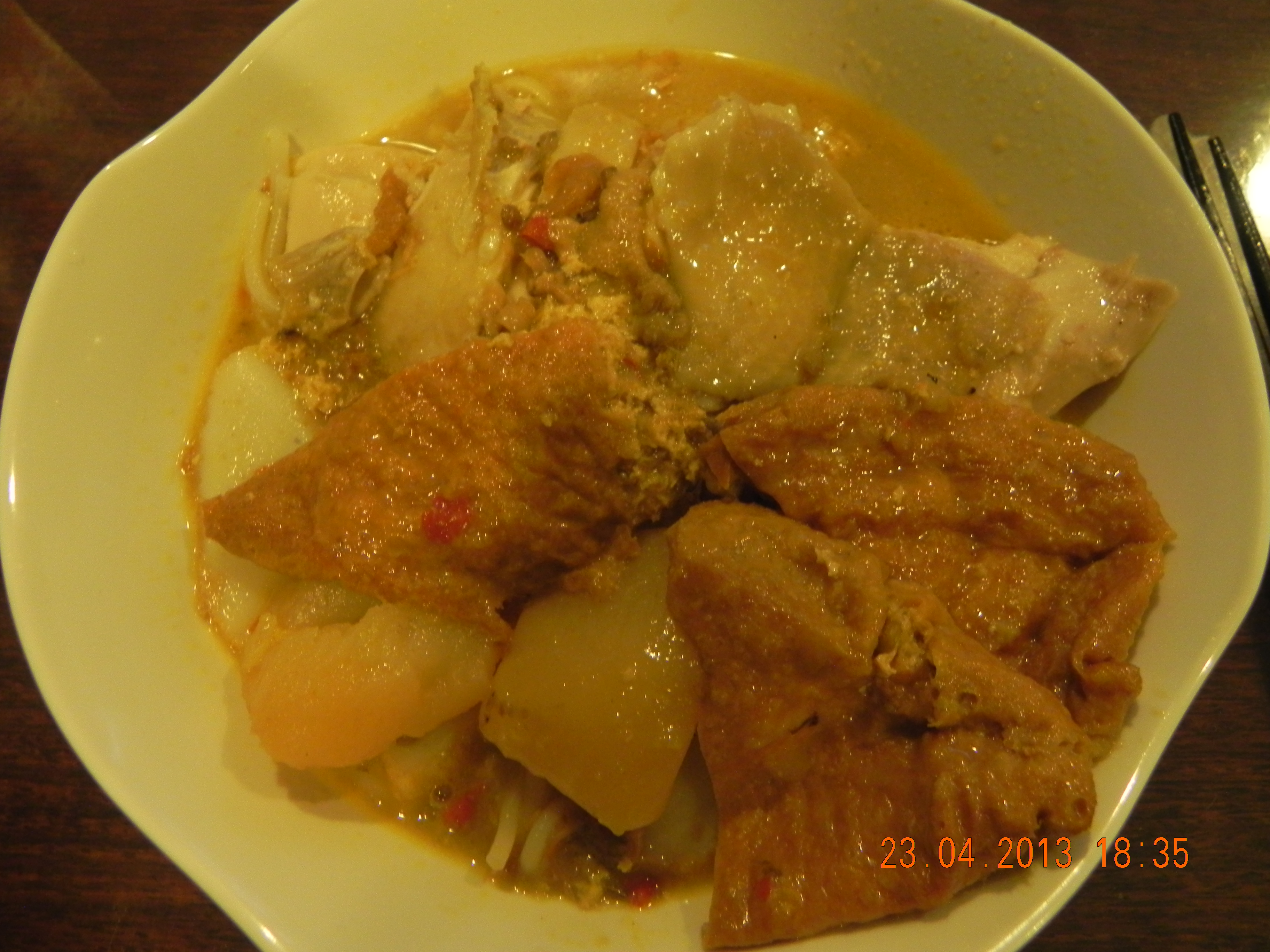
DSCN4562 DSCN4564

DSCN4566 DSCN4568

DSCN4568 IMG_3849

for the curry soup, i added potatoes to add to the body of the soup & cooked till i can break the potatoes by pressing against the side of the saucepan. i added taupok (dried bean curd) nearer the end of cooking. 🙂

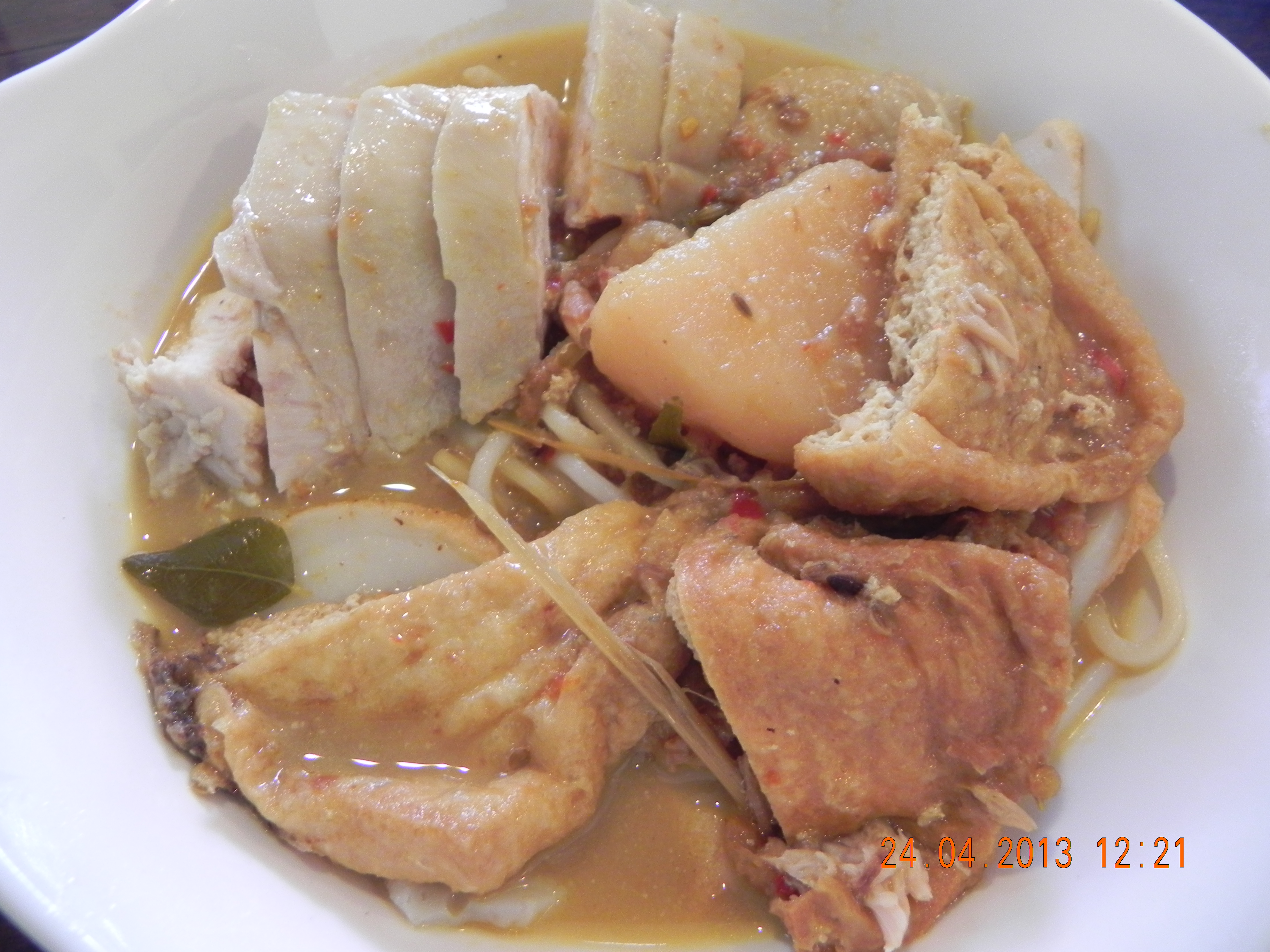
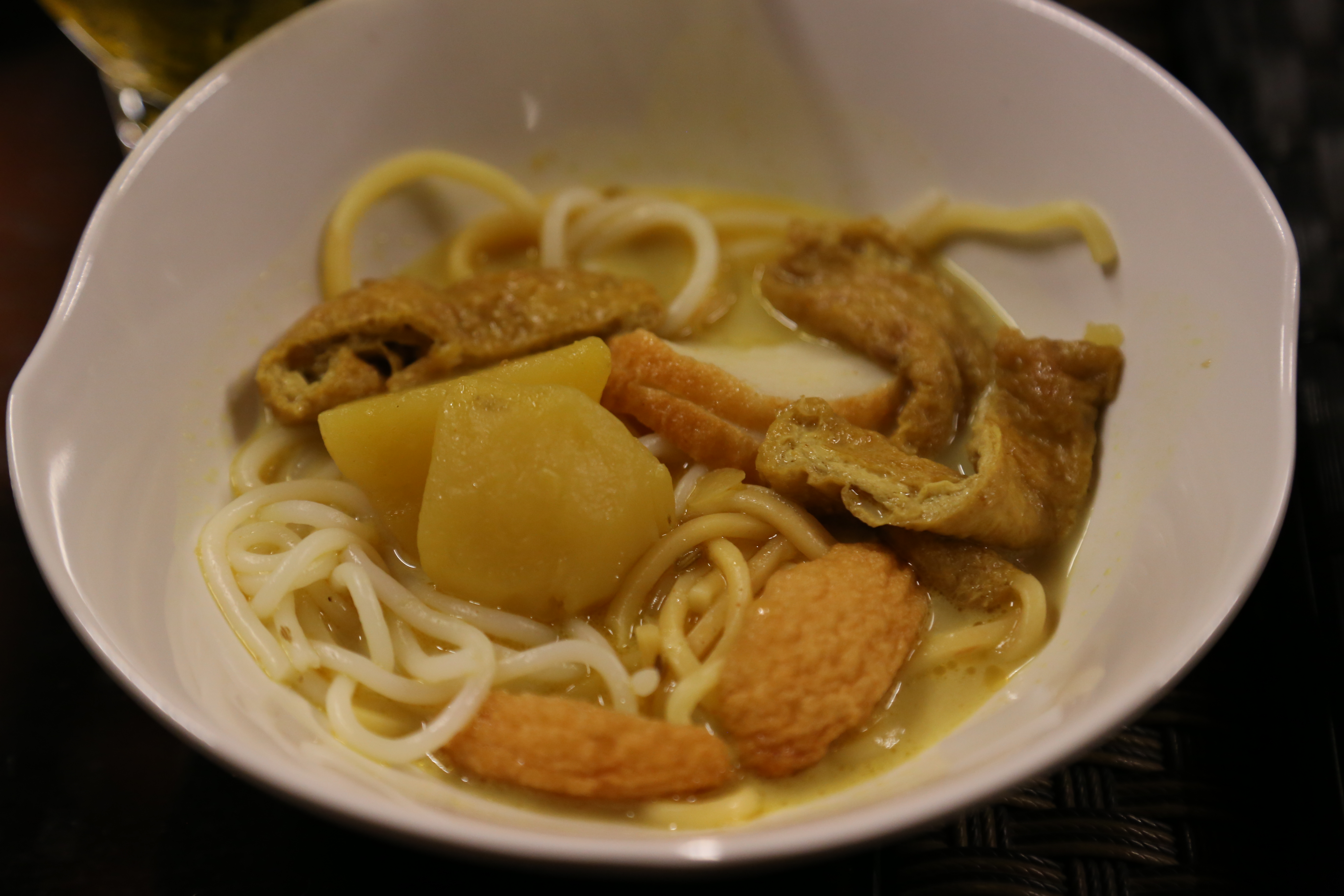
i boiled yellow noodles & thick beehoon for laksa till just cooked (al dente) and put in ice bath to stop cooking so noodles were QQ. when everything was done, i served the yellow noodles & thick beehoon in bowl & added the fishcake & cut chicken. then add boiling curry soup with taupok & potatoes & serve.

though it was not quite Hong Lim curry chicken, i must say it was very enjoyable. i served it to my friends for the 11pax Homegourmet Dinner on 11Jun2013, & everyone loved it. 🙂

c.h.e.f andy

Ingredients:

  • 1 whole chicken (I use 1.4kg from Giant hypermarket OR Sheng Shiong)
  • 200ml thick coconut milk or to taste
  • 2 star anise
  • 1 clove
  • 1 cinnamon stick
  • 4 tbsp oil
  • 1 tbsp sea salt
  • 1 tbsp sugar
  • 100g dried prawns boiled in chicken stock
  • 10 pieces of dried taupok
  • 2 potatoes peeled & diced
  • 3  ikan parang (西刀鱼) fish cake

for spice paste (ground – in my case I mince & pound them):

  • 3 cloves garlic
  • 18 shallots
  • 12 dried chilli (soaked in water & removed seeds)
  • 10g coriander seeds
  • 1 tsp fennel
  • 2 tsp cumin
  • 1 tsp tumeric powder
  • 2 stems lemon grass (white part)

Directions:

  1. Cook the chicken curry – stir-fry star anise, cinnamon stick & cloves over low heat. add in the spice paste and stir-fry till fragrant. add the curry leaves and fry them really well. add chicken stock with dried prawns & bring to boil. use the carcase of 1 chicken as stock base. subsequently after cooking & deboning the whole chicken, use the bones/carcase to add to the soup – so 2 chicken bones/carcase to provide the soup stock flavours. add diced potatoes to add to the body of the soup & cook for about 1/2hr or till they break by pressing against the side of the saucepan. add sea salt & sugar & add 200ml thick coconut milk OR to taste.
  2. Cook the chicken – clean the chicken & rub salt on the skin & inside to exfoliate & make the skin ultra smooth. tie a string (butcher twine) to secure the chicken neck & tie it to a ladle. add enough chicken stock. bring soup to boil on high heat & lower the whole chicken so it is just completely submerged. once soup is boiling again after lowering the chicken, turn fire to low & simmer for 1/2hr. i use a 1.4kg chicken from Giant & 1/2hr is about right. one can also use a meat thermometer & set at 170degF (77degC). when chicken is cooked, lift it out & deposit it in an ice bath to stop the cooking & to produce a very pretty taut skin.
  3. Condiments – grill ikan parang (西刀鱼) fish cake in a toaster oven, let them cool & then slice them. add taupok (dried bean curd) nearer the end of cooking.
  4. Serve with noodles – boil yellow noodles & thick beehoon for laksa till just cooked (al dente) and put in ice bath to stop cooking so noodles are QQ. when everything is done, serve yellow noodles & thick beehoon in bowl & add the fishcake & cut chicken. then add boiling curry soup with taupok & potatoes & serve.
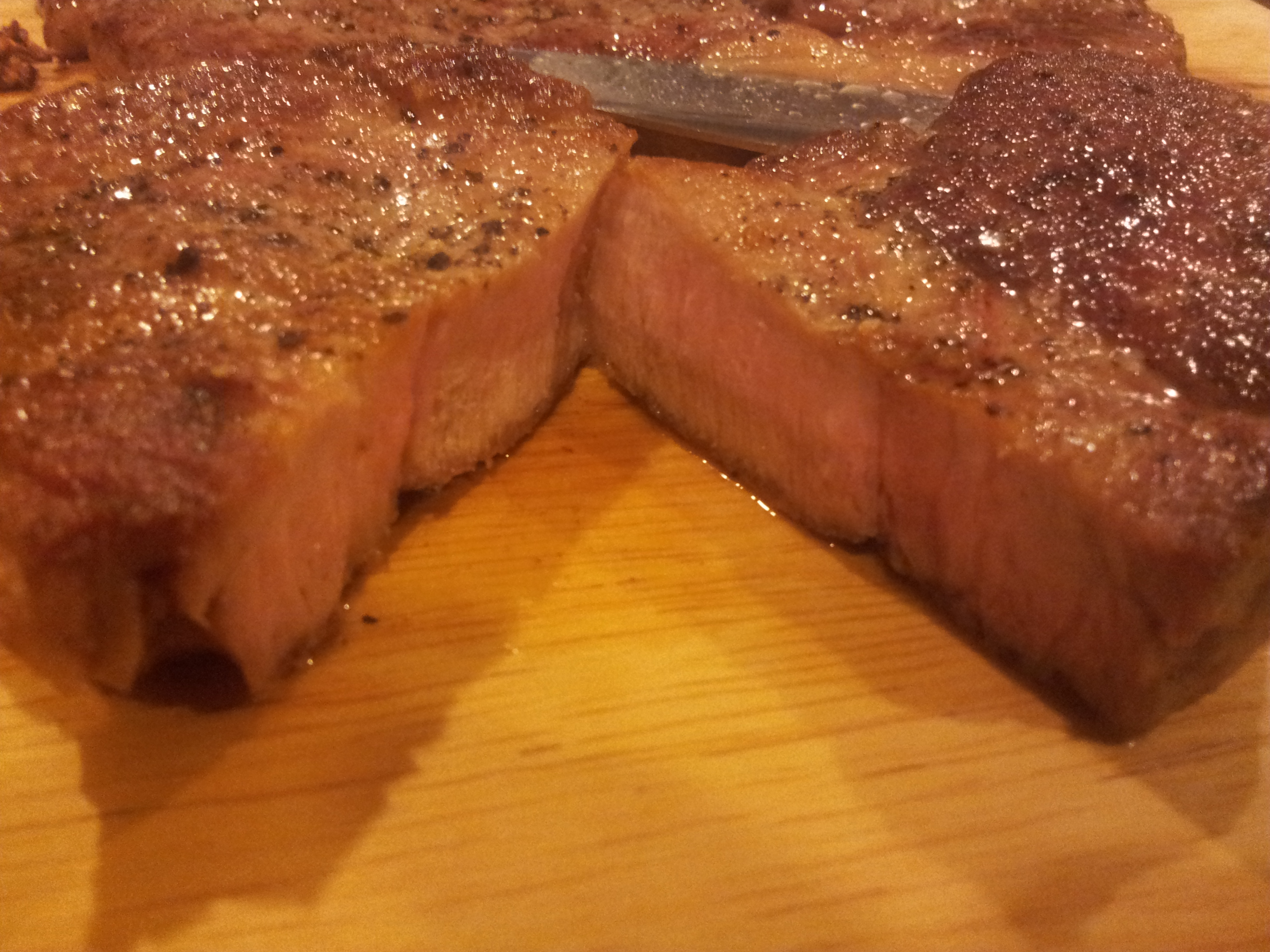
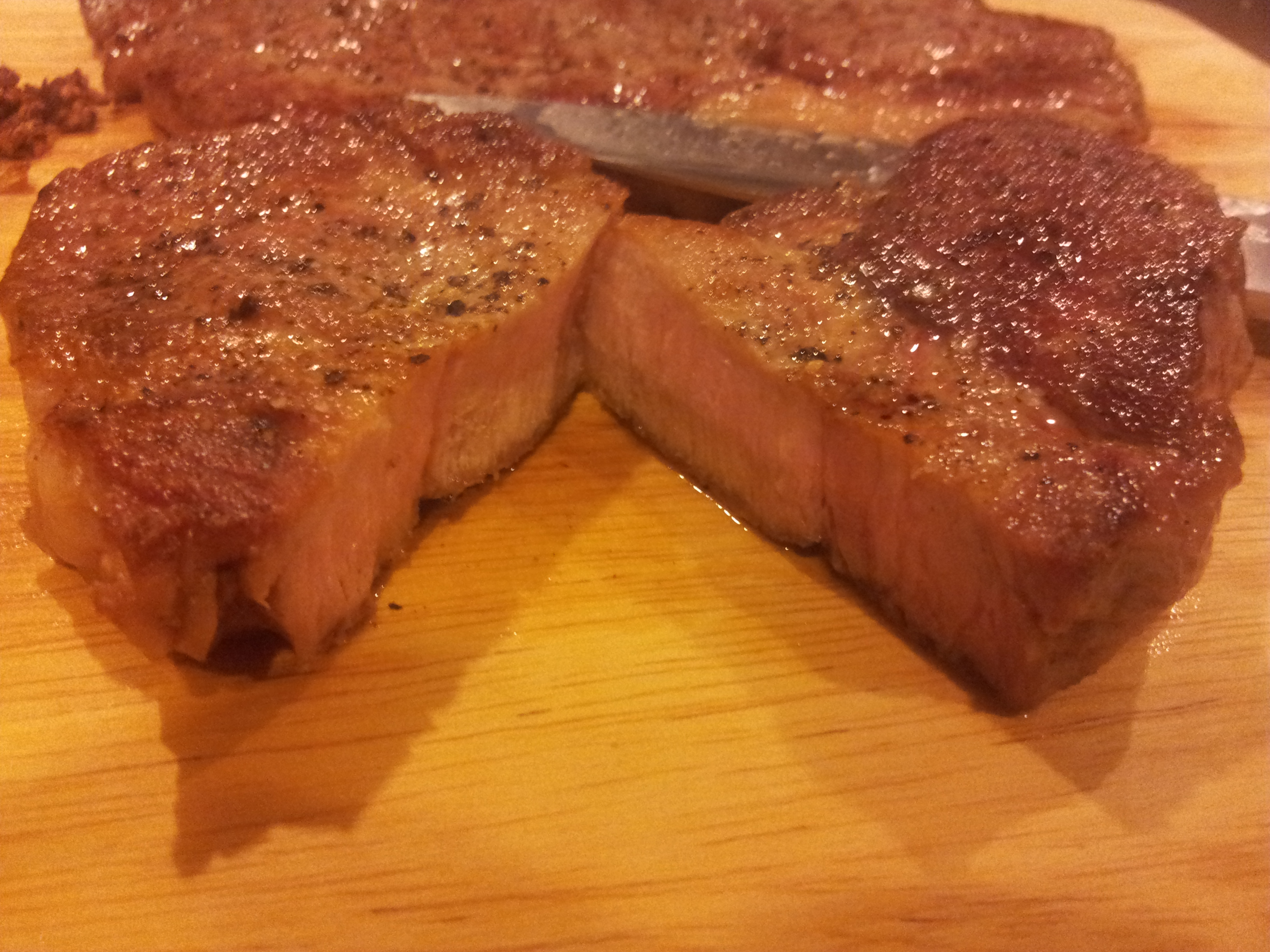
Pan-fried Kurobuta Steak

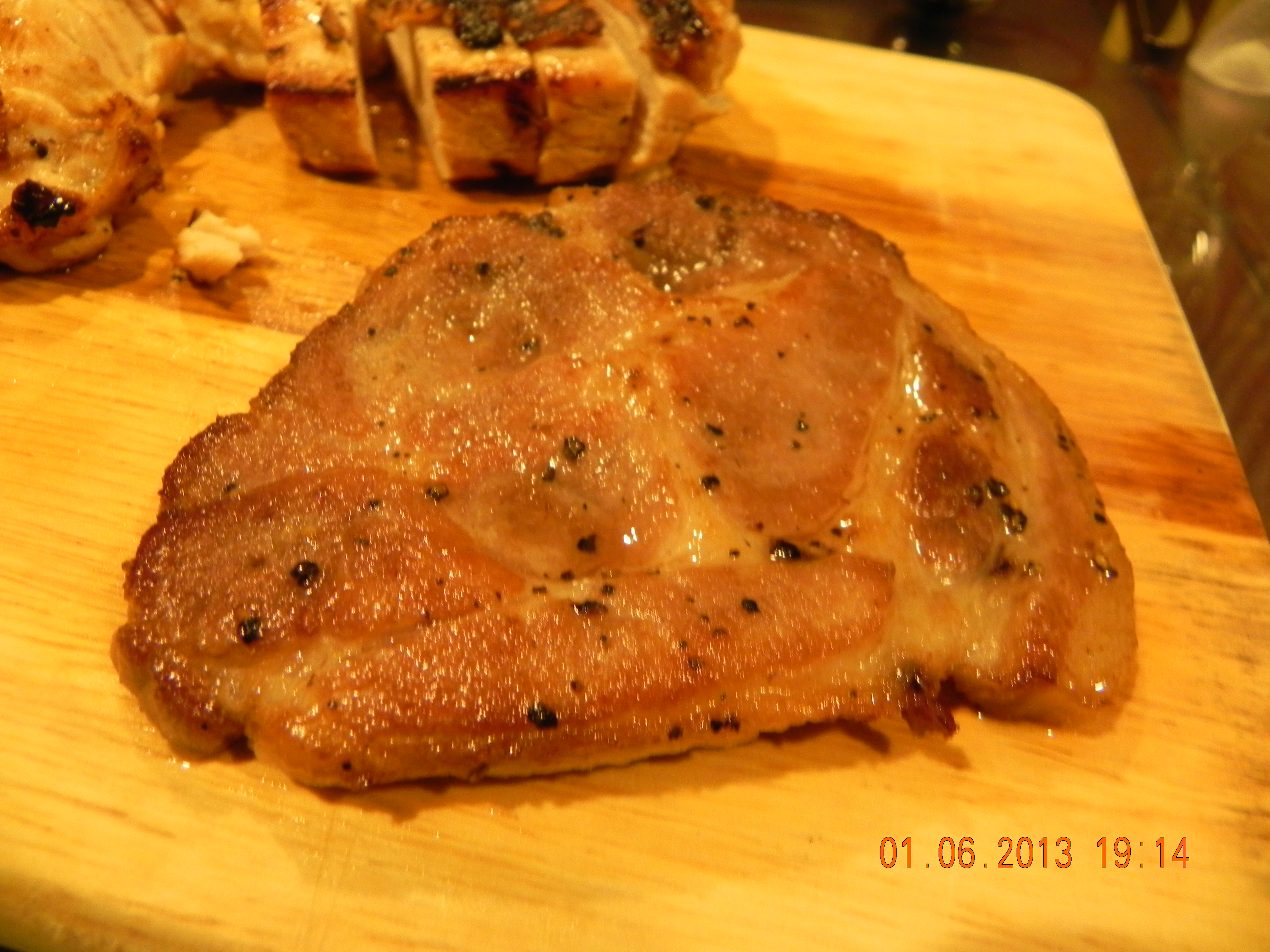
pan-fried kurobuta steak

pan-fried kurobuta steak

just realised that i did not put up the recipe for pan-fried kurobuta steak.

i was looking for a main course item to add to Nobu Miso Cod to cook for my wife for the Mother’s Day 6-course Homegourmet Dinner. 🙂

the technique is largely what I use for pan-fried angus or wagyu steak in tagliata di manzo – a good dry steak at room temperature seasoned with sea salt & coarse black pepper, and a very hot pan, & voila! the only difference being that for a beef steak, i mostly do it medium rare whereas for kurobuta (i use either iberico or yorkshire black pig bought from mmmm) i do it well done.

pan-fried kurobuta steak

pan-fried kurobuta steak

my understanding of pan-fried steak (or say scallops) is basically one of temperature. once you get the temperature right not much can go wrong & you just have to get the doneness right. So the pan has to be very hot (& well greased with olive oil & butter), and the meat has to be dry (air dry in fridge or pat dry with kitchen towels) and at room temperature, so that the steak can be seared quickly to seal in the juices, and to achieve maillard reaction. if the meat is wet, the pan temperature drop sharply & you will be poaching instead of searing.  the only other thing to remember is to let the steak rest for 5-10mins to redistribute the juices, before you cut it. 🙂

DSCN5276 DSCN5277

we find the kurobuta from mmmm to be excellent in some way equal or better than angus striploin, but of course not comparable with the wagyu MBS 4/5 striploin. of course these things are very much a matter of personal taste preference. 🙂

it seems to me that anyone can cook an excellent steak at home with a good piece of meat. so i don’t do steaks out often these days unless it is at a very good restaurant. it is surprising though that many restaurants sometimes deliver a mediocre or poor steak when they get the temperature wrong, which is something they should never do!

c.h.e.f andy

Directions:

  1. remove kurobuta (1/2in to 3/4in think cuts) from fridge & leave at room temperature for 1/2hr.  pat dry & season with sea salt & coarse black pepper on both sides.
  2. heat a non-stick skillet. add 1 tablespoon olive oil & add 10g butter. when the pan is very hot & just begins to smoke. add the steak (say 2 pieces) w/o crowding the pan. making sure the places where the steaks are sitting are well greased. turn heat to medium after 1 min. when the steak is cooked 1/2 way up on the side, turn heat to high & flip over and turn down to medium after 1 min.
  3. remove meat from pan to cutting board & rest for 5mins before serving.

Oven Slow-braised Chashu (Japanese Braised Belly Pork for Ramen)

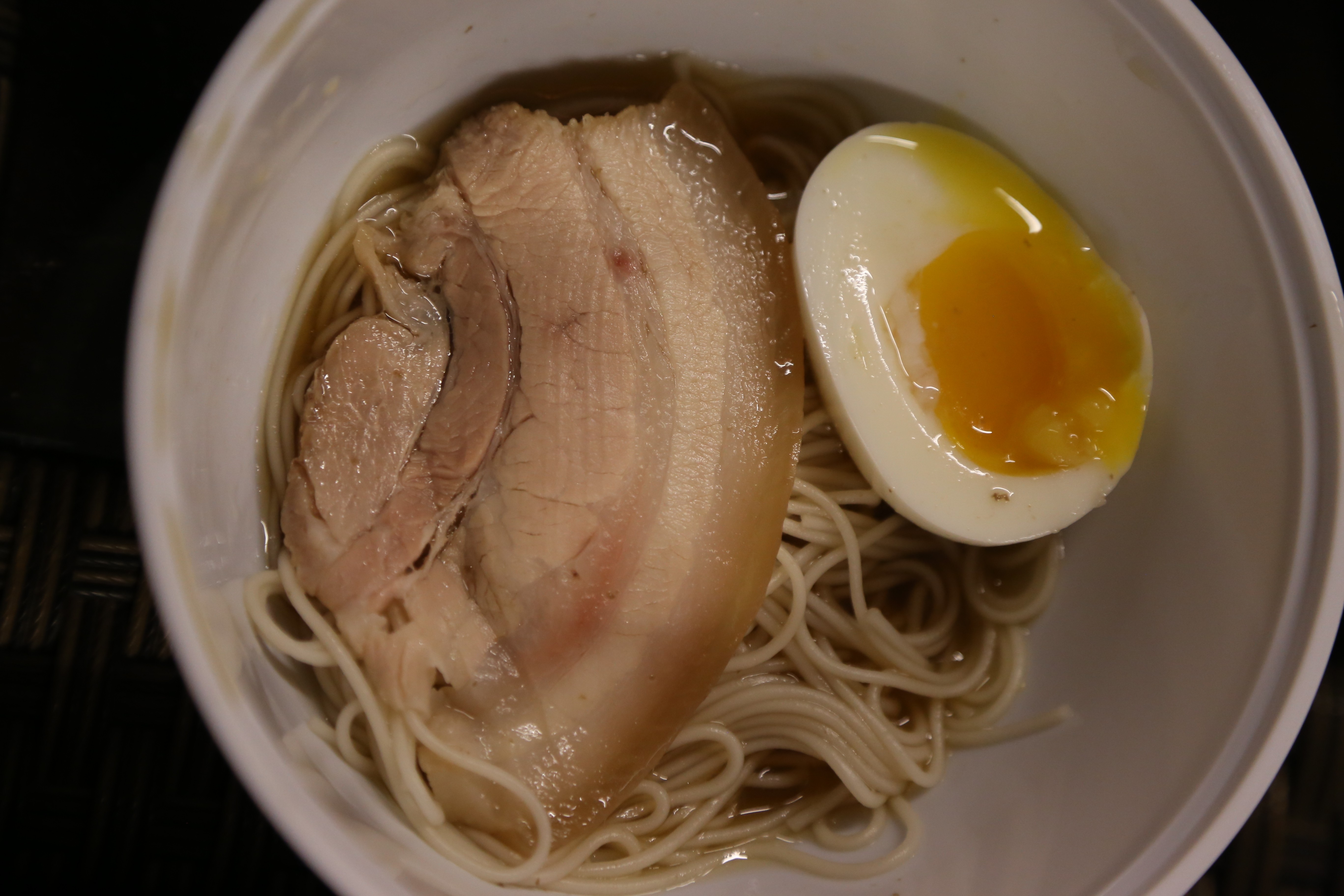
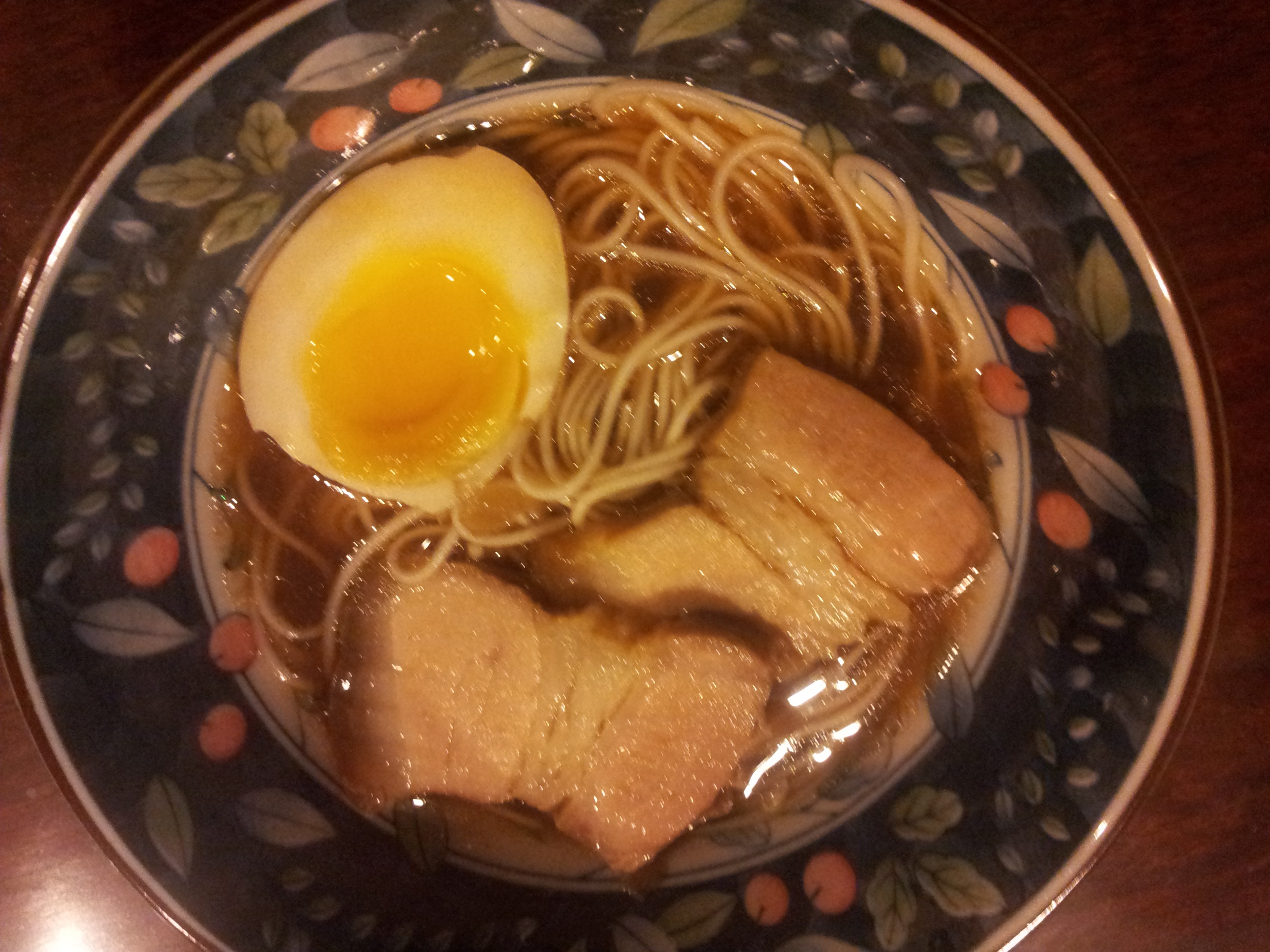
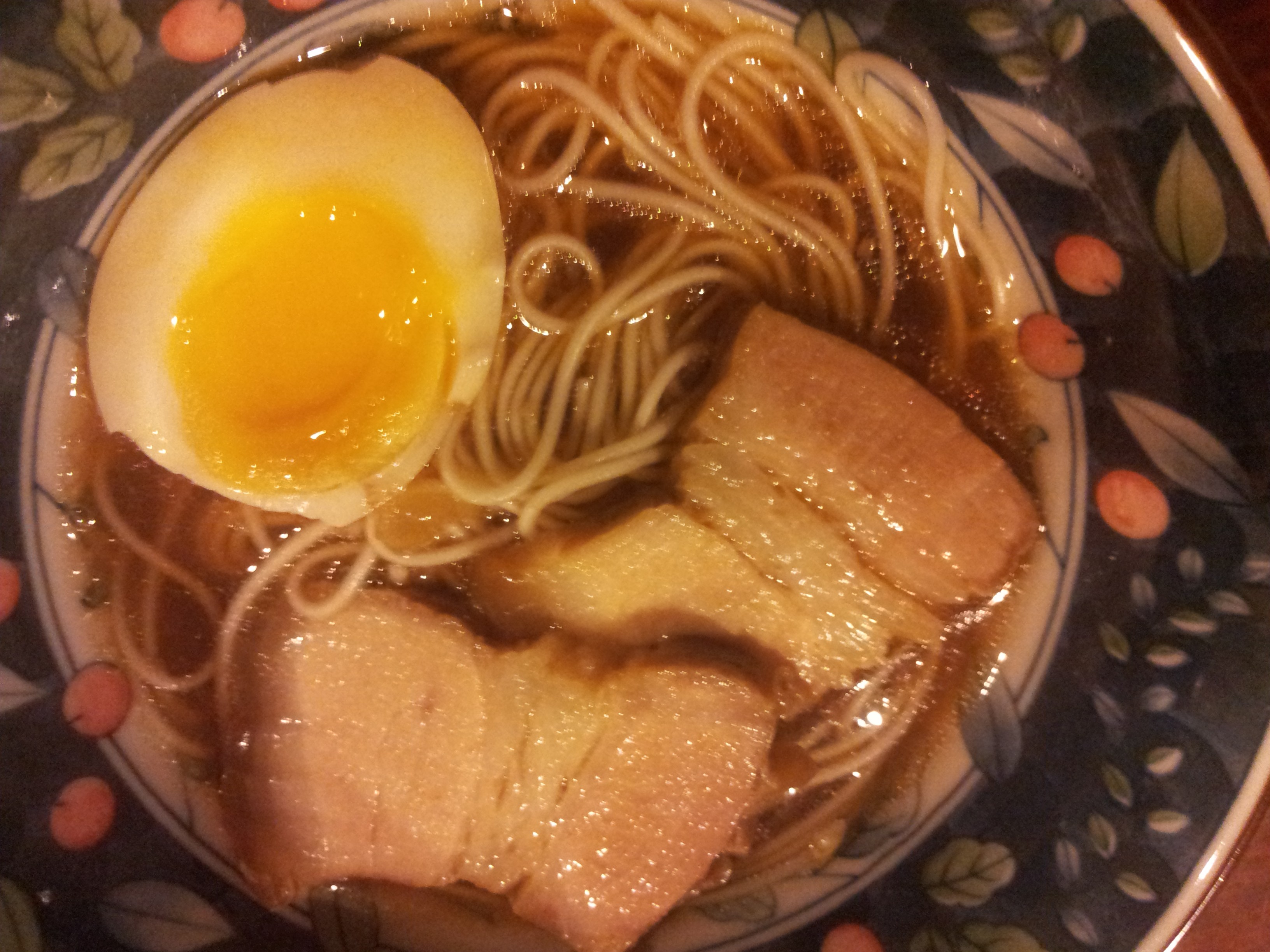
chashumen

chashumen

have not done any blogging on recipes for a while.

lately, after seeing some internet recipes on cooking Japanese chashu (see a very good one by http://www.seriouseats.com on chashu pork), I did a few attempts myself, with some reasonable success. 🙂

I had also in fact undertaken a 10pax homegourmet dinner recently on 11.6.2013, where I also served 10 bowls of chasumen, which was rather well received. 🙂 the top photo (and the one right at the bottom) were taken during that dinner. 🙂

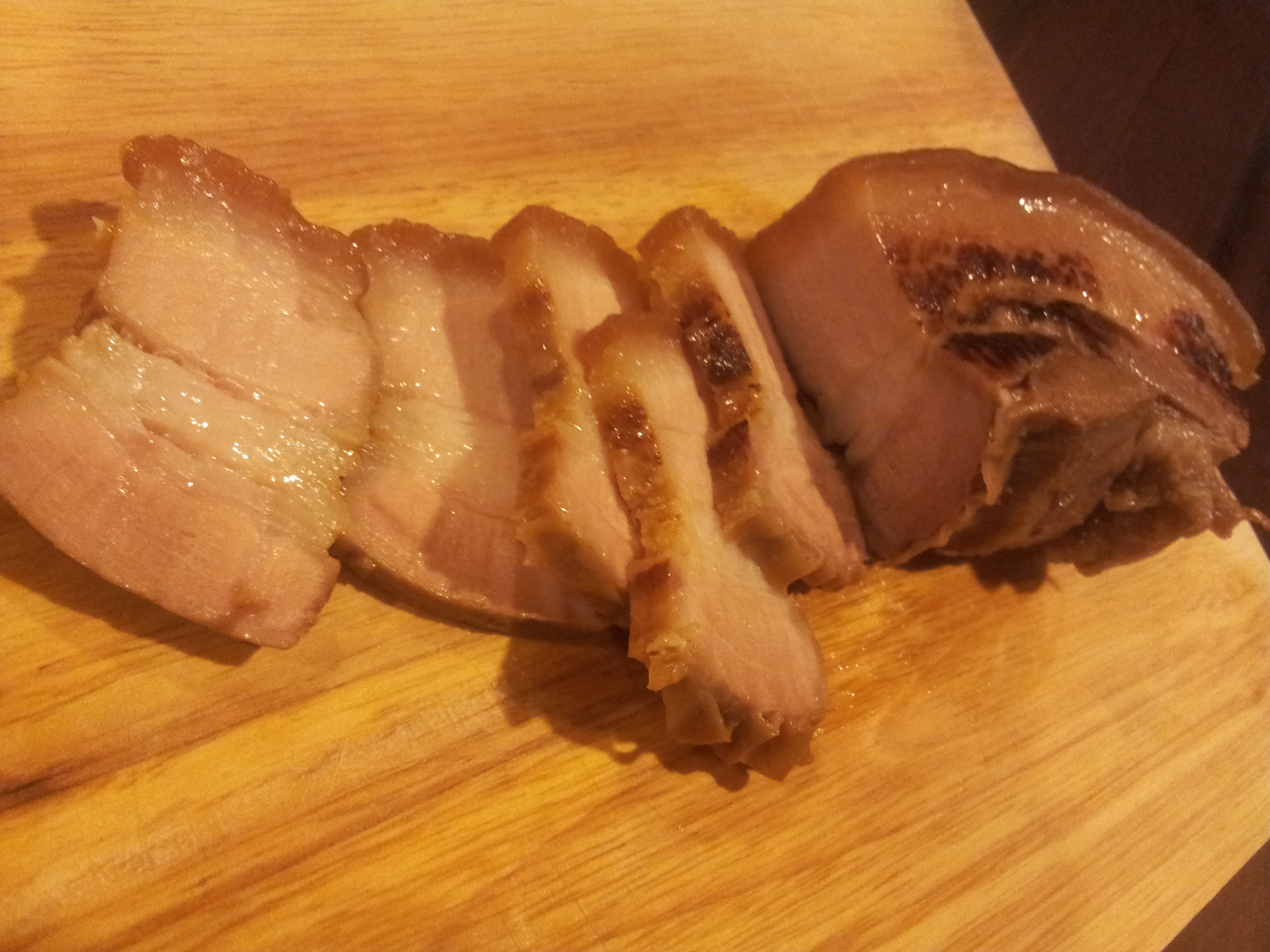
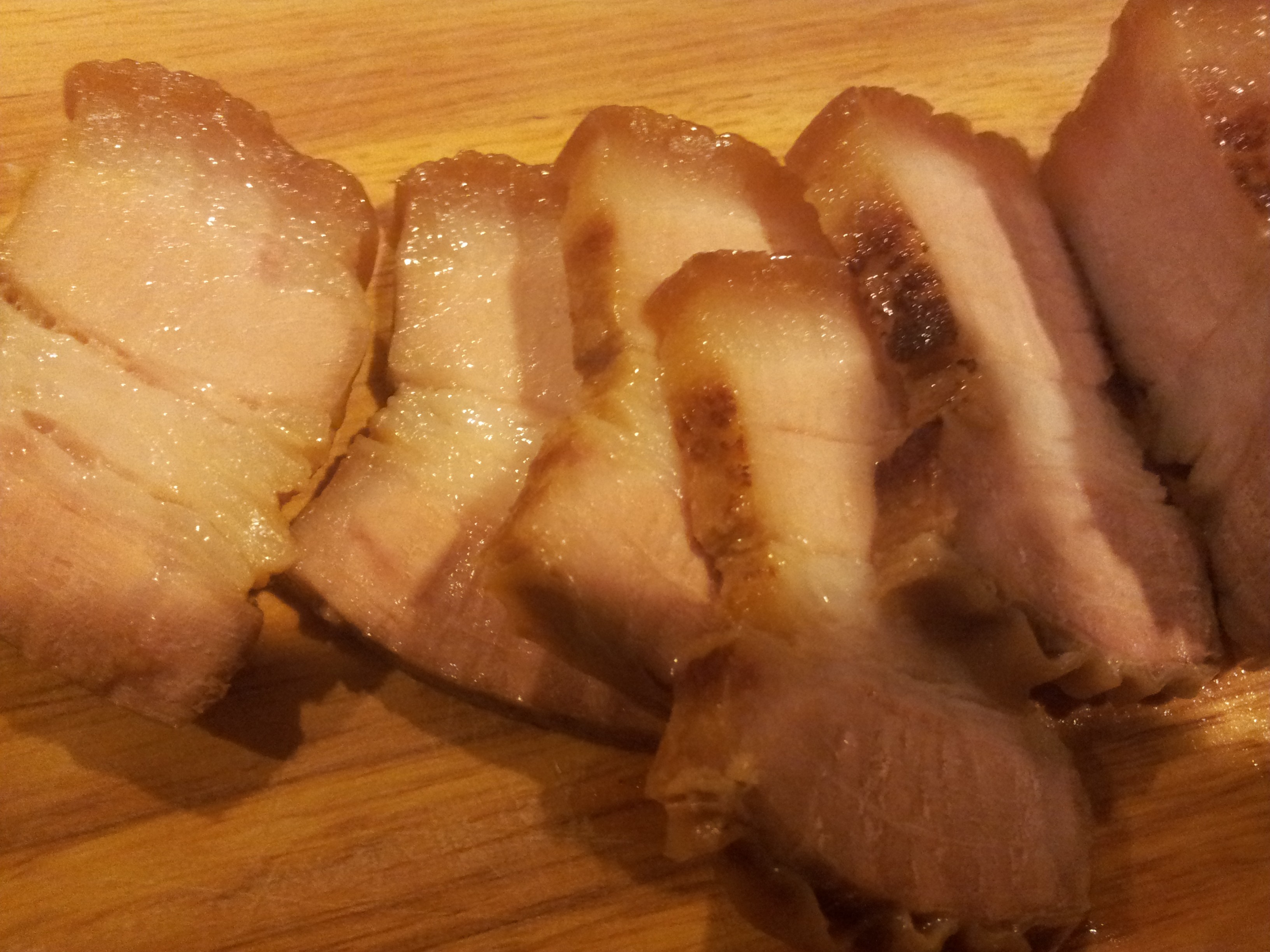
chashu (Japanese oven slow-braised pork belly)

chashu (Japanese oven slow-braised pork belly)

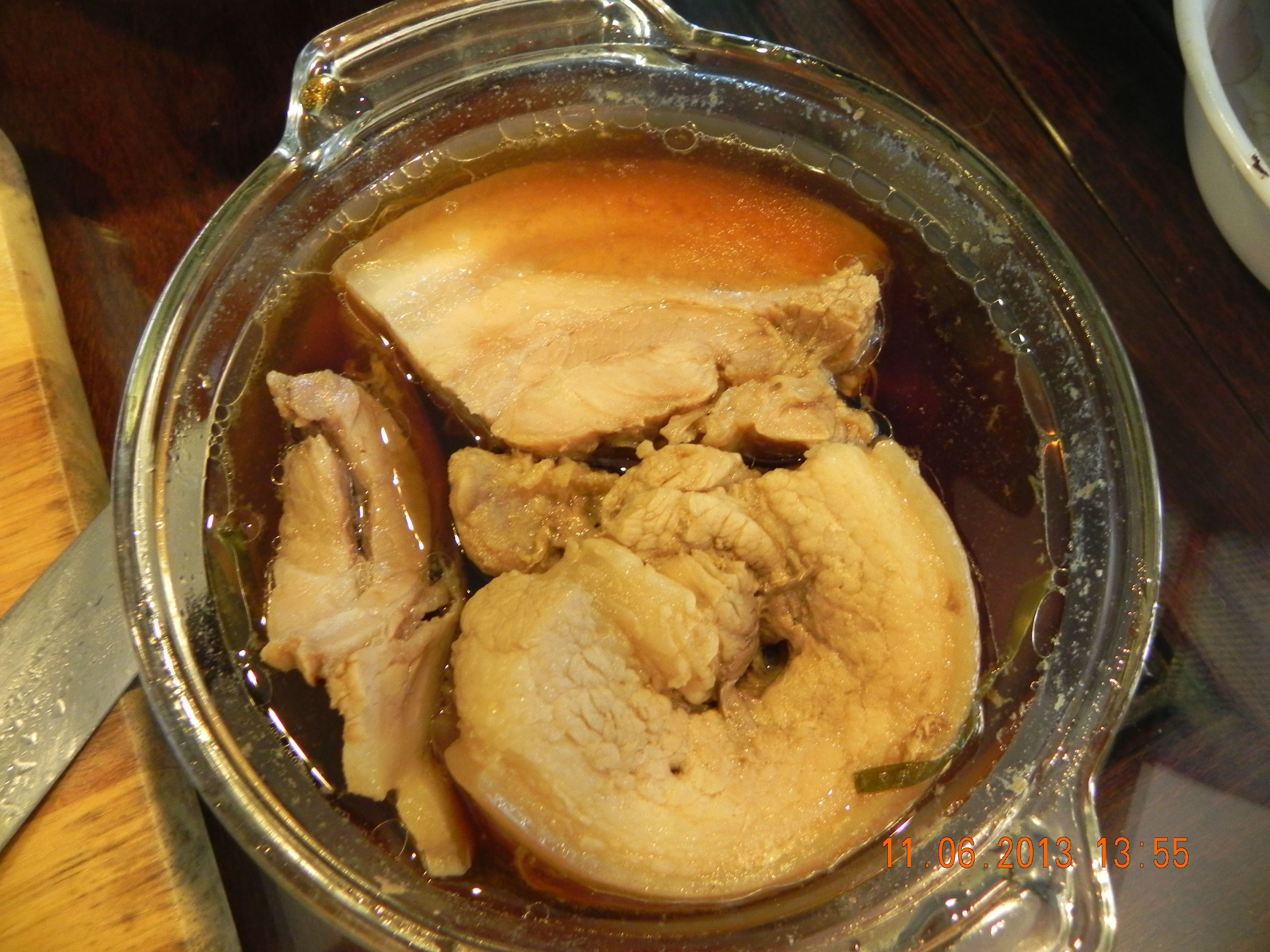
now on the cooking. I blanched a 300g belly pork in boiling water to remove the scums & then rinsed with slow running water.  I then used a string (butcher twine) to tie the pork belly to make the semi-circular shape. 🙂 I prepared the braising sauce which comprised 1/2 cup sake, 1/2 cup mirin, 1 tablespoon sugar, 3 tablespoon light soy sauce and 1 cup water. I added sliced ginger (3cm block), 4 peeled garlic cloves, 1 stalk spring onions, 1 shallot quartered and heat till boiling. I added the belly pork & transfer to a preheated oven at 130degC for 1/2hr. I then let the oven cooled and set to 90degC and left the belly pork to slowly braise over 2hrs. 🙂

chashu (Japanese oven slow-braised pork belly)

chashu (Japanese oven slow-braised pork belly)

the result was a very tender texture of belly pork including the skin. 🙂 & it was sweet & tasty from the sauce marinade. 🙂

20130422_193834 20130422_193819

the above photos were from my very first attempt.

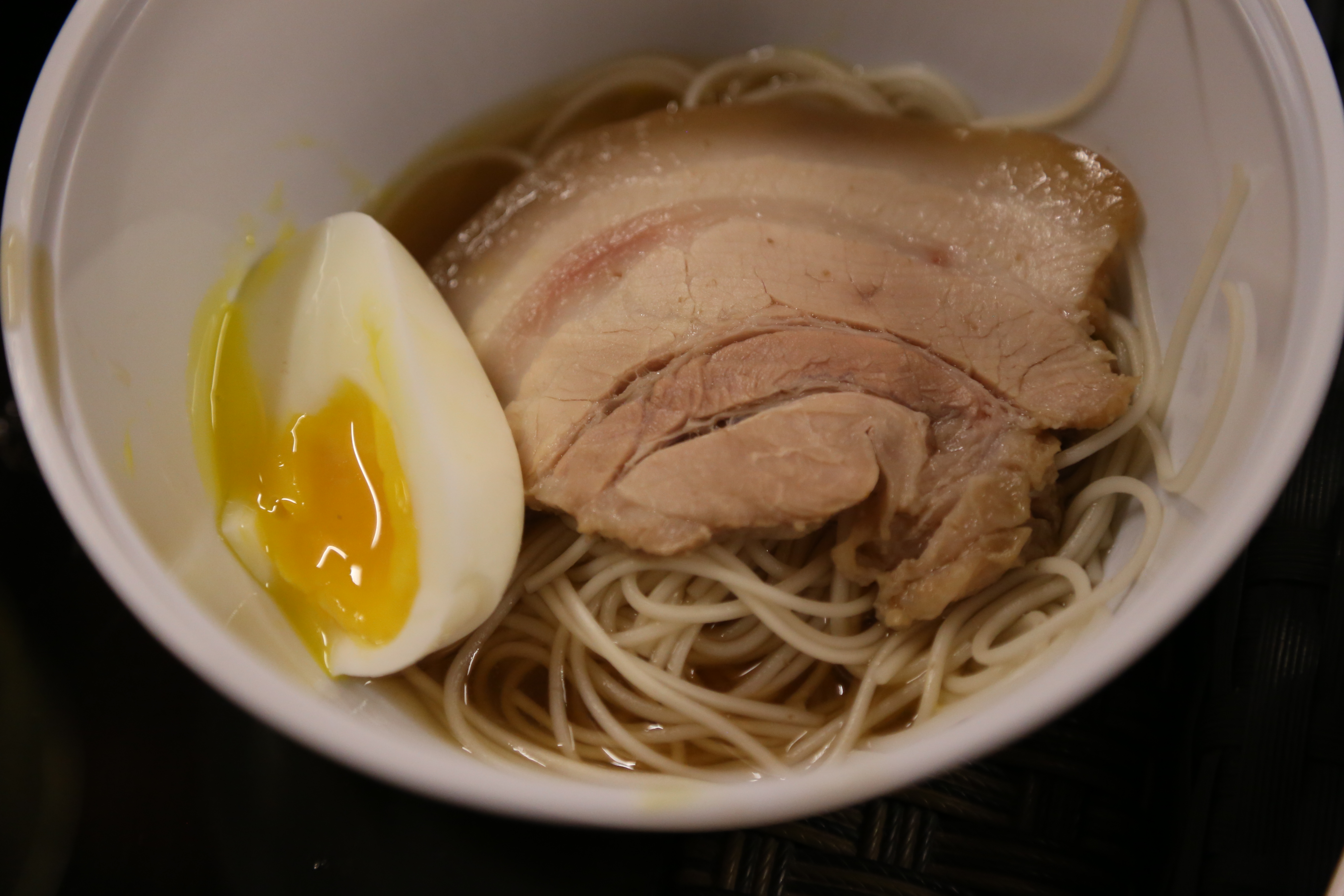
just to add – I have now perfected the 6 minutes runny yoke egg (will make a separate recipe post later!). also though the chashu would go very well with the regular ramen, I prefer the much lighter version using the thin Japanese noodles, especially when this carbo item is served as part of a 8-course menu. 🙂

20130422_193049IMG_3846

the bowl on the right with the runny york egg was from the recent 10pax homegourmet dinner on 11.6.2013. 🙂

c.h.e.f andy

Ingredients:

  • 300g belly pork
  • 1/2 cup mirin
  • 1/2 cup sake
  • 1/2 cup water
  • 1 tbsp sugar
  • 3 tbsp light soy sauce
  • 4 cloves peeled garlic
  • 1 shallot quartered
  • 1 stalk spring onions
  • 3cm ginger (sliced)

Directions:

  1. blanch 300g belly pork in boiling water to remove the scums & then rinse with slow running water.  use a string (butcher twine) to tie the pork belly to make the semi-circular shape.
  2. prepare the braising sauce which comprises 1/2 cup sake, 1/2 cup mirin, 1 tablespoon sugar, 3 tablespoon light soy sauce, and 1 cup water. add sliced ginger (3cm block), 4 peeled garlic cloves, 1 stalk spring onions, 1 shallot quartered and heat till boiling.
  3. add the belly pork & transfer to a preheated oven at 130degC for 1/2hr. let the oven cool and set to 90degC and leave the belly pork to slowly braise over 2hrs. serve or store in fridge for future use.

Recipe = Nobu Miso Cod

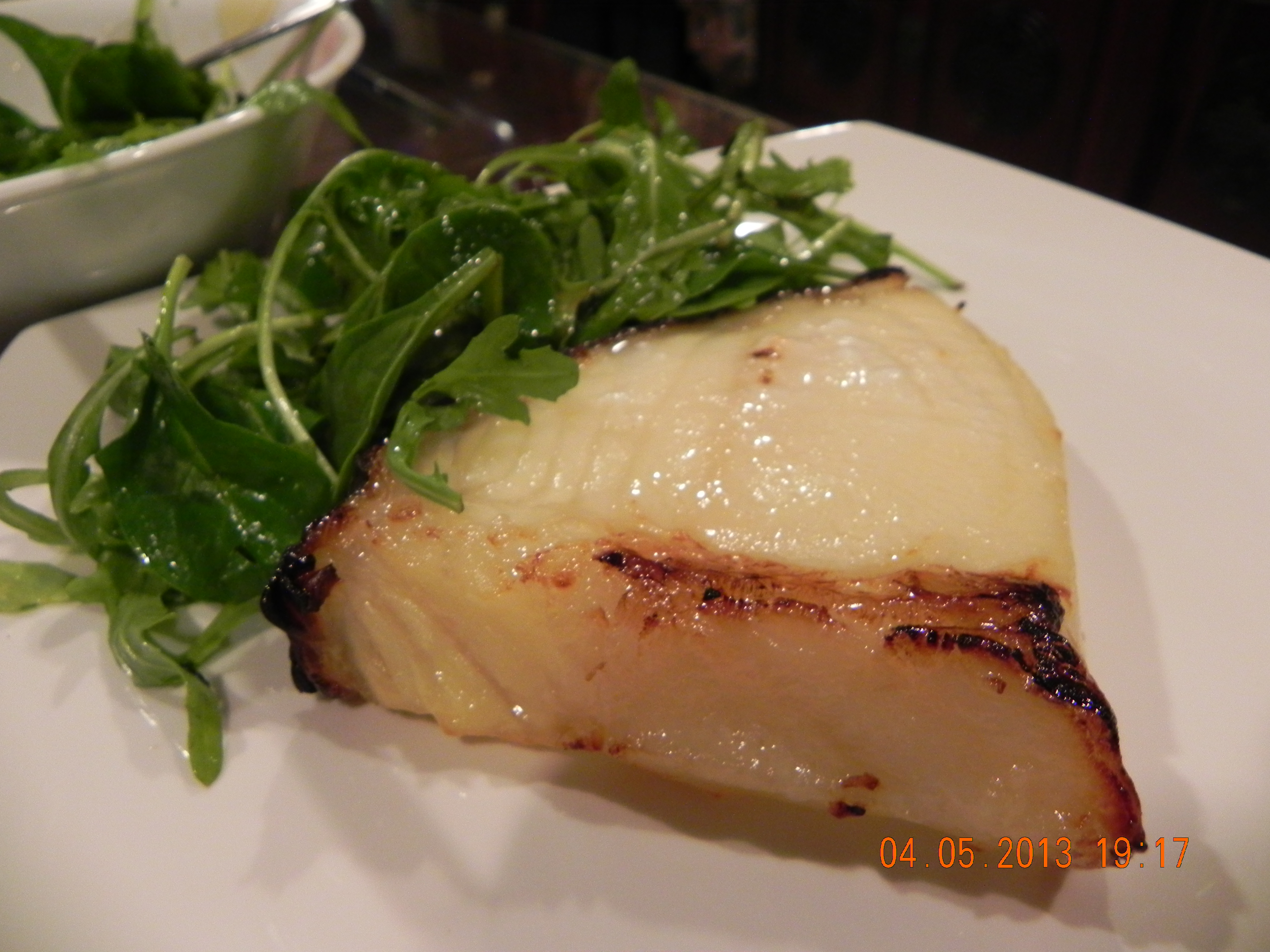
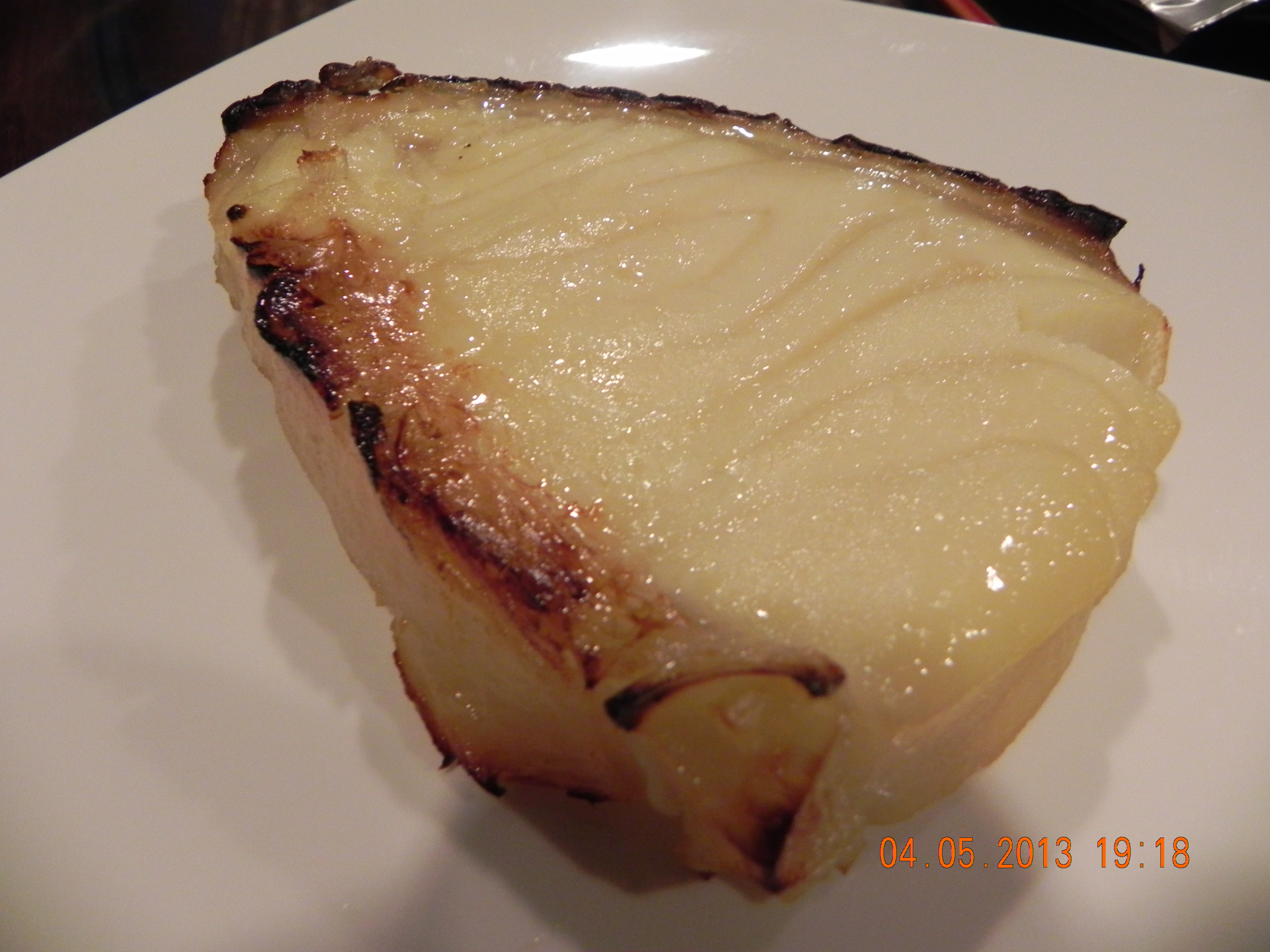
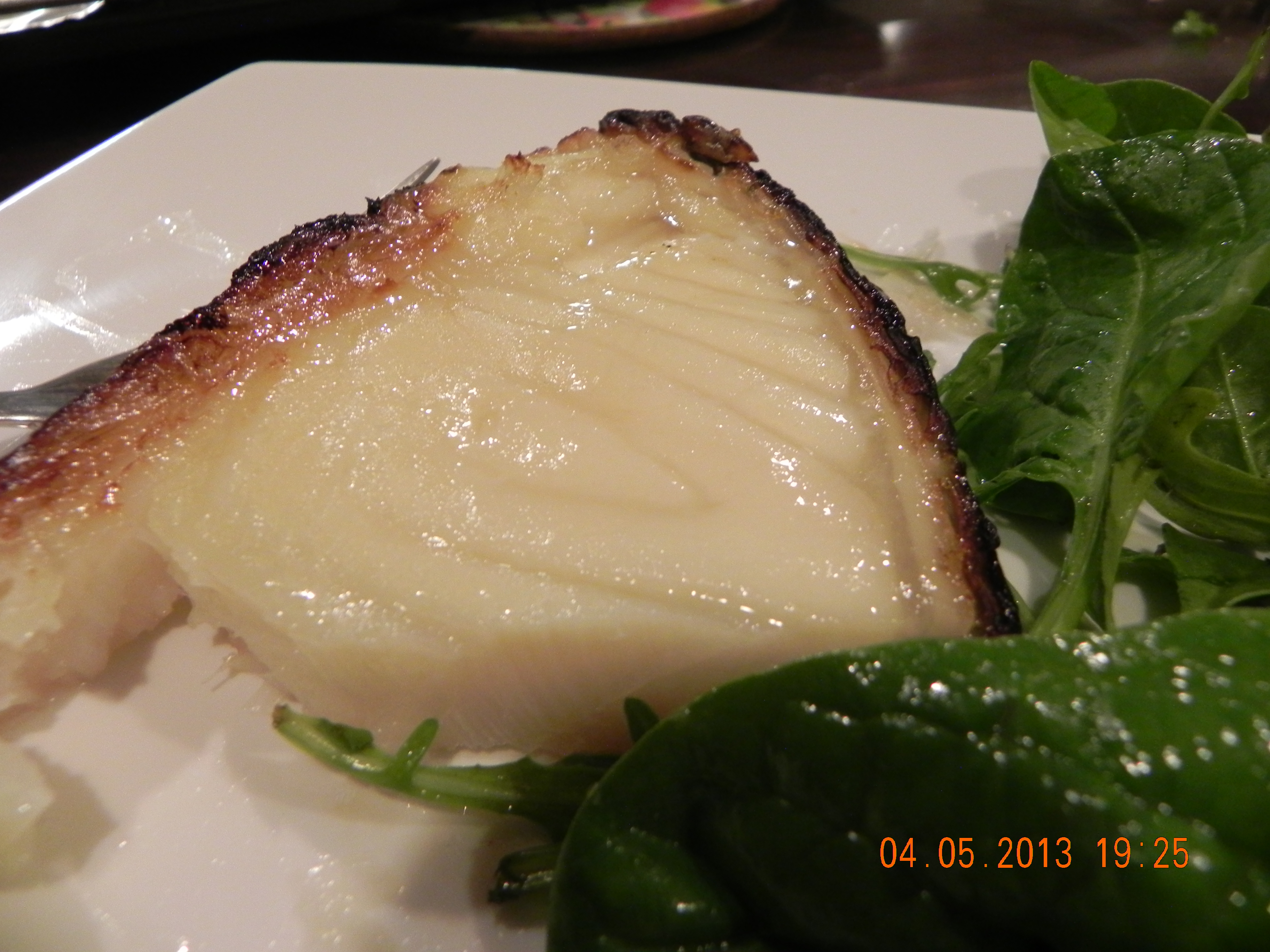
Nobu miso cod - the usual lovely firm, bouncy, slightly oily cod texture & full of flavours

Nobu miso cod – the usual lovely firm, bouncy, slightly oily cod texture & full of flavours

6feb2015 update (recipe at bottom updated accordingly –

subsequently i was lazy & just roast the cod in a roasting rack in 250degC oven for 12minutes and achieved the same results.

i also reduced the sugar to 1 tsp flat & the miso to 1 tbsp heap & marinated for 2 days instead 3days…

so proud of my Nobu miso cod! 🙂 successful at the very first attempt! wow! 🙂

my prize= the usual lovely firm, bouncy, slightly oily cod texture & full of flavours! 🙂

was planning a menu to cook for my wife for Mother’s Day…I now do a good pistachio crusted rack of lamb, slow-cooked Spanish beef ribs and pan-fried wagyu. but my wife is off lamb basically; slow-cooked, braised stuff never really up her alley; and while she is ok with pan-fried wagyu, it’s not something she’s into too much..so I was thinking what main course I could do..kurobuta was one which I started to do recently, pan-fried in a similar way as wagyu. I thought miso cod could be the other!

I found the Nobu miso cod recipe in a blog TastingMenu which I followed, and though I had some confidence the dish should turn out ok, one could never be too sure, and I was really quite elated that it did turn out so nicely! 🙂

I bought some frozen cod (<600g) from mmmm during their periodic promotion at S$41/kg. I later found that you could get cod fillet at Chinatown basement wet market for about same price S$40/kg (which I presumed was also cut from frozen whole cod).

I followed the miso marinate recipe (80gml mirin, 80ml sake, 3/4 cup miso paste, 3 heap tablespoon sugar). I boiled the saké and the mirin  in a medium saucepan over high heat for 20 seconds to evaporate the alcohol, turned to low and added the miso paste, stirring to dissolve the miso completely, then turned to high again and added the sugar, stirring constantly so that the bottom of the pan didn’t burn. I then cooled down the marinate mix to room temperature.

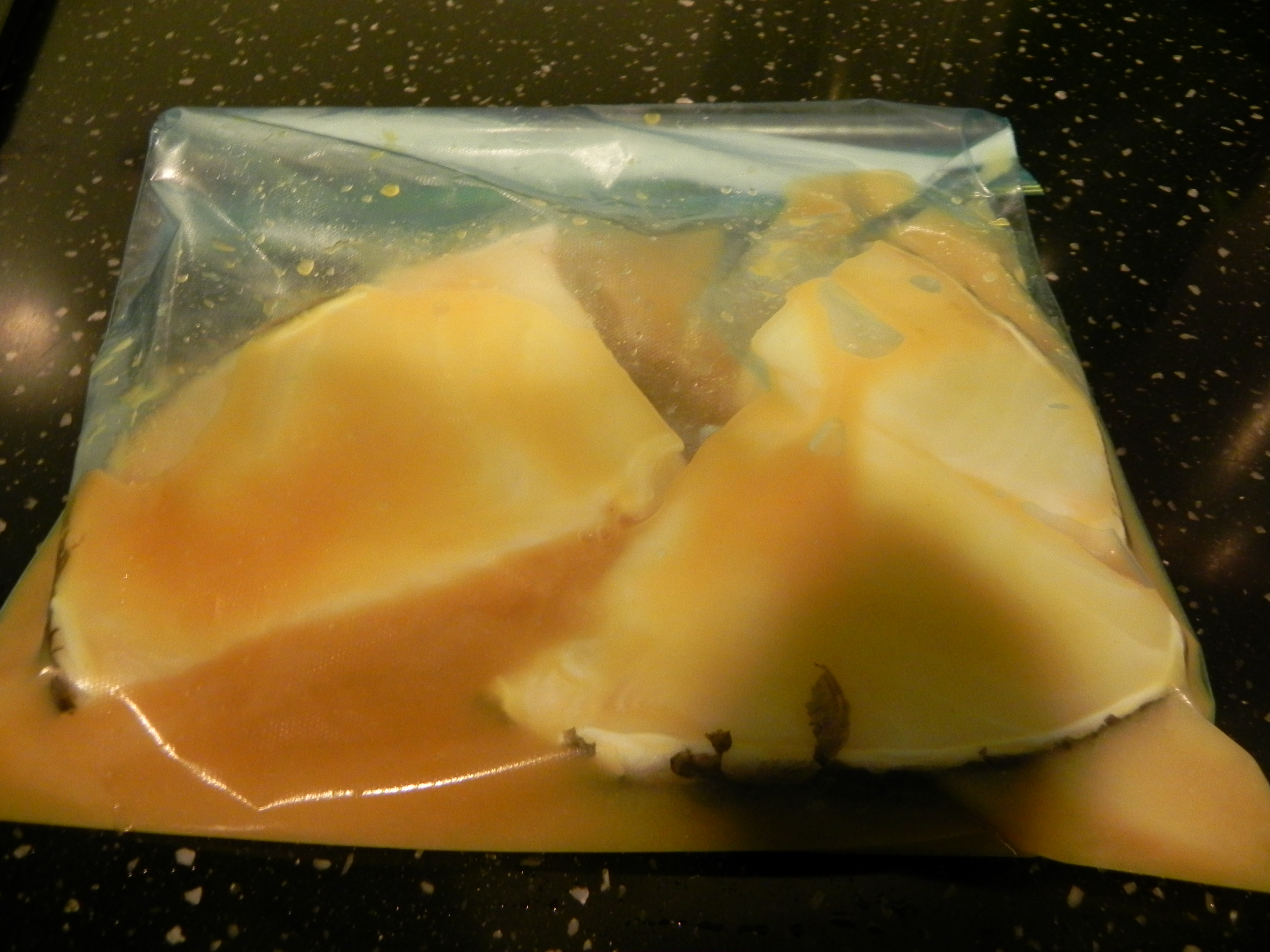
600g cod fillets in miso marinate in ziplock bag

600g cod fillets in miso marinate in ziplock bag

I placed the cod fillets in a ziplock bag & poured in the cooled marinate and left it in the fridge for 3 full days. turning over once in the morning & once in the evening to ensure all sides were fully coated.

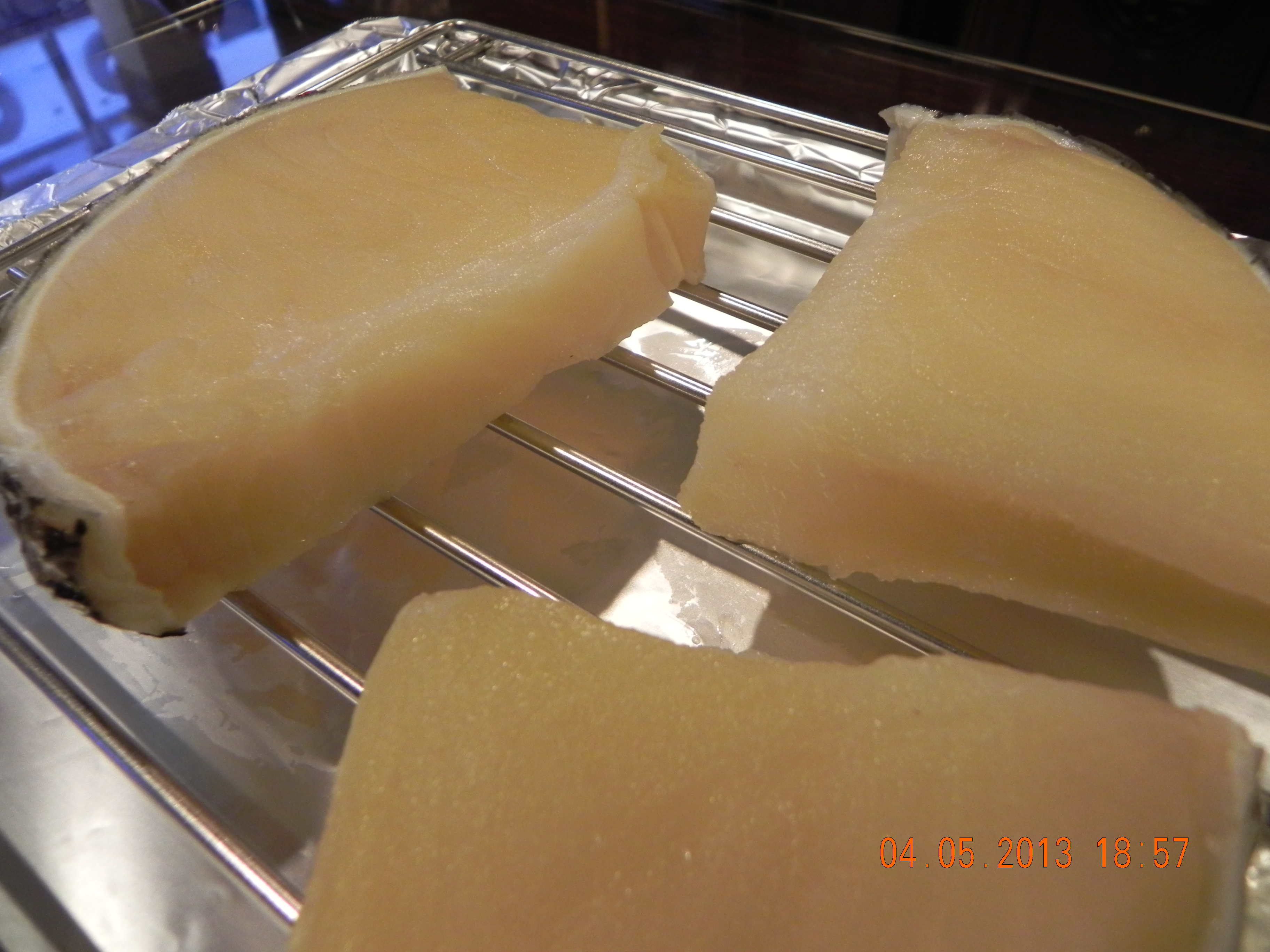
miso cod - pretty light translucent yellow colour

miso cod – pretty light translucent yellow colour

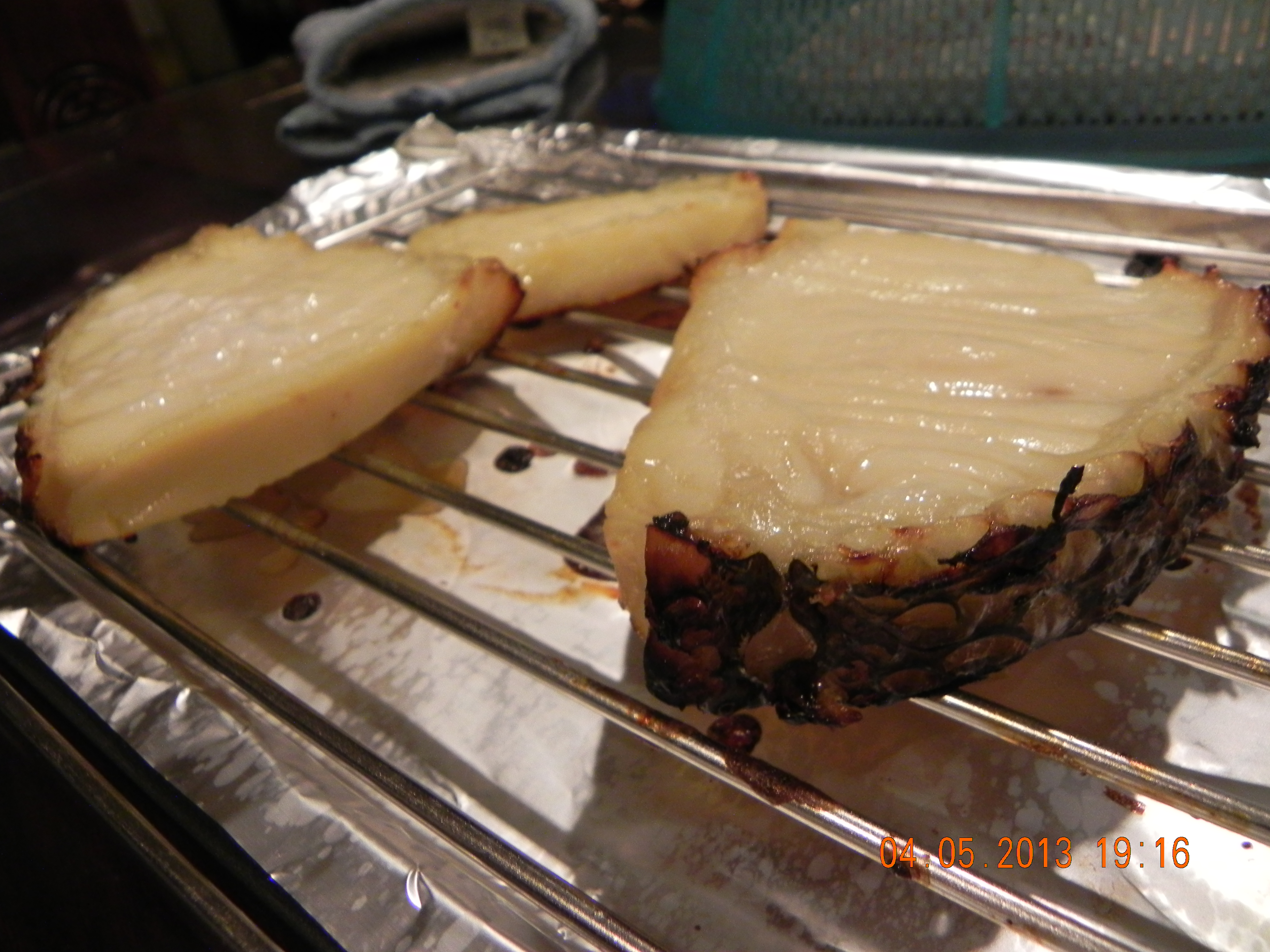
After 3 days I removed the cod fillets from the miso marinate, patted dry with kitchen towels & placed the cod fillets on a rack over an aluminium foil lined baking tray. The miso cod is totally coated with a pretty light translucent yellow colour. 🙂

Nobu miso cod - the usual lovely firm, bouncy, slightly oily cod texture & full of flavours

Nobu miso cod – the usual lovely firm, bouncy, slightly oily cod texture & full of flavours

DSCN4627 DSCN4620

I preheated the oven to 250degC on the circulation function, and put in the miso cod for 4 minutes. I then switched to the grill function at 210degC (the maximum for my oven for grill function) and roasted the cod for 3 minutes then turned over for another 4 minutes – a total cooking time of 11 minutes.

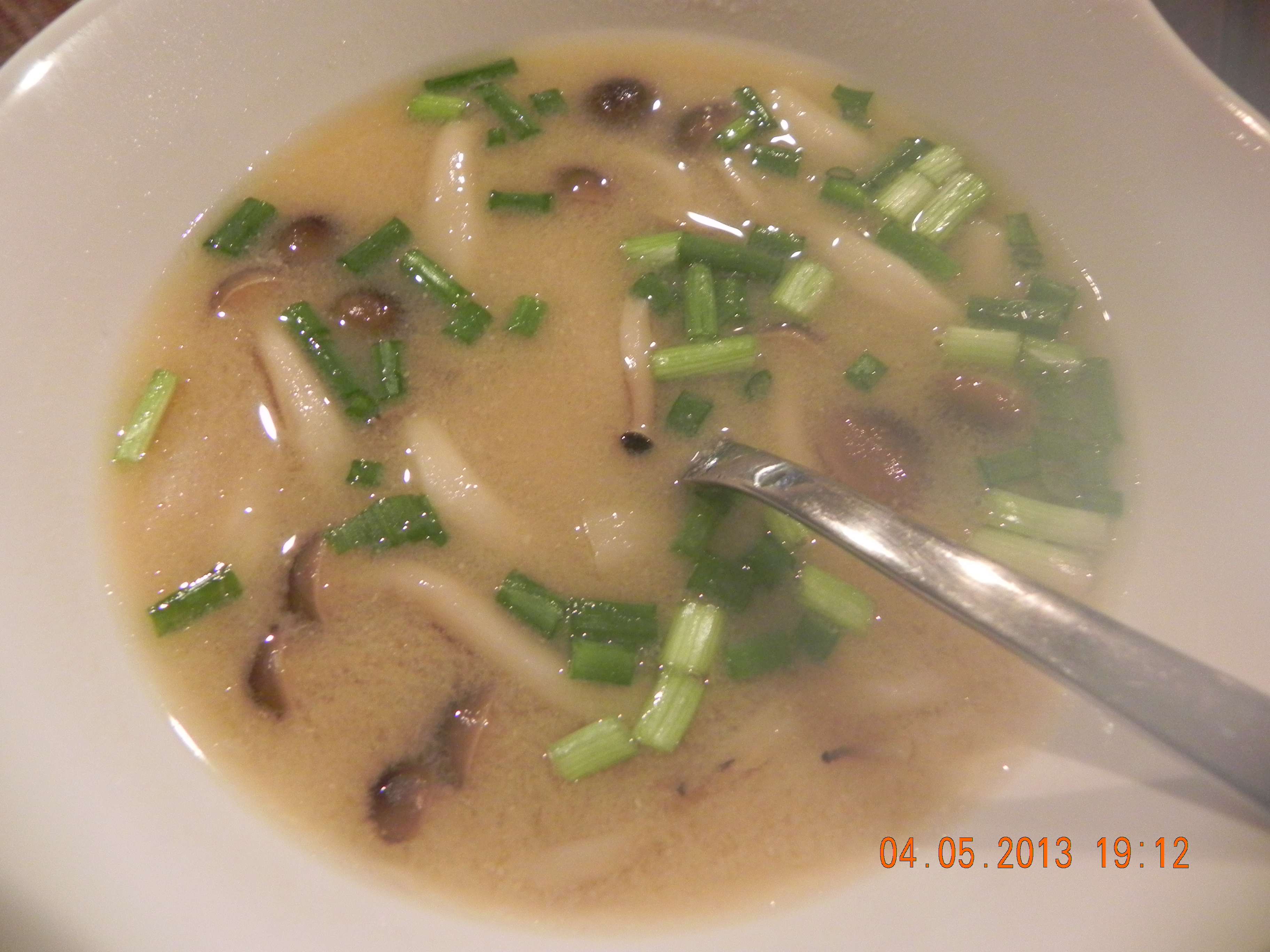
miso soup with shimeji mushrooms & garnished with scallions

miso soup with shimeji mushrooms & garnished with scallions

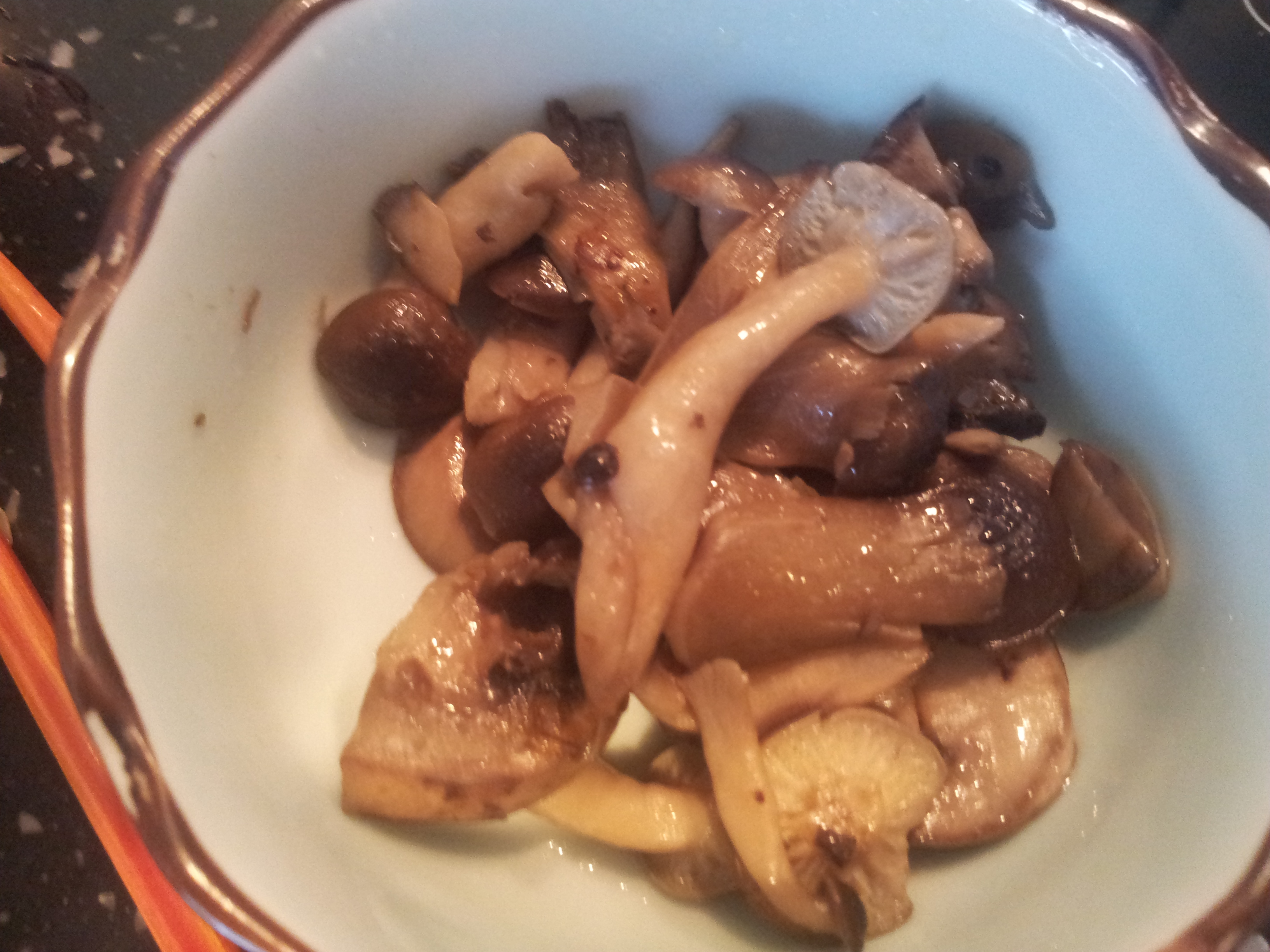
and the used miso marinate? why discard it? it was full of flavours from the cod & miso. I cut & threw in 1 packet of 200g shimeji mushrooms from China (these were selling S$0.65 at Sheng Shiong!), added some chicken stock & water to taste and cut some stalks of scallions for garnishing. nice miso soup! 🙂

c.h.e.f andy

Ingredients:

  • 500g cod fillet 

for miso marinade-

  • 80ml mirin
  • 80ml sake
  • 1 tbsp heap miso paste
  • 1 tbsp flat sugar

Directions:

  1. heat saké and the mirin to dissolve the miso and sugar, stirring constantly so that the bottom of the pan doesn’t burn. cool down marinade mix to room temperature.
  2. place cod fillets in a ziplock bag & pour in the cooled marinate and leave in chiller for 2days. turning over once in the morning & once in the evening to ensure all sides are fully coated.
  3. remove cod fillets from miso marinade & place cod fillets on a roasting rack lined with aluminium foil at the bottom.

  4. roast cod for in 250degC oven for 12mins..

Cream of Cauliflower Soup

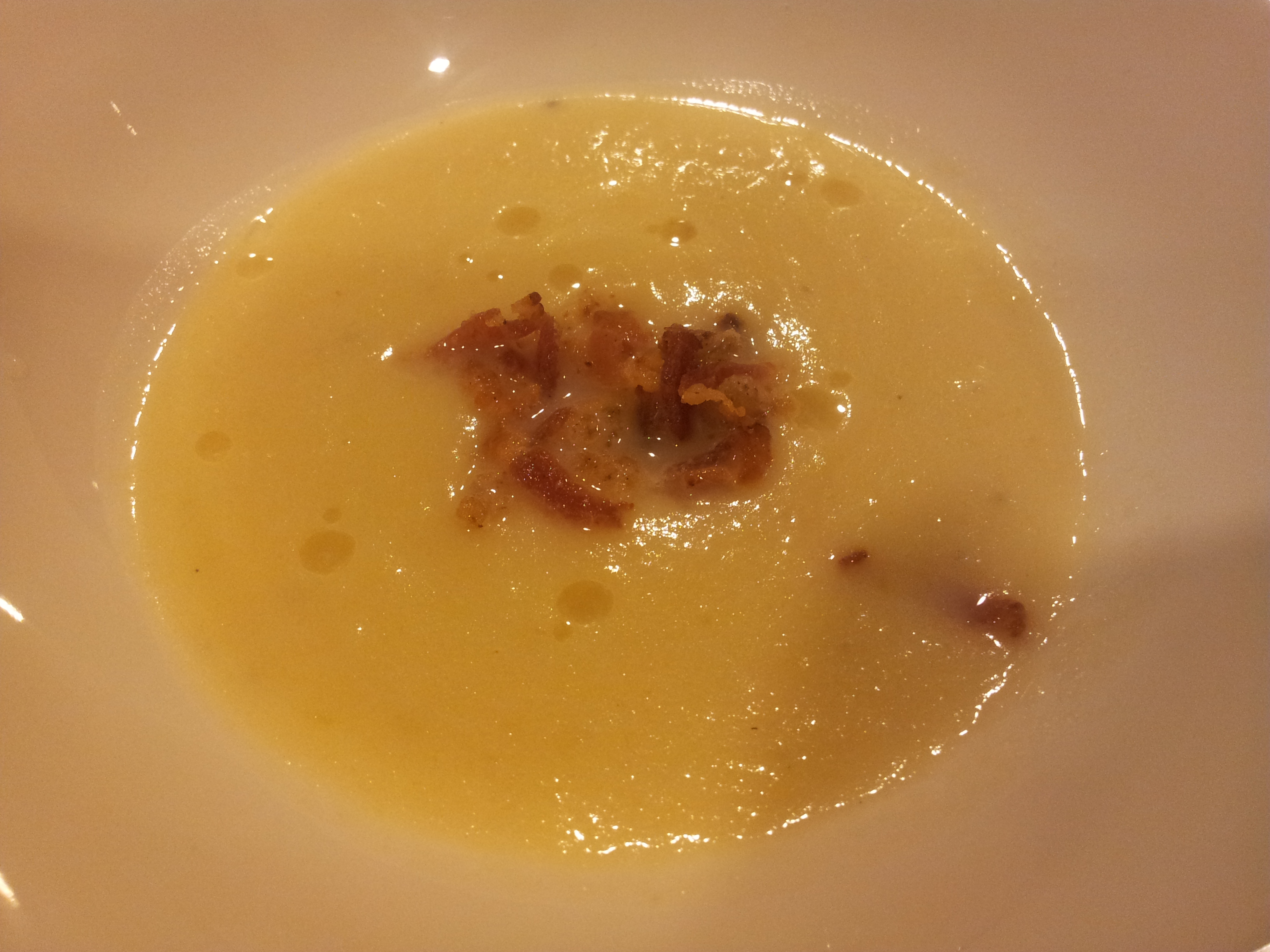
20130326_230301

cream of cauliflower soup

having tasted some early successes in my creamy mushroom soup venture, I thought since I am already down the path of using the blender (which I had thus far mostly avoided to do) why not trail further and try other soups. after all whether it is blending mushrooms or blending potatoes, leeks, cauliflowers etc, it cannot be too far off. and so far my faith has been rewarded. 🙂

my next venture is this beautiful cream of cauliflower soup recipe, again from none other than Chef John of Foodwishes.com. I am falling in love with this guy.

I first sweated the celery & yellow onions for 5-6minutes in a soup pot with some olive oil over medium heat until the onions turned translucent. Then I cut the cauliflowers in small pieces, threw in a potato that has been peeled and quartered, then threw in the cauliflowers. I then added 5 cups of vegetable stock & 5 cups of water enough to cover the cauliflowers, bring to boil & turn down the heat to medium low and simmer for 30 minutes. That’s when the potatoes were “smashable” – it would collapse when you pushed it against the wall of the pot. I let  the soup cooled down & then blended in batches and pureed to a smooth velvety texture. I then added sea salt to taste, and the soup was basically done. I added the heavy cream when I heated up the soup again just before serving. 🙂

20130326_231330

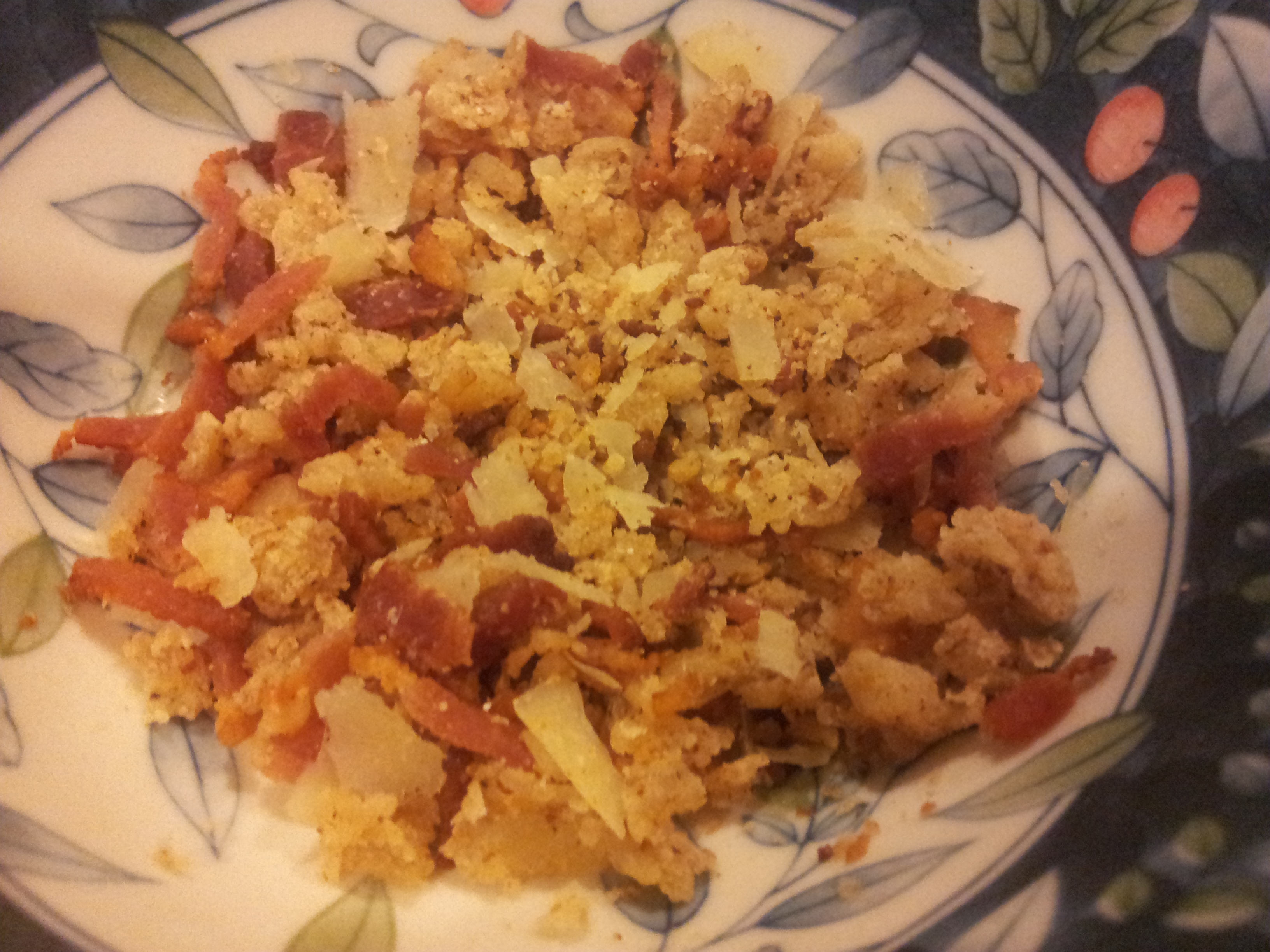
bacon tip gremolata

for the bacon gremolata, I followed Chef John’s concoction – first frying cut bacon to crisp, then added fresh bread & toasted it in the bacon fat on low heat until golden & crisp  to make breadcrumbs. I then added lemon zest and mixed them as in above picture.

20130327_104152

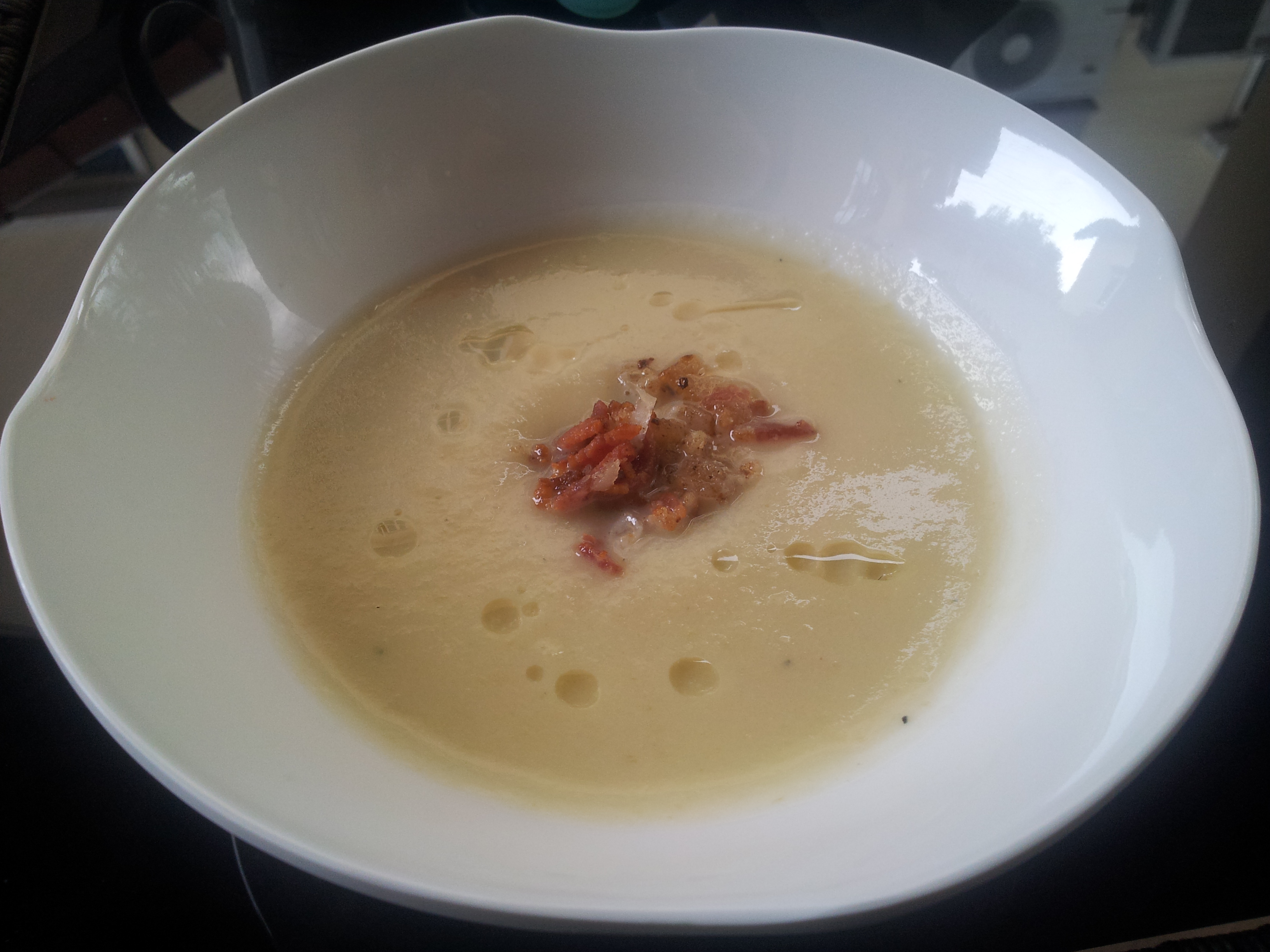
cream of cauliflower soup

I then served the soup with the bacon topping & few drops of truffle oil. My wife & daughter both liked this soup. I must say the bacon gremolata made quite some difference – the saltiness of the bacon & the crisp texture went very well with the soup and fragrance of the truffle oil. 🙂

c.h.e.f andy

Ingredients:

  • 1/2 a cauliflower (about 400g)
  • 2 ribs celery chopped
  • 1/2 yellow onion chopped
  • 1 potato peeled & quartered
  • 5 cups of vegetable stock
  • 5 cups water
  • 2 tbsp heavy cream

for the bacon gremolata:

  • 2 streaky bacon cut to small pieces
  • 1 slice of fresh bread to make 30g of breadcrumbs
  • 2 tsp lemon zest
  • 1 tbsp chopped parsley (I did not use in the above photos)

Directions:

  1. Cook the soup – sweat the celery & yellow onions for 5-6minutes in a soup pot with some olive oil over medium heat until the onions turn translucent. cut the cauliflowers in small pieces, throw in a potato that has been peeled and quartered, then throw in the cauliflowers. add 5 cups of vegetable stock & 5 cups of water enough to cover the vegetables, bring to boil & turn down the heat to medium low and simmer for 30 minutes. when potatoes are “smashable” – it will collapse when you push it against the wall of the pot – cool down & then blend soup in batches in a blender and puree to a smooth velvety texture. add sea salt to taste, and soup is basically done. add heavy cream after heating up again just before serving.
  2. Prepare the bacon gremolata – fry bacon to crisp. add fresh bread & toast in the bacon fat on low heat until golden & crisp  to make breadcrumbs. remove & cool. add lemon zest to bacon tips & breadcrumbs and mix them.
  3. add the bacon topping & few drops of truffle oil when serving the soup

Basque Seafood Soup

basque seafood soup

basque seafood soup

This a very enjoyable, intense, tasty soup!

I had it at La Cicala with my son in Aug2012, and thought I would do this. I looked up the internet and found this basque seafood soup recipe.

My family use a fair amount of prawns mostly in pasta & some Chinese dishes, and used to discard the shells & heads. For this dish, I save the heads & shells and boil them for 3 hours. You could blend the shells & liquids in a blender in batches, but it required much effort and at the time I was not yet using blender much, so I just passed the liquids through a sieve & pushed hard, and then disposed the boiled heads and shells. That provided the prawn stock for the bisque. I learned then you needed shellfish or crustaceans to give the bisque that depth of flavour & intensity. 🙂

basque seafood soup

basque seafood soup

I next prepared the vegetable base. I sautéed the leeks, onion and carrot for 5 minutes to soften, stirring frequently. I turned to high heat and added the prawn stock, and then added brandy (it might flame as the saucepan was very hot). I then added white wine & diced tomatoes, just 1 teaspoon of tumeric for colour. I then turned to low heat & let the soup simmered for 40minutes to bring out the vegetable base sweetness. Then I add chicken or vegetable stock and add sea salt to taste.

Before serving I added the prawns and squids to poach them, and lastly the mussels for just about 3minutes. I then take out the prawns, squids, mussels and distributed them to individual bowls before topping them up with soup, and serve.

c.h.e.f. andy

Ingredients:

  • heads & shells from 1 kg small or medium prawns – serves 8
  • 2 leeks chopped
  • 1 carrot chopped
  • 1 yellow onions chopped
  • 1/4 cup brandy
  • 1/2 cup white wine
  • 4 cups vegetable or chicken stock
  • 1 large tomato diced
  • 1 tsp tumeric
  • sea salt to taste
  • 8 medium prawns (or 16 small prawns) – about 300g
  • 1 large squid skin removed cut into rings (about 16 rings) or into large curls with cross-cuts (8 pieces)
  • 8 large shelled mussels or 16 small ones

Directions:

  1. Prepare prawn stock for the bisque – boil the heads and shells for 3 hours. blend the shells & liquids in a blender in batches OR pass the liquids through a sieve & push hard, and then dispose the boiled heads and shells.
  2. Prepare vegetable base for soup – sauté the leeks, onion and carrot for 5 minutes to soften, stirring frequently.  turn to high heat and add the prawn stock, and then add brandy (it might flame as the saucepan is very hot).  add white wine & diced tomatoes, &  tumeric for colour. turn to low heat & let the soup simmer for 40minutes to bring out the vegetable base sweetness. add chicken or vegetable stock (if required) and add sea salt to taste.
  3. Before serving, add the prawns and squids to poach them, and lastly the shelled mussels for just 3minutes. take out the prawns, squids, mussels and distribute to individual bowls before topping them up with soup. Serve.


Baked Mushroom Risotto

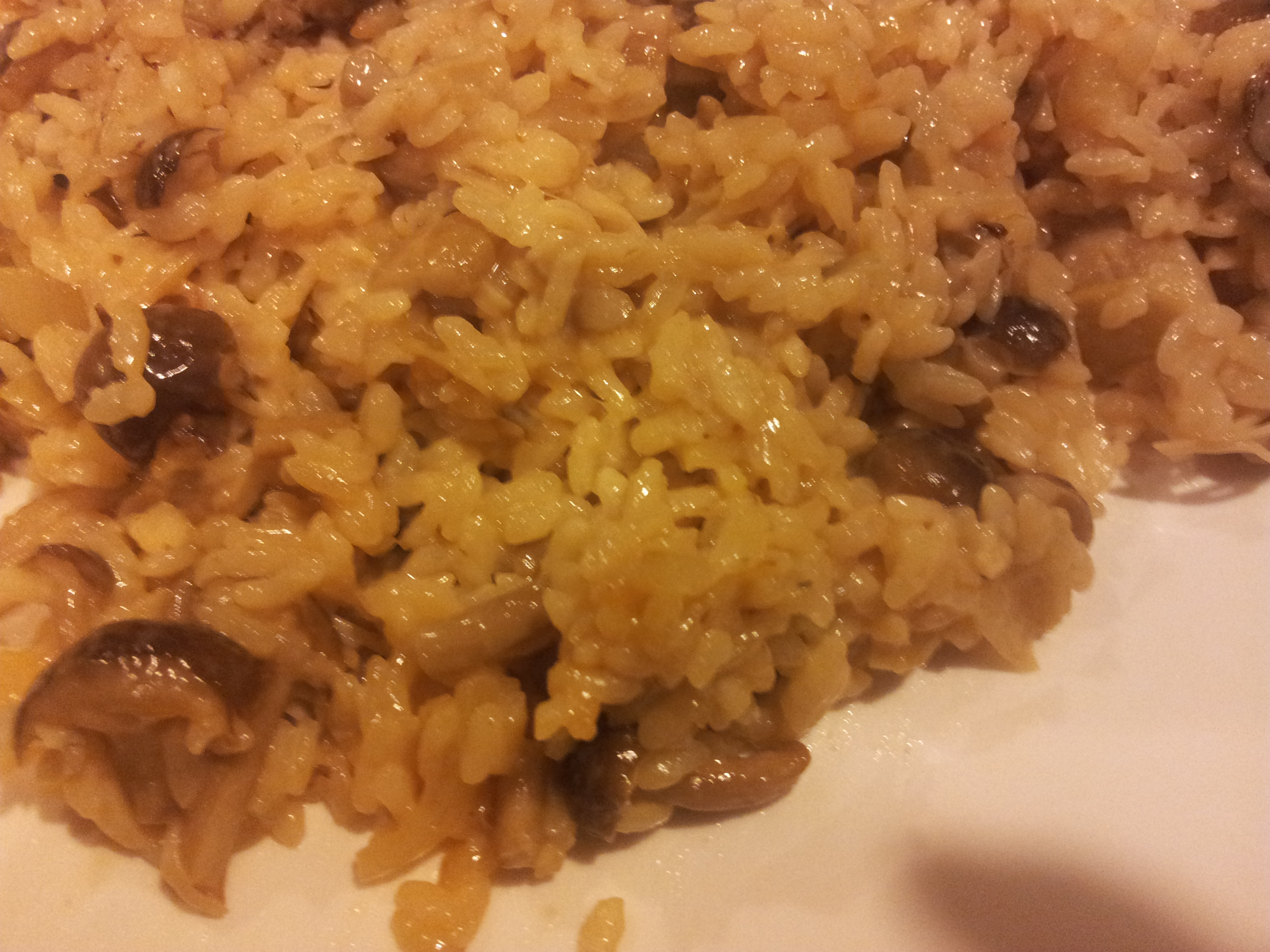
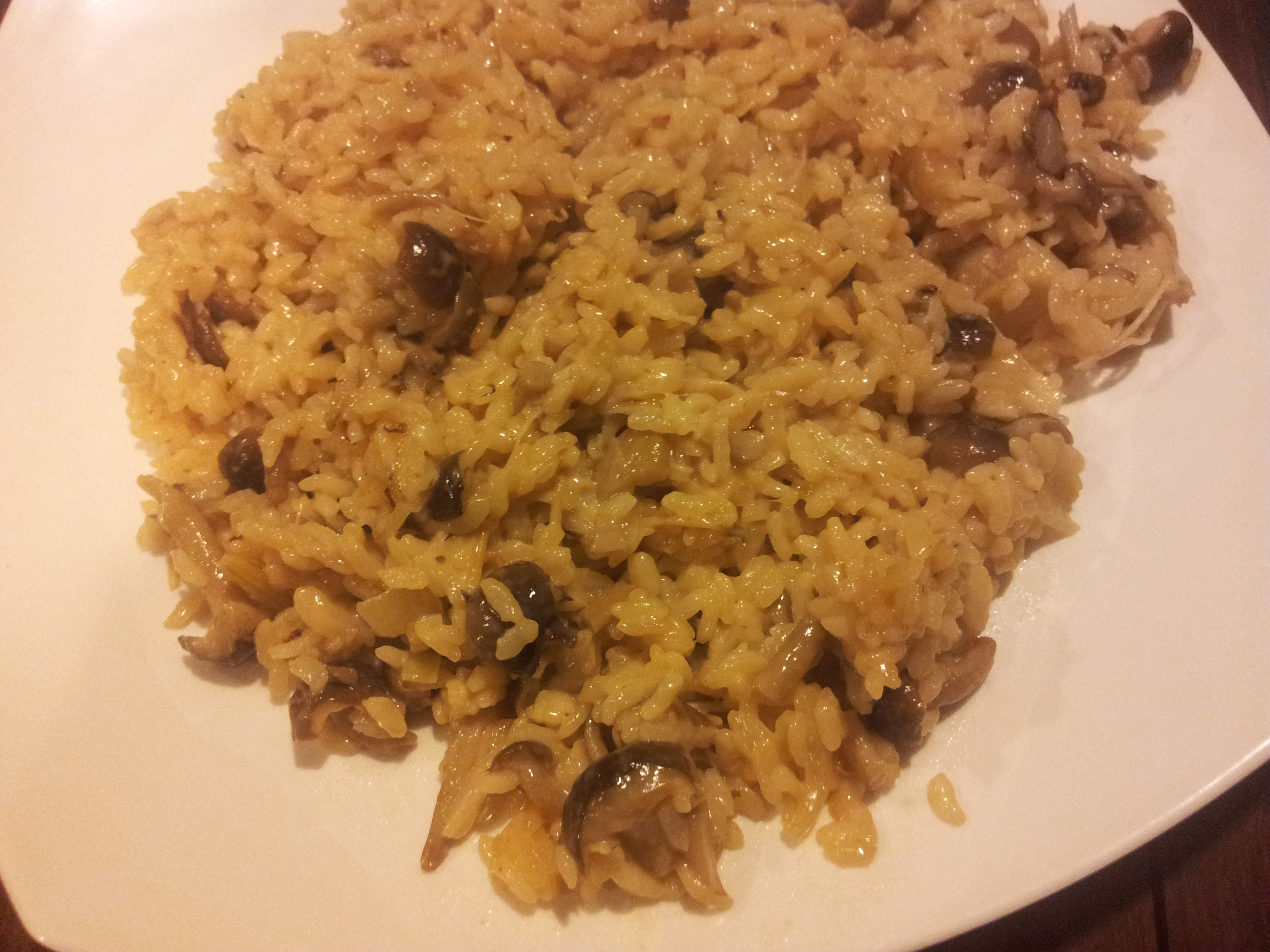
my first risotto - a funghi risotto

my first risotto – a baked mushroom risotto

cook my first risotto last evening!

It was just so satisfying but also spoke volumes of Foodwishes.com Chef John’s baked mushroom risotto recipe that I could reproduce such a great dish with ease even though this was my very first risotto. 🙂

I have the bulk of a 2.5kg bag of USA 松鹤 (no english name but I guess it is matsutsuru in literal translation?) Shakaku premium rice – which I think is a medium grain rice – lying around. I bought these in Giant hypermarket when I was trying out a paella mixta for a homecooked (kind of Spanish theme) dinner for friends as I didn’t know where to get aborio rice (still don’t!). Though the paella turned out kind of ok taste-wise (quite good tasting) based on the recipe I used, the texture was really quite far out. Anyhow I have not found other use for the rice and I don’t quite fancy cooking paella mixta that often when it is not quite ideal in the visual & texture departments & also it takes a bit of effort to prepare (when c/w this mushroom risotto which requires almost no effort!).

So I actually decided only at very last-minute to cook this & it was done like in 35minutes (only because you needed to put it in the oven for 16minutes).

I cut and washed the only mushrooms I had in the fridge (a packet of 150g shimeji mushrooms and another packet of 100g enoki mushrooms). I put these in an oven-proof skillet with 1 chunk of butter (20g) and a large pinch of salt on high heat and cooked/sweated for 10 minutes on medium heat OR until the liquids evaporated off, then I added chopped yellow onions and cooked for a few minutes until softened. Next I added a cup of the Shakaku rice, stirred to coat the rice completely and then added 1 cup of chicken stock, brought it to boil and dropped to low heat and stirred. When the liquids were evaporated, I added another cup of chicken stock and when it started to simmer, I placed the skillet in a 205degC preheated oven for exactly 16minutes (following Chef John’s instructions to the dot..it had been kind of fool-proof which explained my relative success thus far..no secrets haha!) 🙂

my first risotto - a funghi risotto

my first risotto – a baked mushroom risotto

I then returned the skillet to the stove, added another cup of chicken stock, brought to boil and stirred on low heat. At this point, as Chef John said, you needed to be your own boss & decide how you wanted the risotto to turn out. I tasted the rice, flavour was great (quite super really!) 🙂 very slightly not cooked-through the centre, so I added another cup of chicken stock and stirred. Last I added 2 tablespoon of heavy cream and sea salt to taste. The result was a truly marvellous dish – creamy but not overly, with very nice infused mushroom flavour, just like any good funghi risotto I would have gotten in a good restaurant. 🙂

It was far better than I expected as I was also not certain whether my Shakaku rice would do for this recipe. So yes it really made my day!

c.h.e.f andy

Ingredients:

  • 150g shimeji mushrooms
  • 100g enoki mushrooms
  • 1/2 yellow onion
  • 20g butter
  • sea salt & pepper to taste
  • 4 cups chicken stock

Directions:

  1. cut and wash the mushrooms, put these in an oven-proof skillet with 1 chunk of butter (20g) and a large pinch of salt on high heat and cook/sweat for 10minutes on medium heat OR until the liquids evaporated off. add chopped yellow onions and cooked for a few minutes until soften. add a cup of washed Shakaku rice, stir to coat the rice completely and then add 1 cup of chicken stock, bring to boil and drop to low heat and stir. When the liquids evaporate off, add another cup of chicken stock and when it started to simmer, place skillet in a 205degC preheated oven for exactly 16minutes.
  2. return skillet to stove, add another cup of chicken stock, bring to boil and stir on low heat.  taste the rice for texture & flavour to see if it is cooked to your preference, add another cup of chicken stock (if required) and stir. add 2 tablespoon of heavy cream and sea salt to taste. Serve.

Beef Meatballs Arrabiata Spaghetti

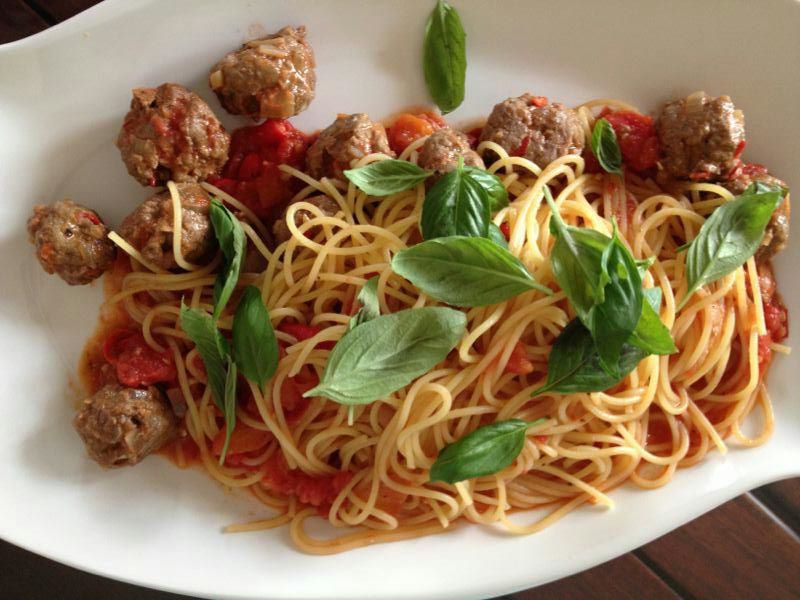
beef meatballs arrabiata spaghetti

beef meatballs arrabiata spaghetti

I like arrabiata (spicy tomato) sauce though second to alio olio with white wine. So this is an easy variation from the pork rib & belly pork arrabiata but require a decent meatball recipe. I very quickly found a simple one for my use on the internet.

I mix 400g of minced beef, 2 eggs, parmesan cheese, parsley, minced garlic, breadcrumbs in a large bowl,  and season with salt and pepper to taste.  I heat some oil in large pan over medium-high heat. I roll the mix in 2.5cm balls and fry until golden brown, but not cooked through completely, then remove to a plate lined with paper towels.

For the arrabiata sauce, I fry to soften some chopped yellow onions in a medium saucepan, then add 1 can of diced tomatoes and sauce & add some sugar. I the put in the meatballs and add light soy sauce, and let it slow-cook in low fire for 1/2 hour.

The spaghetti is done in the usual way according to timing instructions. As with my other pasta dishes, I then heat up the browned garlic cloves & olive oil (set aside earlier) in a pan, add 1 cut chilli padi and fry a little, add in the meatballs with the tomato sauce, bring to boil, turn off the fire, mix in the spaghetti and toss, and then add sea salt to taste.

c.h.e.f andy

Ingredients:

  • 400g minced beef
  • 2 eggs
  • 1/4 cup grated parmesan cheese
  • 2 tsp minced garlic
  • 1/4 cup chopped parsley
  • 1/4 cup breadcrumbs
  • 1 can (400g) diced tomatoes with sauce
  • salt and pepper
  • 1/2 chopped yellow onion
  • 1 tbsp sugar
  • 1 tbsp light soy sauce

Directions:

  1. Prepare the garlic olive oil – stir-fry whole garlic cloves on low heat to brown the garlic & flavour the oil.
  2. Prepare the spaghetti – add some salt & oil to water and boil the spaghetti according to timing instructions & drain in a colander.
  3. Cook  – mix 400g of minced beef, 2 eggs, parmesan cheese, parsley, minced garlic, breadcrumbs in a large bowl,  and season with salt and pepper to taste.  heat some oil in large pan over medium-high heat. roll the mix in 2.5cm balls and fry until golden brown, but not cooked through completely, then remove to a plate lined with paper towels. fry to soften some chopped yellow onions in a medium saucepan, then add 1 can of diced tomatoes and sauce & add some sugar. put in the meatballs and add light soy sauce, and let it slow-cook in low fire for 1/2 hour. heat up the browned garlic cloves & olive oil (set aside earlier) in a pan, add 1 cut chilli padi and fry a little, add in the meatballs with the tomato sauce, bring to boil, turn off the fire, mix in the spaghetti and toss, and then add sea salt to taste.

Crabmeat Spaghetti in Pink Sauce (Creamy Tomatoes)

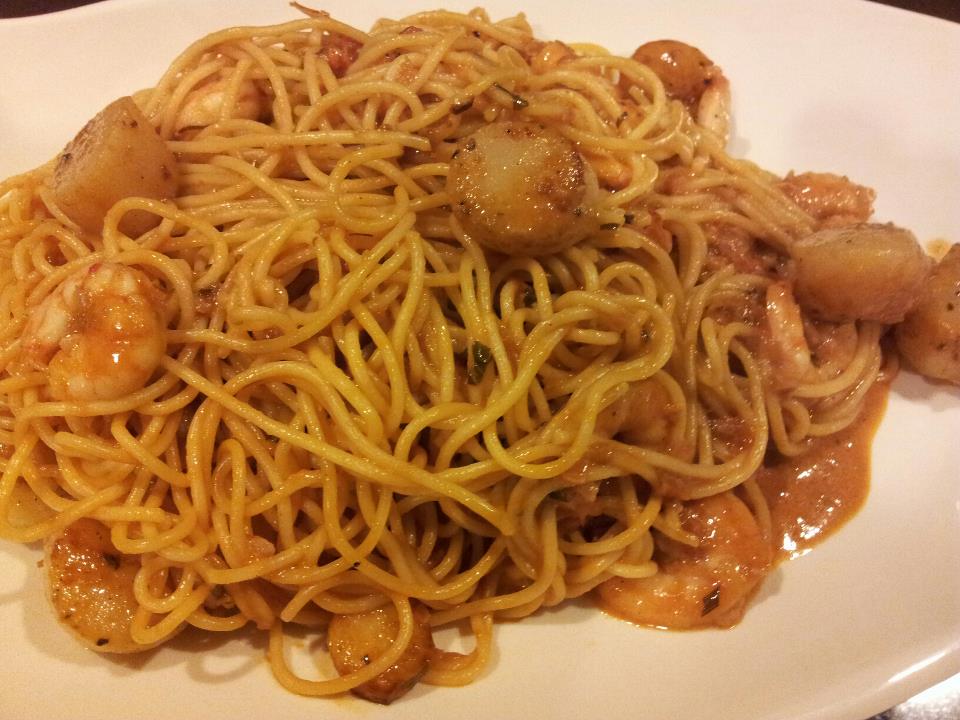
crabmeat spaghetti with prawns & scallops in pink sauce (creamy tomatoes)

crabmeat spaghetti with prawns & scallops in pink sauce (creamy tomatoes)

N.B. = did an excellent crab linguine in pink sauce with medium prawns & pan-seared scallops using this recipe on 11.1.2014. 🙂

One of my favourite pasta is the crab meat linguine in pink sauce. Many moons ago, when Chef Valentino was still working (I guess he was a partner) in Cantina which was a short stone-throw from my place, we dined there a few times and also “da bao” (take-out) his crab meat linguine in pink sauce.

The good Chef left & set up his own Ristorante da Valentino at Jalan Binga and later shifted to the much larger premises it is currently located at Turf City. Some months back, a friend & his wife invited me for a lunch there, and I enjoyed immensely the burrata cheese and also relished my old-time favourite – but this time a squid-ink seafood linguine in pink sauce.

I thought I would give it a go myself, so I googled and assembled this recipe, tried it and was ok the first time, and I was able to repeat the dish w/o difficulty.  The result is in the picture above, which I made for my friends at one of my homecooked dinners. It is nothing even close to what Valentino serves, but still it is a pretty nice pasta. 🙂

To make the sauce, I saute minced garlic and 1 small onion (diced) in olive oil on medium heat. I then add chopped basil (I have fresh basil from the garden), 1 can of diced tomatoes with sauce, sugar, dried oregano, sea salt & coarse black pepper, boil for about 5 minutes. I then turn off the fire and mix in the heavy cream & butter.

pink sauce (creamy tomatoes)

pink sauce (creamy tomatoes)

The spaghetti is cooked in the usual way following the timing instructions. For the scallops (optional), I pan sear them first (see recipe); and likewise for the prawns I stir-fry them in olive oil first to almost cooked. All these can be set aside first and toss together when ready to serve the dish. I heat up the pink sauce, add the prawns & drained crabmeat, cook for few minutes, then turn off the fire, add the spaghetti & toss, and then add the seared scallop, and serve.

c.h.e.f andy

Ingredients:

  • 250g crabmeat drained (I use frozen crab claws from NTUC Fairprice)
  • 12 Hokkaido scallops (I use frozen scallops from Sheng Shiong)
  • 15 pieces of medium prawns (shelled)
  • 2 tbsp olive oil
  • 1 clove minced garlic
  • 1 small yellow onion diced
  • 1 can diced tomatoes
  • 1/2 cup chopped fresh basil
  • 1 tsp sugar
  • 1/4 tsp dried oregano
  • 1/2 cup heavy cream
  • 1 tablespoon butter
  • sea salt & coarse black pepper to taste

Directions:

  1. Prepare the pink sauce – saute minced garlic and diced onion in olive oil on medium heat.  add chopped fresh basil, 1 can of diced tomatoes with sauce, sugar, dried oregano, sea salt & coarse black pepper, boil for about 5 minutes. turn off the fire and mix in the heavy cream & butter.
  2. Prepare the scallops (optional) – see pan-seared scallop recipe.
  3. Cook the dish – stir-fry the prawns (shelled) in olive oil first to almost cooked. cook the spaghetti in the usual way following the timing instructions. heat up the pink sauce, add the prawns & drained crabmeat, cook for few minutes, then turn off the fire, add the spaghetti & toss, and then add the seared scallop, and serve.

Steamed Razor Clams with Garlic Oil

steamed razor clams with garlic - beautiful pic taken by Jeanette at 6.10.2012 homecooked dinner

steamed razor clams with garlic oil – beautiful pic taken by Jeanette at 6.10.2012 homecooked dinner

See also Chef=cookhangouteatfun.

Steamed razor clams is a common dish served in many seafood restaurants. I had many times very good ones at Ah Yat Turf City and couple times at Long Beach Dempsey. These days, cooking methods & processes are quite precise and I seldom come across a live fish that is not steamed just right (in older times we get undercooked & overcooked fish). The same with razor clams.

No recipe is needed to cook this dish really. It is just a matter of getting the razor clams, cleaning them (which is a big hassle) and then steaming PLUS doing the lightly browned garlic oil to drench over them.

I get my IQF (Individual Quick Freeze) razor clams from Giant hypermarket & Shop n Save (these days you get IQF everything – mussels, scallops, fish fillets etc). Normal price is S$11.95 for one 500g packet containing 8 to 11 large razor clams. Sometimes I get them during sales and it can be S$8.95, so just about $1 per clam. At the restaurants, you get live ones & will on average pay S$8++ (about $9.40) per clam.

Cleaning as I said is a hassle. I use kitchen scissors to cut away the blackish sag of innards & clean each clam thoroughly in slow running water (there will be a lot of soil & you will feel like you are eating sand if you don’t clean them). For the garlic oil, I just fry minced garlic on low heat with oil to brown them & then set aside the lightly browned garlic with oil in a bowl.

To steam the clams, you can use the usual steamer for about 6 minutes (just make sure you are able to remove the plate holding the clams out of the steamer when it is very hot). I find it easier to just poach the clams (w/o the shell) with the garlic oil & add 1 tablespoon light soy sauce in a covered saucepan for a few (about 4) minutes. Then I remove the steamed clams, place each on an individual cleaned 1/2 shell on a serving dish, and then spoon the garlic oil over the clams.

The result is the beautiful dish above.  I would say it is 95% as good as the restaurants that do them well, and better than those that can’t do them properly.

c.h.e.f andy

Ingredients:

  • 1x500g packet IQF (Instant Quick Freeze) razor clams – OR if you can get fresh ones that are not too costly
  • 3 tbsp minced garlic
  • 5 tbsp oil
  • 1 tbsp light soy sauce

Directions:

  • Prepare the clams – defrost, cut/remove from shell, cut away the blackish sags of innards & clean thoroughly, airdry in fridge. clean enough 1/2 shells to place the clams on.
  • Cook the clams – lightly brown the minced garlic so you have the garlic oil ready in a large saucepan. add the clams & drizzle 1 tablespoon light soy sauce over it. Turn the fire to high to heat up & then quick lower to medium & cover for 4 minutes until the clams turned a white opaque colour (as in above picture). Turn off the fire, remove the clams & place each on cleaned individual 1/2shells on a large serving dish. spoon the garlic oil over each clam & serve.
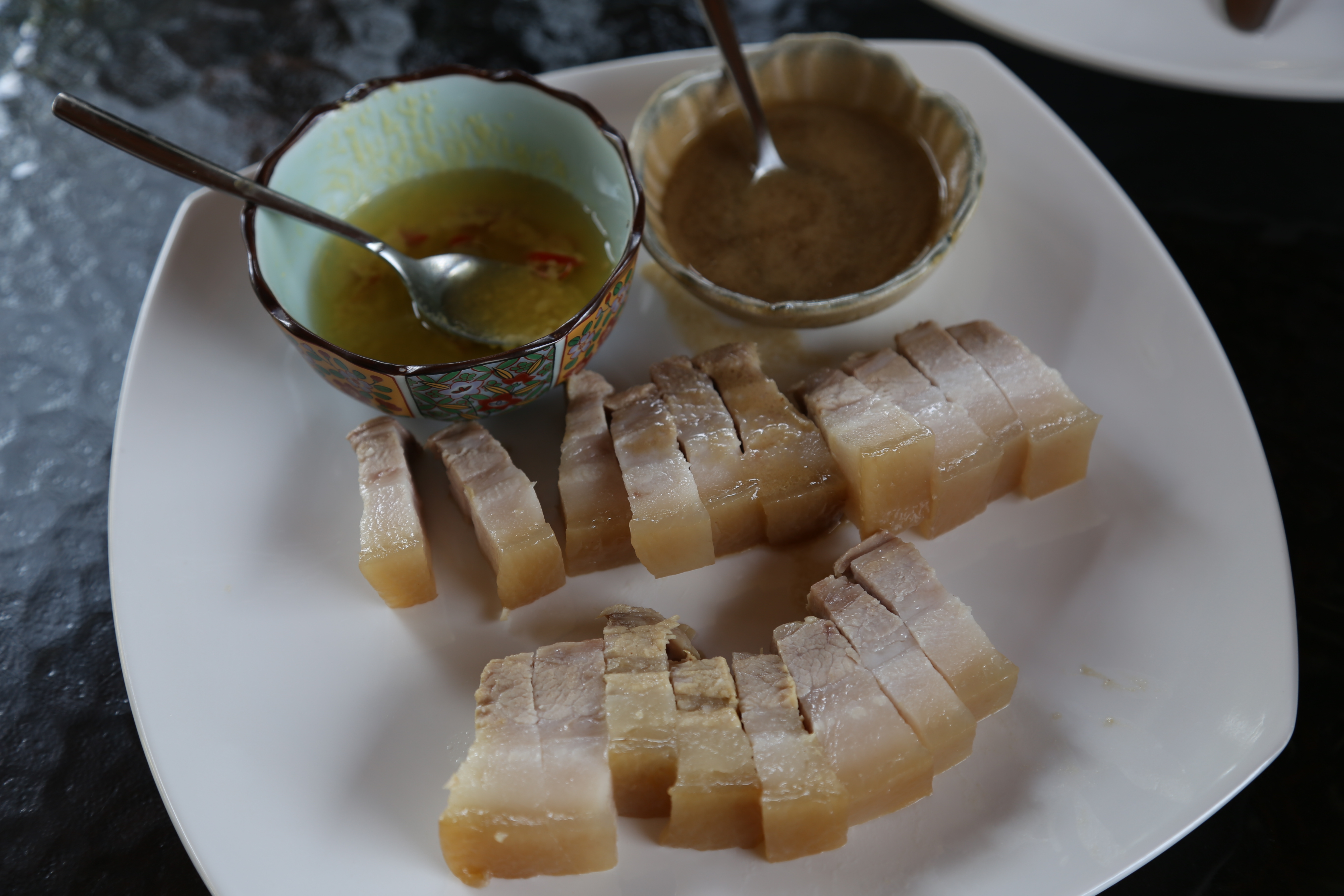
Oven Slow-roast Pork Belly

Image

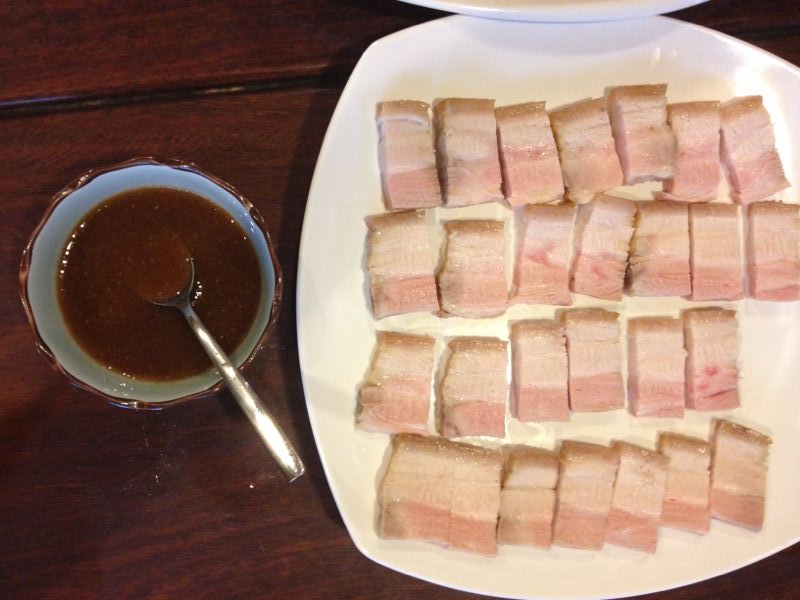
oven slow-roast pork belly

I have NOT been too successful when it comes to cooking belly pork. First, it is really not so healthy to be eating belly pork often & my family members are not really crazy over it. The more successful pork belly dish I have made is kakuni – Japanese slow-braised pork belly.

Anyhow I wanted a wider selection of dishes for my homecooked makan (meal) gatherings, so I still somewhat doggedly try out different cooking methods for pork belly. I find GR (Gordon Ramsay)’s crackling skin pressed pork belly too difficult to make, so I try out various slow-roast to get a dish that is good enough for my purpose.

The best version I have created is in the top picture. I did that when my youngest 19-year old daughter invited 14 friends to the house for lunch on the 3rd day of the recent Chinese New Year, 2013.

I use a square-cut block of belly pork, place it in boiling water for like 10seconds, then place it in cold water, wipe it clean & dry with kitchen towel or airdry in fridge. I then rub the belly pork with white sugar (but not the skin), place it in a baking dish skin-side up, drizzle Chinese old shaoxing wine (陈年绍兴酒) & then olive oil over it. I cover the baking dish with aluminium foil & place it in a preheated 175degC oven for 1/2 hr. I remove the dish from the oven, turn over the belly pork so it is skin-side down & drizzle 1 tablespoon light soy sauce, & letting the oven cool. I then preset the oven to 90degC on the low heat function and leave it for 3/4hr, turnover once again for another 3/4hr. So the total time is 2hrs.

The end result is the picture above, though the belly pork is looking pretty with a nice pink, it is fully cooked. That is my best production with this method so far.

Image

oven slow-roast pork belly

I tried it again for my recent gathering of friends, with a slight variation. Instead of the low heat function, I use the normal function still set to 90degC. The result is the one below. The texture of the fat & meat is still as good & soft, the skin is just very little bit tougher. One addition I made is the Spanish spicy mustard sauce. This is a really nice concoction & together with the original sauce from the belly pork (after passing through a sieve) made 2 very nice dipping sauce for the belly pork. 🙂

c.h.e.f andy

Ingredients:

  • 1 block square cut belly pork (about 350g)
  • 2 tbsp sugar
  • 1 tbsp Chinese old shaoxing wine (陈年绍兴酒)
  • 1 tbsp olive oil
  • 1 tbsp light soy sauce

For spicy Spanish mustard sauce:

  • 1 tsp dijon mustard
  • 1 tsp red wine vinegar
  • 1 cut chilli padi
  • 2 tsp olive oil

Directions:

  1. Prepare the belly pork – place it in boiling water for like 10seconds, then place it in cold water, wipe it clean & dry with kitchen towel or airdry in fridge.  rub the belly pork with white sugar (but not the skin), place it in a baking dish skin-side up, drizzle Chinese old shaoxing wine (陈年绍兴酒) & then olive oil over it.
  2. Cook the belly pork – cover the baking dish with aluminium foil & place it in a preheated 175degC oven for 1/2 hr. remove the dish from the oven, turn over the belly pork so it is skin-side down & drizzle 1 tablespoon light soy sauce, & letting the oven cool.  preset the oven to 90degC on the low heat function and leave it for 3/4hr, turnover once again for another 3/4hr. total time is 2hrs. remove from oven, rest & serve.
  3. Make spicy Spanish mustard sauce – put a teaspoon of dijon mustard in a small bowl, add 1 cut chilli padi, 1 teaspoon red wine vinegar, and 2 teaspoon olive oil. mix well.

Oven Roast Chicken

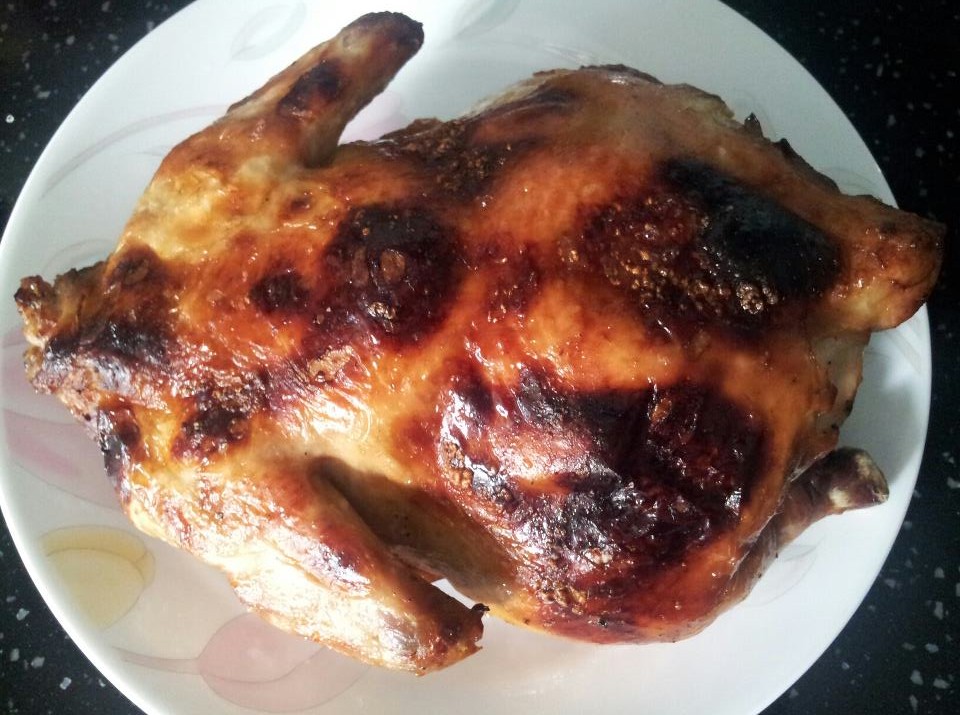
oven roast chicken

oven roast chicken

Before I discovered the brining technique (& now use often) for pan-roasted brined chicken breast, I was doing a rather good oven roast chicken. 🙂

It is really easy to do & require very little preparation effort.

First, I cut away the head & feet, wash clean thoroughly  & fold in the wings.  I usually leave the chicken on a rack to airdry in the fridge but you can dry it with kitchen towels.

Then I prepare a rub comprising seasalt, coarse black pepper and a dry herb mix (rosemary, basil, parsley flake etc). Of course you can use fresh herbs if you have them. Next I rub all over the chicken & the inside cavity. I then lift the skin (carefully w/o tearing)  & rub below the skin. I also inserted peeled garlic cloves under the skin. You can skip this if you like a nice skin as the garlic will made dark patches on the skin after roast as in above picture. Finally I rub oyster sauce on the chicken & then drizzle/rub olive oil over the skin (olive oil helps the skin not to get burnt). 🙂

I place the chicken breast-side up on a aluminium foil-lined baking tray in a preheated 175degC oven using the grill function for 25minustes. I then turn over the chicken and grill for another 20minutes.

I have been able to consistently reproduce very moist, tender & sweet roast chicken. 🙂

c.h.e.f andy

Ingredients:

  • 1.1kg chicken from Giant hypermarket (if you sue a 1.4kg chicken or other size you will have to try out the ove timing or I guess use a meat thermometer which I have not yet learned to use!)
  • 2 tbsp oyster sauce
  • 1 tbsp olive oil
  • 1 bulb of peeled garlic cloves

make a rub comprising:

  • 1.5 tbsp seasalt
  • 1 tbsp coarse black pepper
  • 2 tsp rosemary flakes
  • 2 tsp basil flakes
  • 2 tsp parsley flakes

Directions:

  1. Prepare the chicken – cut away the head & feet, wash clean thoroughly  & fold in the wings.   leave the chicken on a rack to airdry in the fridge  (or you can dry it with kitchen towels). Apply the rub all over the chicken skin & inside. lift the skin (careful not to tear) and rub under the skin. Insert the peeled garlic cloves under the skin (or you can skip this if you don’t want to have dark patches on the skin).
  2. Cook the chicken – place the chicken breast-side up on a aluminium foil-lined baking tray in a preheated 175degC oven using the grill function for 25minustes. turn over the chicken and grill for another 20minutes. remove from oven & let the chicken rests, and then debone or carve & serve.
Drunken Mussels with Orange Zest

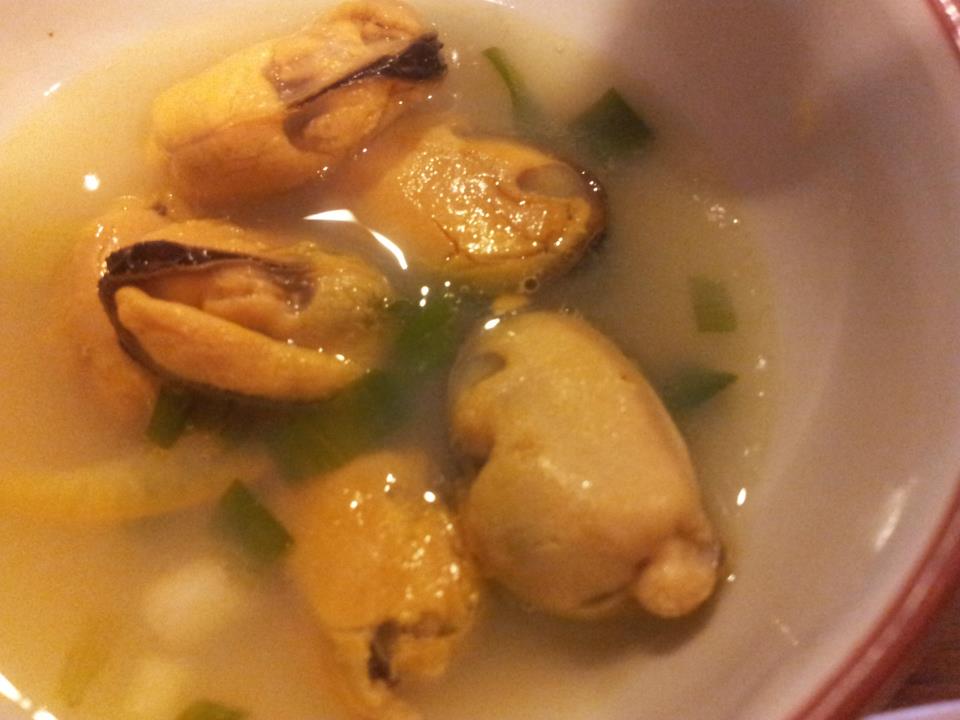
drunken mussels with wine & orange zest

drunken mussels with wine & orange zest

This is another very easy dish to make.

I bought shelled mussels from Sheng Shiong previously but they were not as good, plump and big as the ones sold at QB Food.

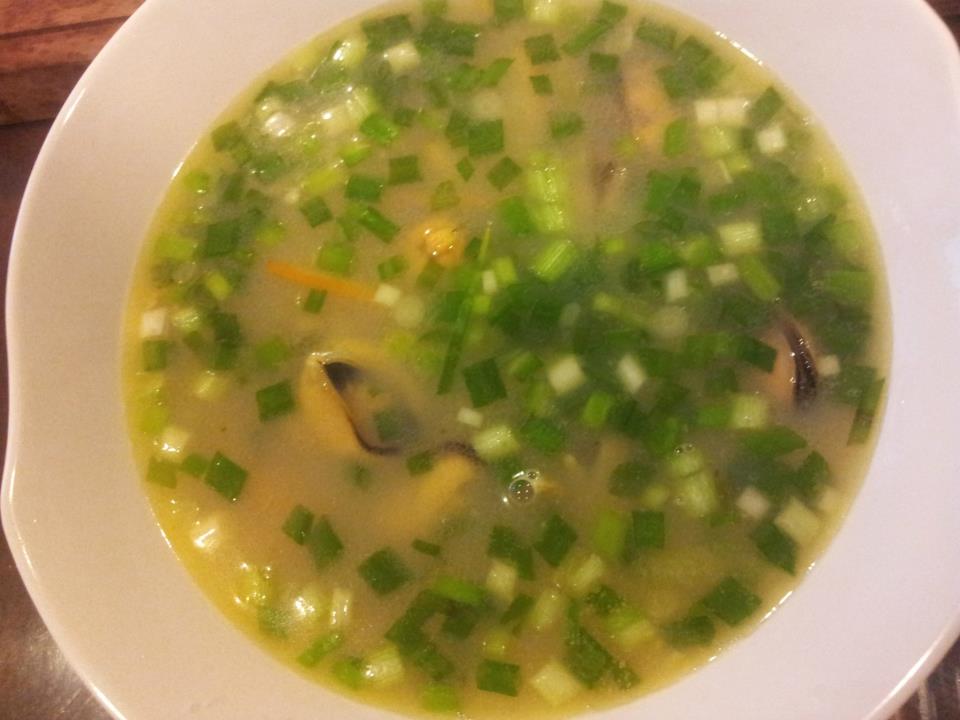
For this dish, you just need to add 20g butter in a soup pot, throw in chopped spring onions (I used the white parts and reserve the green portion for garnishing) & orange zest from 1/2 an orange and stir-fry for <1minute, add 1 cup of wine and 1 cup of chicken stock and bring to boil, and then add 200g mussels & cook for 1-2 minutes, then garnish with chopped parsley (if you have) – I only use spring onions here.

drunken mussels with wine & orange zest

drunken mussels with wine & orange zest

It’s easy, delicious & all comfy goodness!

c.h.e.f andy

Pan-seared Hokkaido Scallops

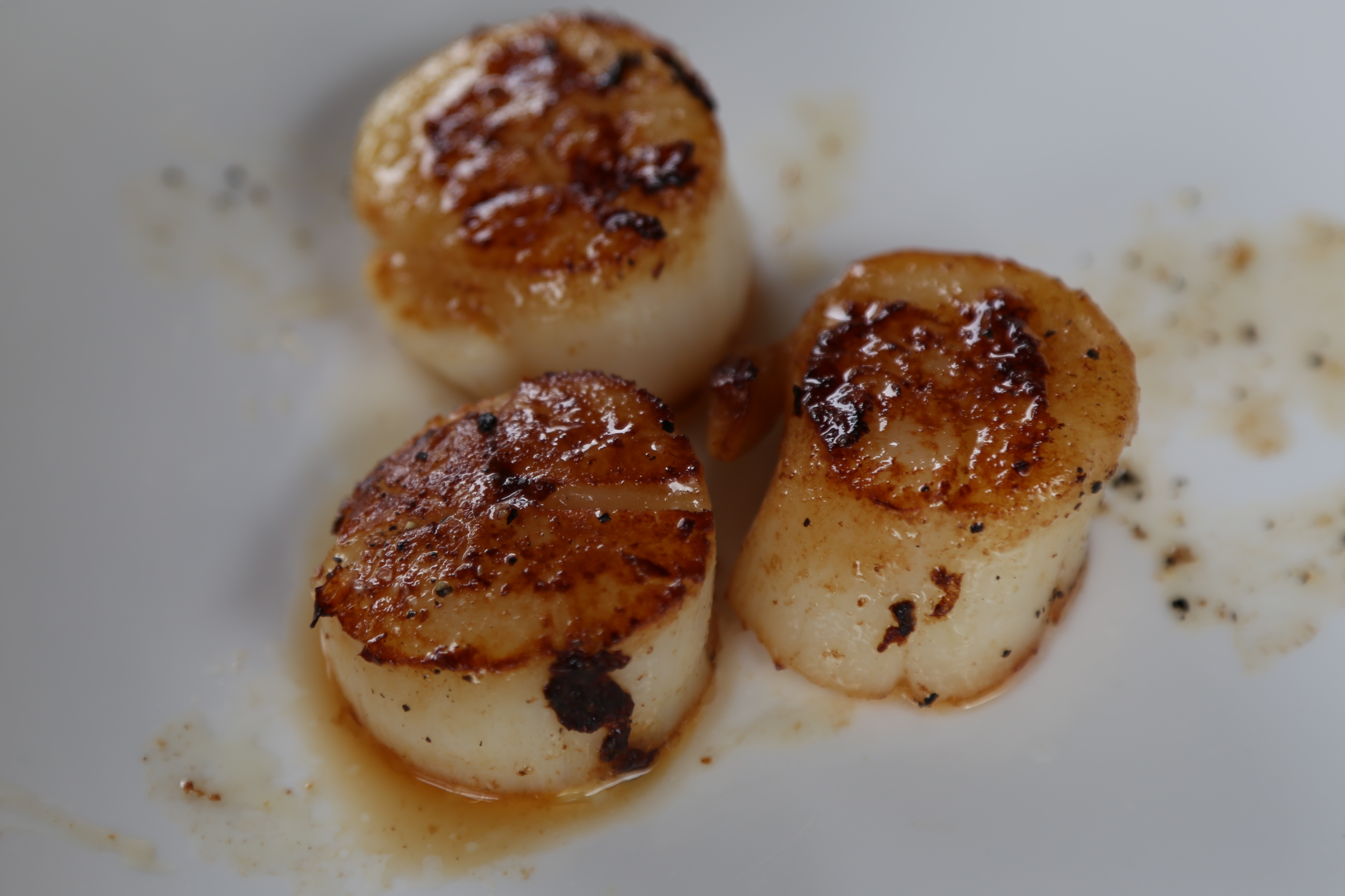
pan-seared Hokkaido scallops

pan-seared Hokkaido scallops

Hokkaido scallops are plump, juicy & sweet.

I bought once from Isetan Orchard during a Japanese Fair and a 1kg box cost S$90 and they were really sweet.  I bought also from QB Food frozen USA scallops at S$17 for 500g but these were not so great. Recently I bought 1 box 900g from Sheng Shiong on promotion at S$24.80, and these were quite ok.

I previously had difficulty searing scallop because the technique was wrong. So again after I check out Foodwishes.com Chef John’s seared scallop recipe, I can now reproduce quite easily scallops with a nice sear (as in above picture).

As mentioned in the video, the trick is simply (1)a superhot pan & (2)bone dry scallops. Scallops, like fish, retain a lot of moisture and if they are not totally dry, the temperature of the pan will drop sharply and you will be boiling/poaching the scallop rather than searing it, and the burnt layer will come off & stick to the pan.

With the right technique then it is really simple. I dry the scallops on a rack in the fridge so that both top & bottom are dry & the water drip on to a bowl or tray below the rack. I bring out the scallops from the fridge for at least 1/2 hour to get it to room temperature. I lightly season the scallop with sea salt & coarse black pepper and place them in a superhot pan with olive oil & sear for 3minutes, watching the side cook to opaque white colour 1/3 to 1/2 way up & then flip the scallops. I cook for another 2-3minutes and then serve. It is that simple.
I have tried also Chef John’s orange supreme sauce, however I don’t really find much there as I don’t feel the sauce add anything to the scallop & maybe reduce the seared flavour & texture. I would rather have my seared scallops with rockets and cherry tomatoes dressed with olive oil, balsamic vinegar and sea salt.

c.h.e.f andy

Creamy Mushroom Soup

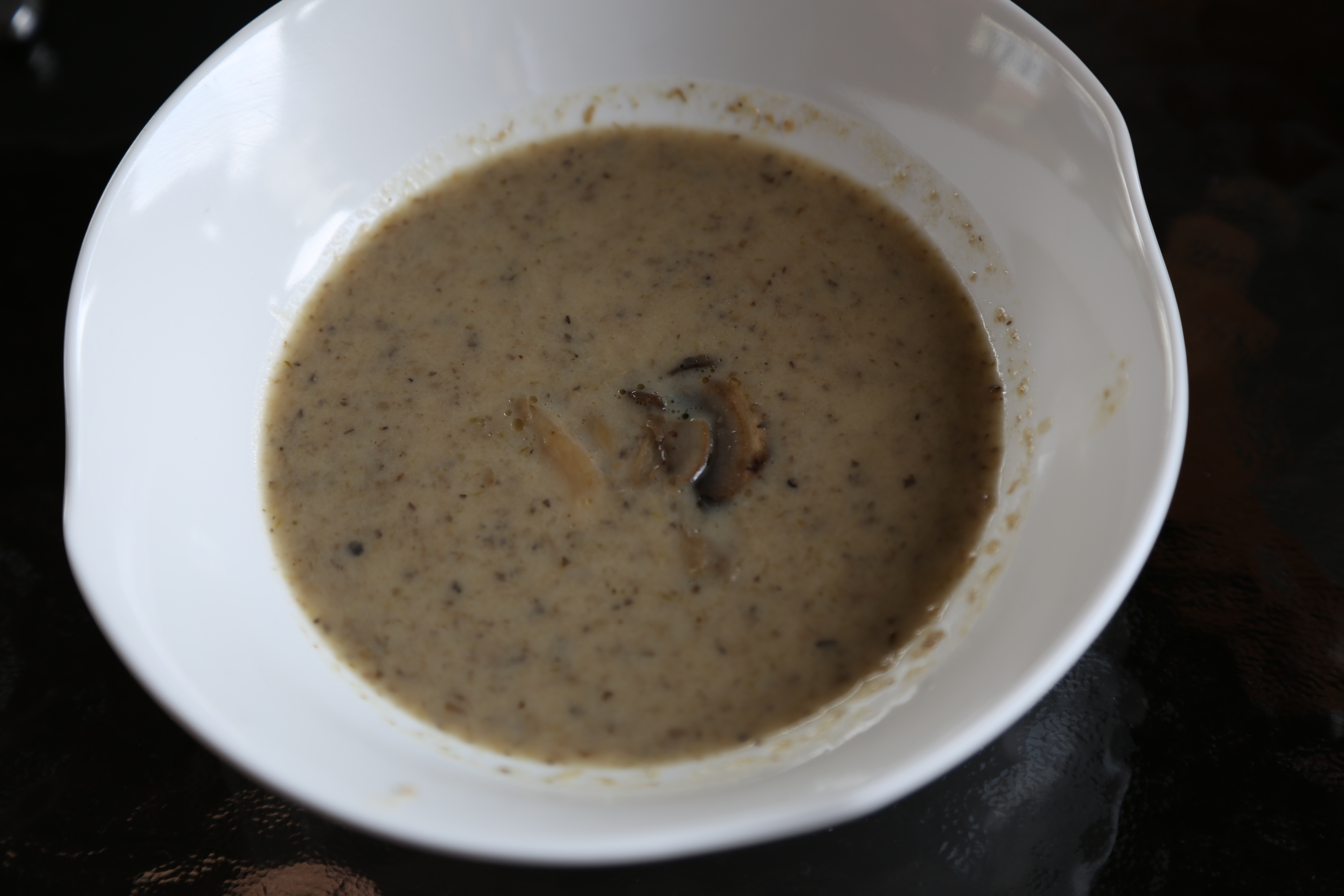
creamy mushroom soup

creamy mushroom soup

soup. auntie  Bes, my Filipino help who has been with us for 24 years, makes very good Chinese soup. They could be pork ribs with peanuts or lotus root soup, chicken bones & feet with old cucumbers or carrots or watercress or even green papaya, largely in the vein of Cantonese 例汤 – soup of the day. auntie Bes doesn’t do soup using pork (she only used pork ribs) though this is also common with Chinese soups and these days we don’t use much of Chinese ham (京华火腿) though in the early days when I travel to Beijing & Shanghai more, I did cart some of these back for soup. when I started doing homecooked dinners for friends, if I were doing dishes like braised duck, curry chicken and kakuni (Japaense braised belly pork), auntie Bes’ soup was a perfect fit. But then I also started doing western dinners, and soon afterwards after several visits to and enjoyable meals at La Cicala Spanish Gastrobar, I learned to cook a Basque seafood bisque, using prawn shells with white wine & brandy to create the bisque, with leek, yellow onions & carrots to add vegetable sweetness to the soup. It was quite successful & I used it for several of my homecooked dinners. But that was the only soup I knew how to cook, that is until yesterday. I had another 8-course lunch for 9pax yesterday so I thought I would test out another soup, and I kind of thought mushroom soup would be the most common, easiest to do and acceptable to most. So who do I turn to? you guess it right – Foodwishes.com Chef John’s creamy mushroom soup recipe. It went really well at first try, and all my friends enjoyed the soup very much.

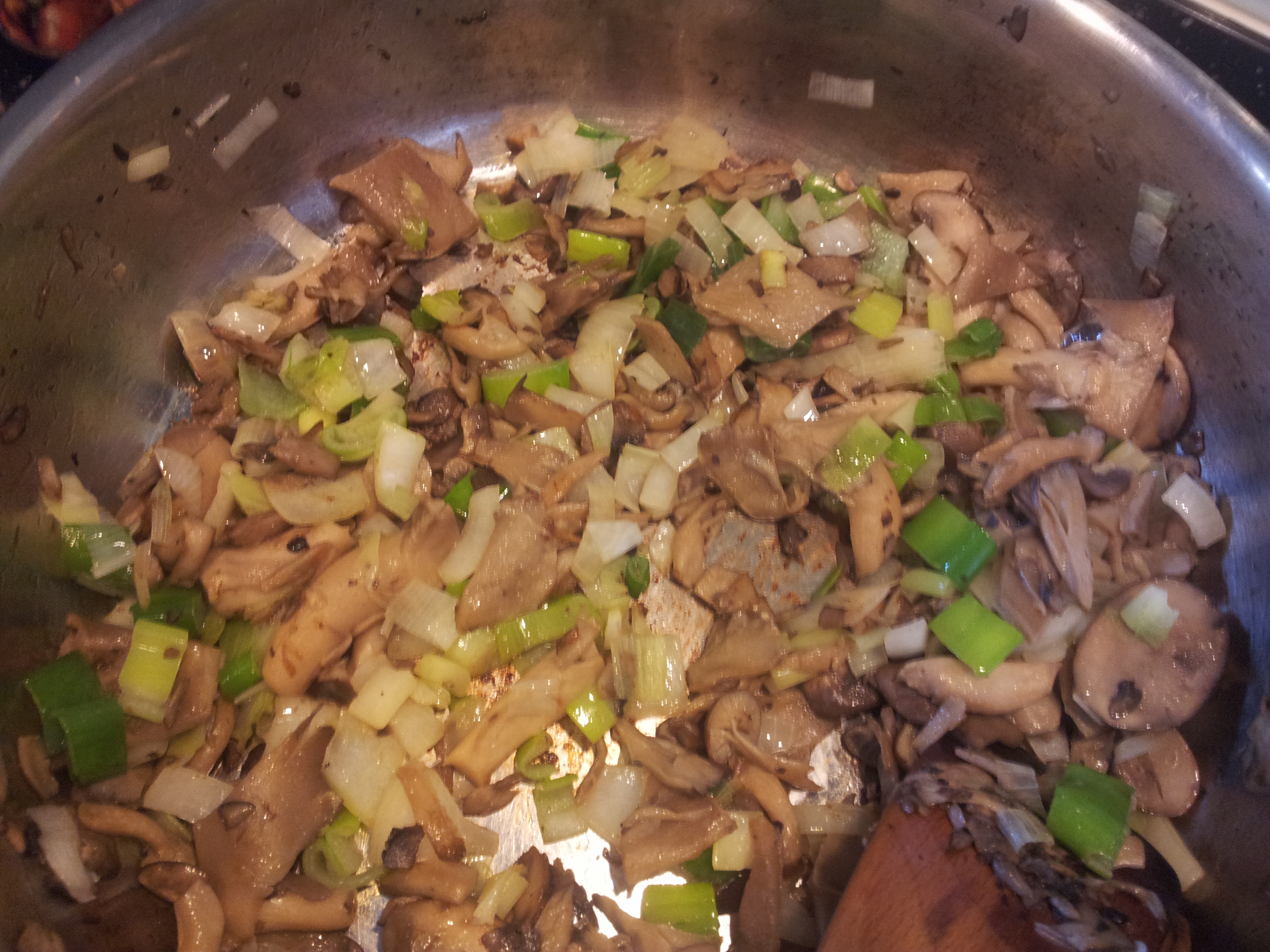
caramelising 3 different mushrooms + leek + yellow onions

caramelising 3 different mushrooms + leek + yellow onions

I bought 250g of cut brown button mushrooms, 200g of oyster mushrooms & 150g of shimeji mushrooms from Sheng Shiong. I added a teasppon of salt & caramelised them in a soup pot according to the video instructions, then added the diced yellow onions & leek. I cooked them further & then fished out a few caramelised mushrooms as toppings for the soup later. I then added the flour and stirred them to thicken a little. Image Next I added the white wine, reduced and then added the chicken stock (made in a crockpot with chicken bones). I then put it on an induction cooker & put to the lowest at 100W & let it cooked for 1.5hrs. I let the soup cooled down, and then blended it in a blender in small batches. Then I brought it to boil in the pot, turned to low fire and added 2 tablespoon of heavy cream and mixed in the soup, and added sea salt & pepper to taste. To serve, I added a dash of extra virgin olive oil & placed couple caramelised mushrooms I reserved earlier as toppings. c.h.e.f andy Ingredients:

  • 600g mushrooms (button mushrooms or with other combinations) – served 8
  • 1/2 large yellow onion diced
  • 1 leek diced
  • 1 tbsp flour
  • 1 cup white wine
  • 5 cups of chicken stock
  • 1 tsp salt (to sweat the mushrooms)
  • 2-3 tbsp heavy cream
  • sea salt & coarse black pepper to taste

Directions:

  1. slice the button mushrooms, and diced the yellow onion & leek.
  2. caramelise the mushrooms in a soup pot with 1 teaspoon salt in high then medium heat. add the yellow onion and leek & cook until they soften. take out some caramelised mushrooms for toppings if you like. add a tablespoon of flour to thicken. add 1 cup of white wine and reduce, and add 3 cups of chicken stock. bring to boil & then turn fire to low & cook for 1.5hrs. let the soup cool or add more cold chicken stock or water, then blend it in a blender in batches. bring the blended soup to boil adding stock or water as necessary to taste according to your own preference. turn fire to low and add 2 tablespoon of heavy cream and mix well. serve with dash of extra virgin olive oil & caramelised mushroom toppings.

Recipe = Pistachio Crusted Rack of Lamb

Image

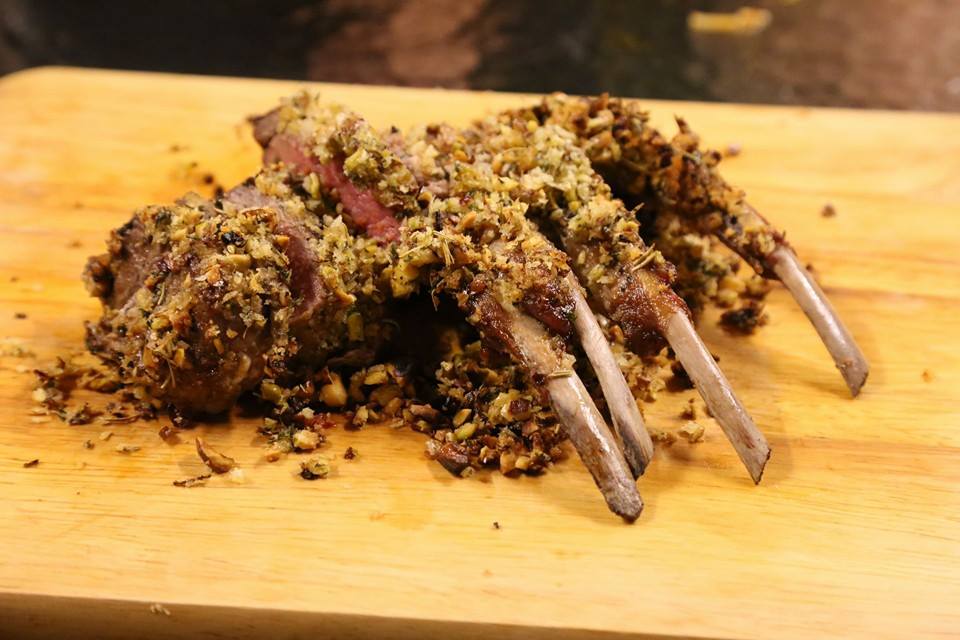
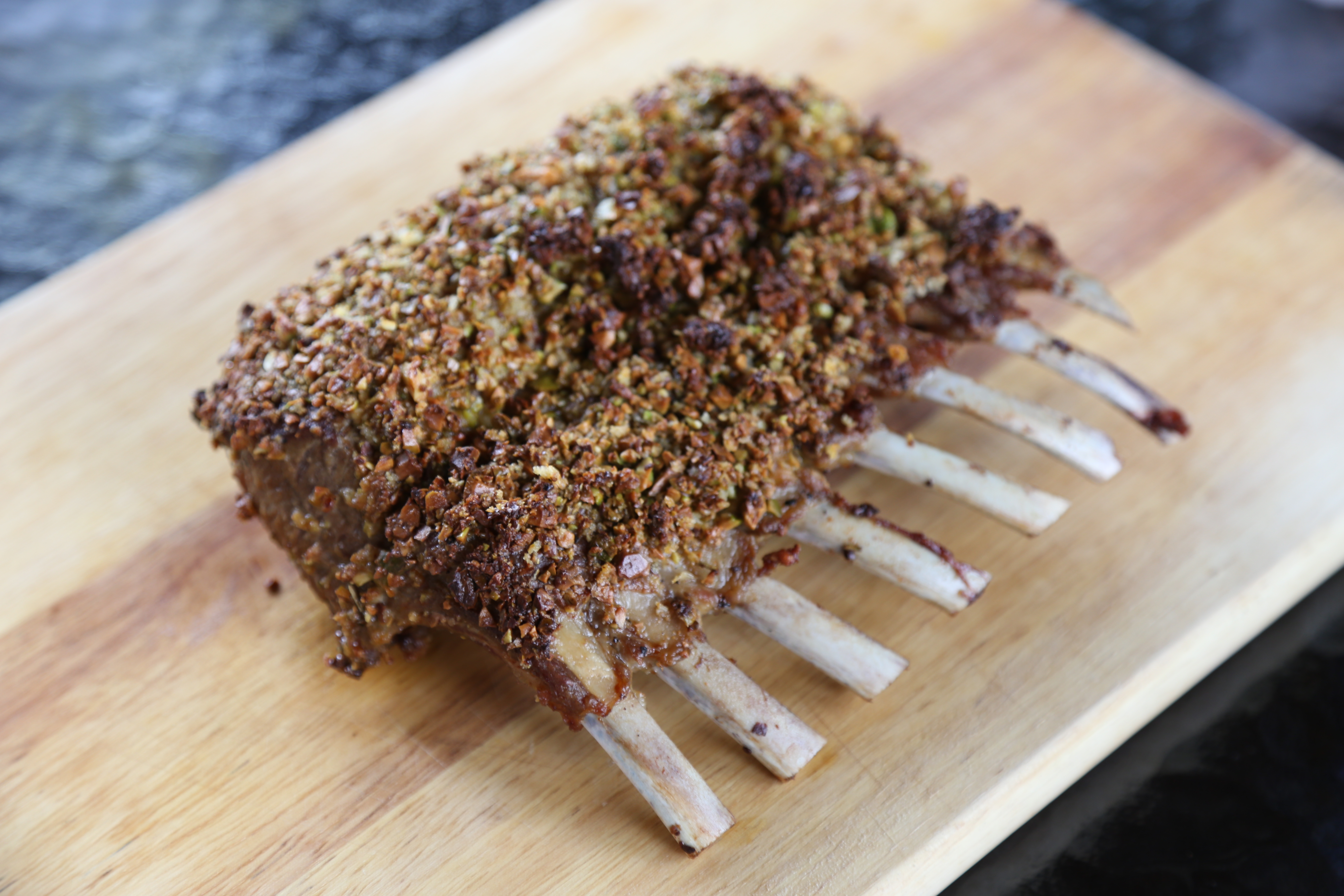
pistachio crusted rack of lamb

never cook lamb before. always had the impression that it was terribly hard! unlike a beef steak which you can just throw in the pan, lamb is like “who can cook lamb?” – unknown, undoable..

in fact, when eating out, I hardly ever order beef, since I can make a rather good steak myself with no effort & at fraction of the cost (just like I will only order squid-ink pasta since it is about the only pasta I don’t make myself); so its lamb or fish everytime (dining out) except at some famous grills, Japanese or fine dining restaurants..

I have a friend though always posting lamb pictures & obsessed with meat thermometers (which I now have 2 thanks to this friend for one, and still have not used any!) Well, I only started cooking much since March2012, so thermometers will have a future with me, I think..

so I gotten myself this packet of lamb, which contained 2 frenched lamb racks, and on the first occasion when enough guinea pigs volunteered to dine at my place, I gave it a go and cooked my first ever lamb rack.  I always like Foodwishes.com Chef John’s cooking videos, and this pistachio crusted rack of lamb recipe is no exception. It is really very easy to make, much easier than the 2-hr slow-cooked Spanish beef ribs which requires preparations & cooking for the vegetable ratatouille for sauce & garnishing.

So I seasoned & browned the lamb rack, prepared the pistachio & the mix (add breadcrumbs, olive oil, melted butter) for the crust, rubbed dijon mustard on the lamb rack so that the pistachio crust sticked, and when my friends were here, while we were devouring the other dishes, I just put the lamb rack into a 210degC oven for 23minutes; and voila, I had a very impressive-looking & tasty pistachio crusted lamb which everyone really enjoyed! actually it was medium & I would have preferred medium rare, will try 21-22minutes next time.

pistachio crusted rack of lamb

pistachio crusted rack of lamb

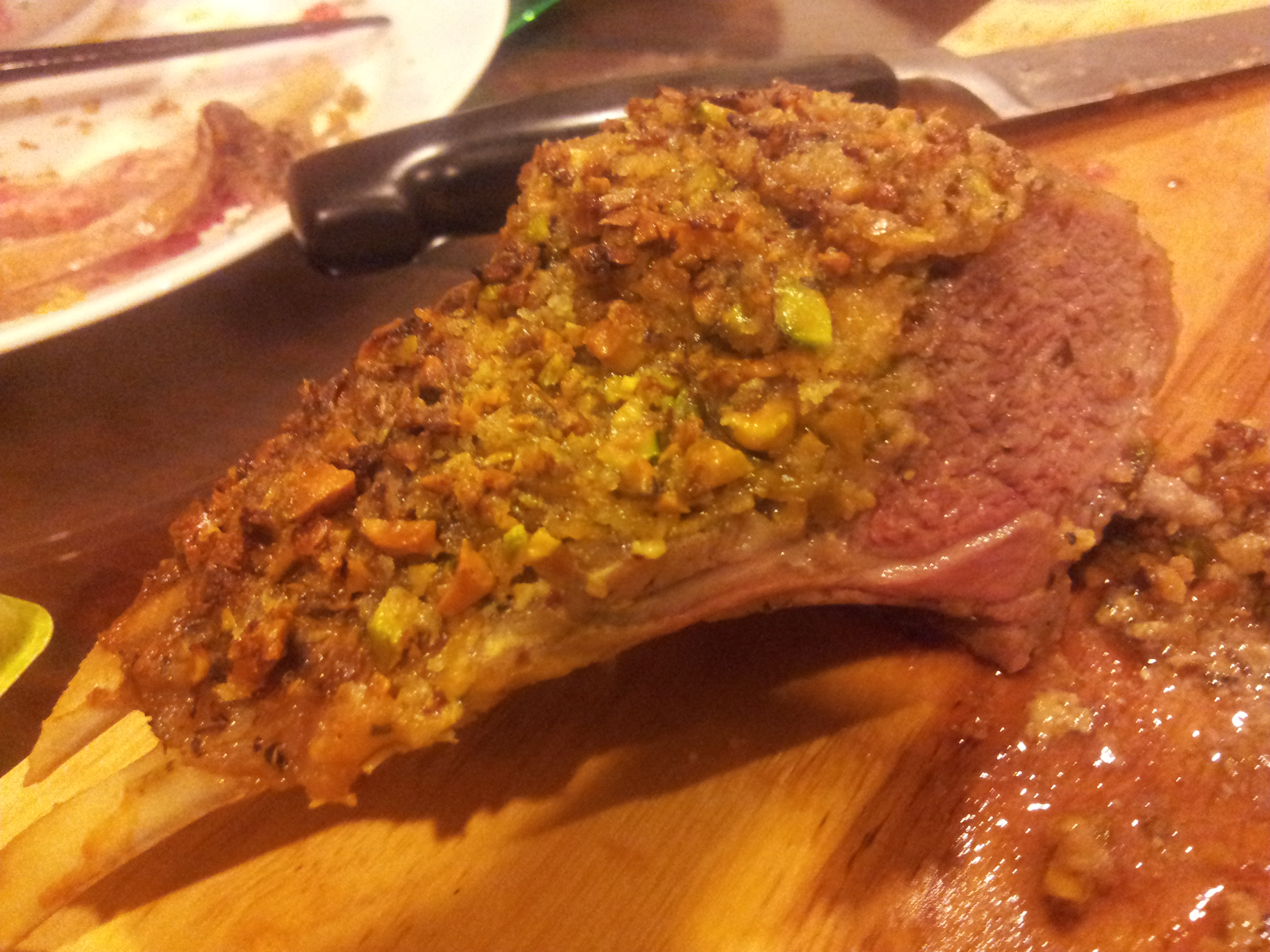
pistachio crusted 1/2rack of lamb

pistachio crusted 1/2rack of lamb updated on 22.1.2015

Looks like I won’t be eating lamb anytime soon when dining out.

c.h.e.f andy

Ingredients:

  • 1 frenched lamb rack (standard 8 ribs, about 600g, good for 4)
  • 1 cup of pistachios
  • 2 tbsp breadcrumbs
  • 1 tbsp melted butter
  • 1 tbsp olive oil
  • sea salt & coarse black pepper to taste
  • 2 tbsp dijon mustard

Directions:

  1. Prepare the lamb rack – cut/trim away the fat (to reduce the strong gamey taste/smell), cut about 2cm every 2 ribs w/o cutting into the loin (this for easy serving of the lamb rack afterwards), season with sea salt & coarse black pepper & pan seared including the ends over a very hot pan. put aside on an aluminium lined baking tray & reserve.
  2. Prepare the pistachio crust mix – cut about 1 cup of toasted pistachios into small bits. in a large bowl add 2 tablespoons breadcrumbs, 1 tablespoon olive oil & 1 tablespoon melted butter, & mix.
  3. Cook the lamb – coat the lamb loin with 2 tablespoon of dijon mustard. This will enable the pistachio crust to stick. now coat the pistachio mix on the lamb to form a crust. Preheat oven to 210degC and place the lamb in the oven for 22minutes (or longer if you like it more done). serve

Korean Spicy Sotong (Squid) Salad

Image

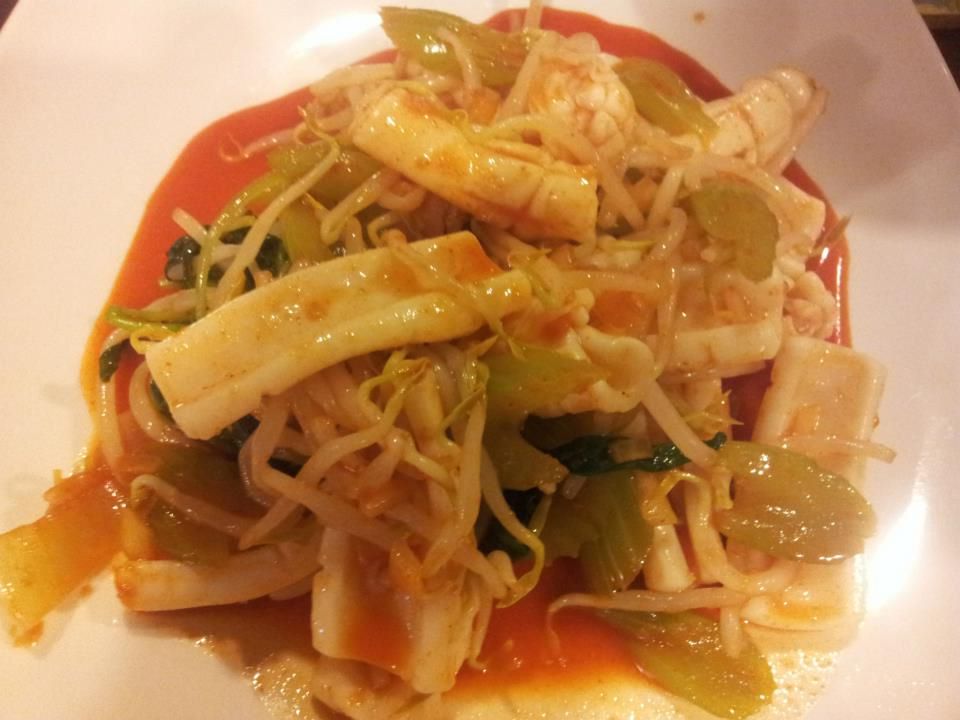
Korean spicy sotong (squid) salad

was rummaging through my fridge one day and saw this bottle of gojuchang (a savoury and pungent Korean fermented red pepper paste) – see picture below. I must have bought that months ago from a Korean provision shop. It is supposedly such an indispensable universal seasoning condiment – and I do often take it at Korean restaurants eg for bibimbap (a signature Korean dish-a bowl of warm rice topped with seasoned sauteed mixed vegetables usually with a raw egg & beef) – but it seems that I have found no use for it.

gojuchang - Korean fermented red pepper paste

gojuchang – Korean fermented red pepper paste

I googled the internet and chanced on this Korean Spicy Squid Salad Recipe. I tried it, and it was easy to do & good. I didn’t have watercress & cucumbers so I used what I had in the fridge – kang kong, celery and bean sprouts, and it turned out rather well, as seen in the above picture – my first & only attempt so far! 🙂

The bean sprouts & kang kong were just blanched, with the latter squeezed dry on a sieve to remove excess water as shown in the video. The celery & yellow onions I thought needed some sautee-ing, which I did to soften, and they turned out very well indeed.

After that it was just a matter of adding & mixing gojuchang & other seasoning. It made for a very refreshing & nice salad, a pleasant addition to dinner. 🙂

c.h.e.f andy

Ingredients:

  • 1 large squid (250g) skin, wings & head removed
  • 1 stalk of celery cut 2cm size
  • 1/2 yellow onion diced
  • 1/2 a bunch of kang kong
  • a handful of bean sprouts

Seasoning mix:

  • 2.5 tbsp gojuchang Korean red pepper paste
  • 2 tsp red wine vinegar
  • 1 tbsp sugar
  • 1 tsp minced garlic
  • 1 tsp sesame oil
  • sea salt to taste

Directions:

  1. Prepare the squid – remove the head, wings & red skin. cut open the squid length-wise. for the chequered pattern cut, slice length-wise along squid 1/4in apart, careful not to cut through. then cut the squid in 1/2 length-wise. now slice across & cut through the squid every 4th cut – that will produce a 1in width cut with square-cut patterns.
  2. Make the salad – blanched the bean sprouts & the kang kong & squeeze out excess water from the kang kong by placing on a sieve. sauteed the celery & yellow onions. Cooked the squid in boiling water for 4minutes until cooked. In a large bowl, mix everything together – the squid, vegetables & the seasoning mix. serve.
Oven Grilled “Sotong” (Squid)

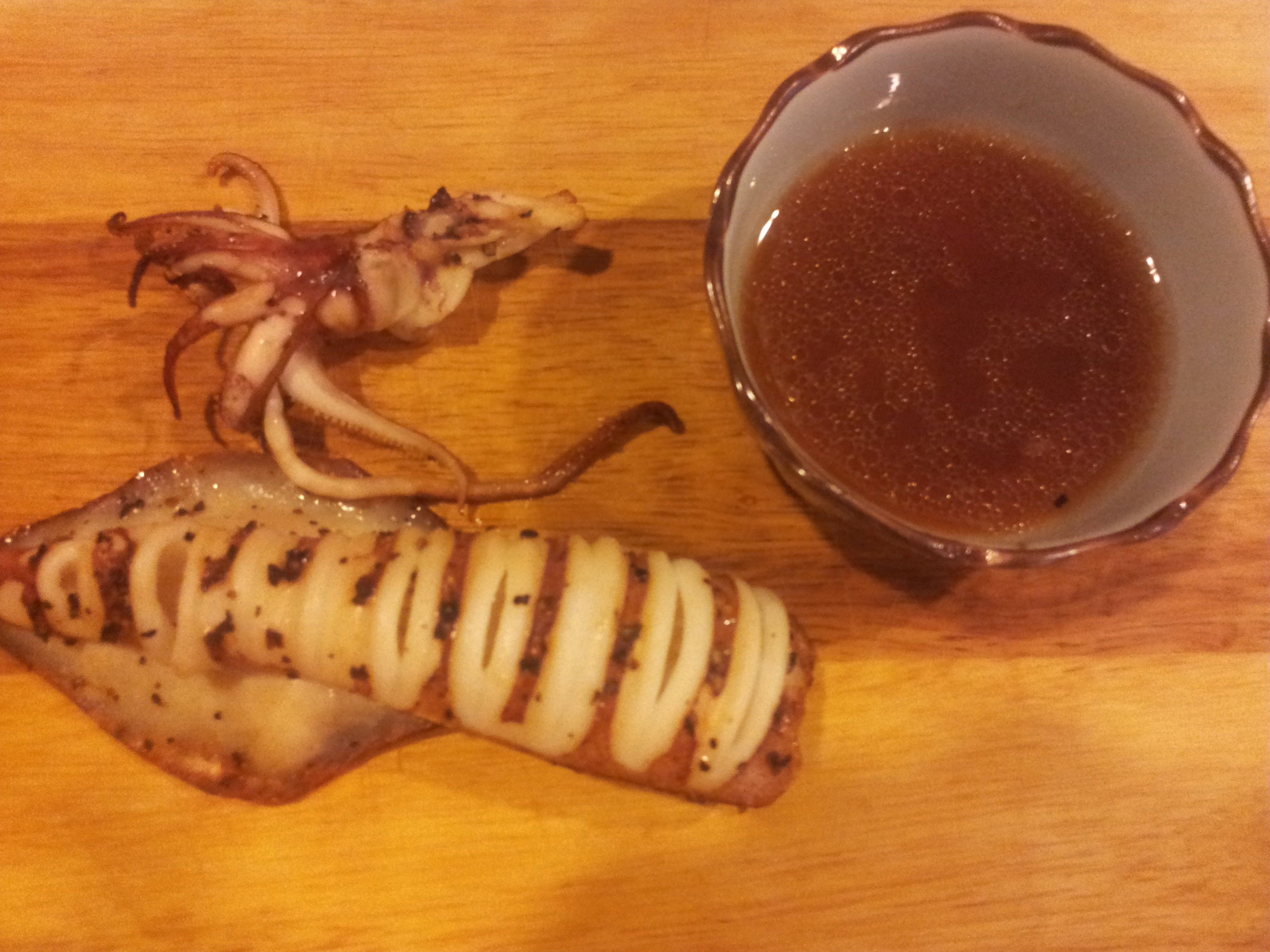
oven grilled "sotong" (squid)

oven grilled “sotong” (squid)

I always enjoyed ika sugatayaki (grilled whole squid) at Japanese Izakaya  – 居酒屋 (though since I do not drink much I seldom visit Izakaya c/w very many other styles of Japanese food which I love).

I was trying to find out how to do this as squid has lots of water & you end up steaming the squid instead of grilling. One way I can see is cutting the whole squid in 1/2 rings, then the water will be drained & the oven will grill & NOT just boil or bake the squid. I found a very nice Izakaya picture here.

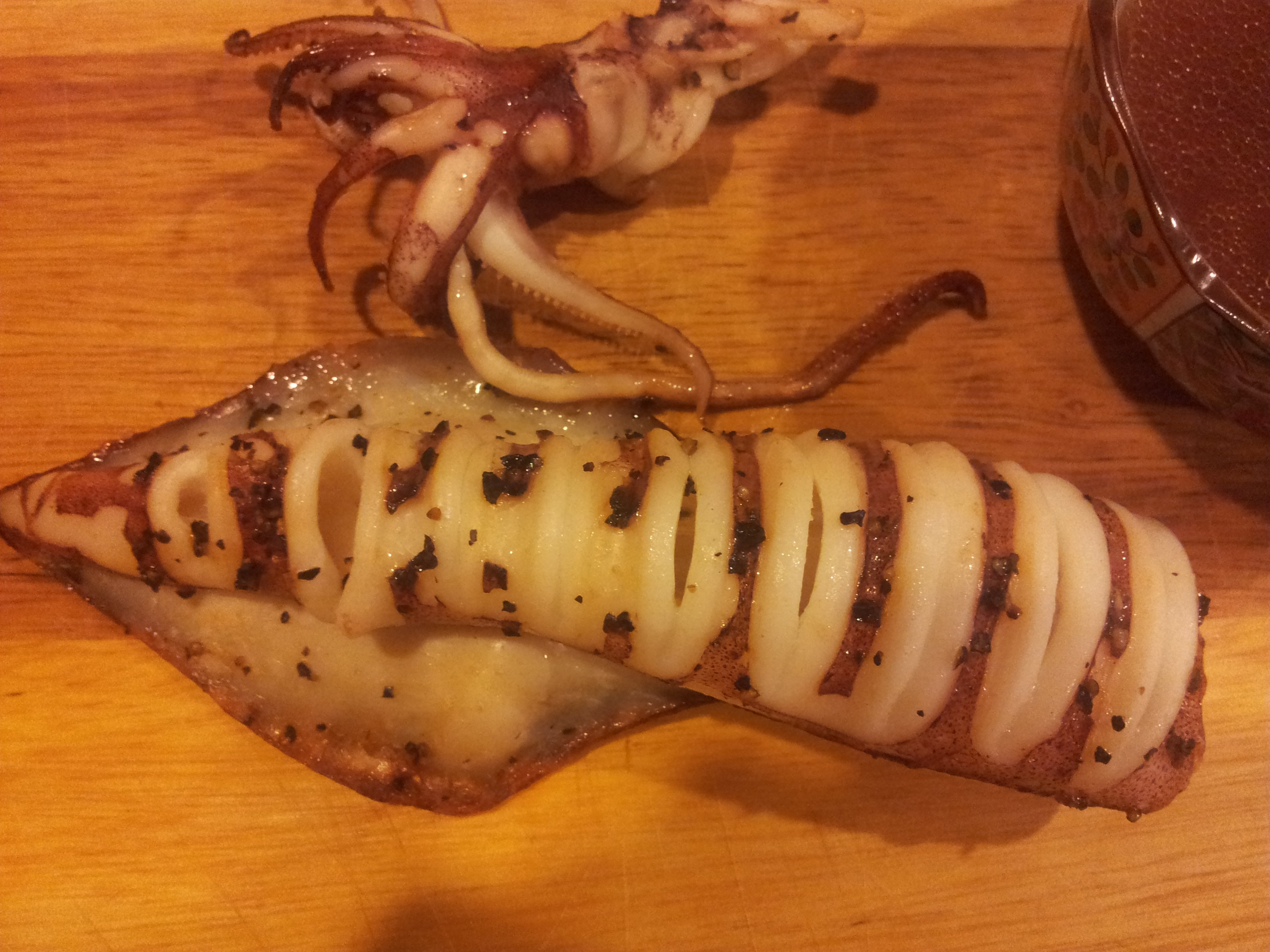
I also found a simple way of cutting the 1/2 rings. It is described here in Jamie Oliver’s recipe. You insert a knife flat into a large (250g) squid, then using another knife you cut the squid as if you are cutting it into rings. the knife stop at the surface flat of the inserted knife so you get your 1/2 rings. This way it is also easy to wash & remove the insides of the squid.

oven grilled "sotong" (squid)

oven grilled “sotong” (squid)

I then line a baking tray with aluminium foil, place the dry squid & head (air-dry in fridge OR with kitchen towels) on it, sprinkle ground sea salt & coarse black pepper, & drizzle lime juice, olive oil & 1 teaspoon of light soy sauce. I place the baking tray in a preheated 210degC oven turned to the grill function for 10minutes, remove the squid and spooned out the sauce to a small bowl. I turn the squid over and return to the oven for another 8 minutes. Then I transfer to a serving board, and serve with the sauce as dip (as in the picture above).

c.h.e.f andy

Spicy Vongole Fettucine with White Wine

Image

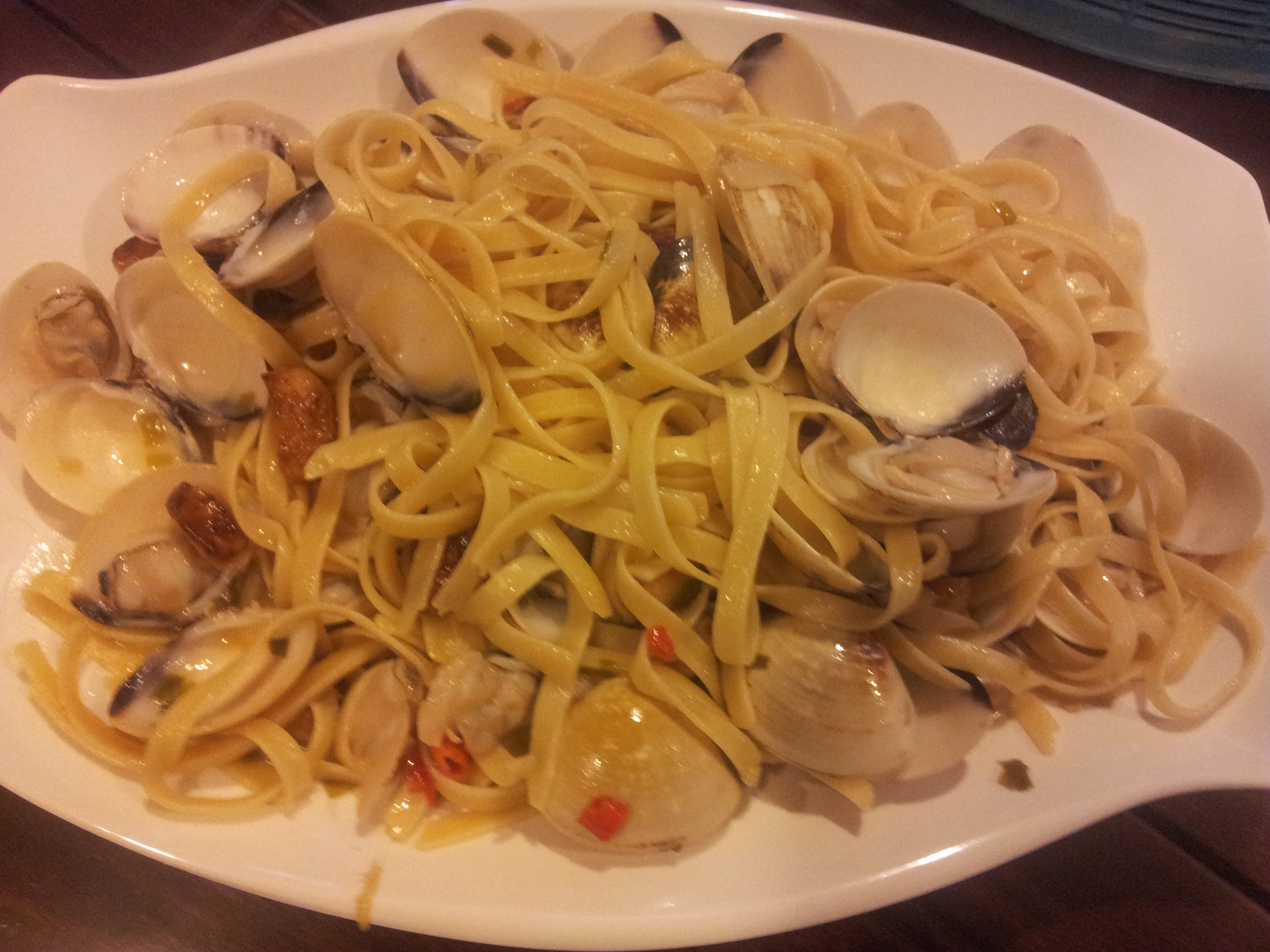
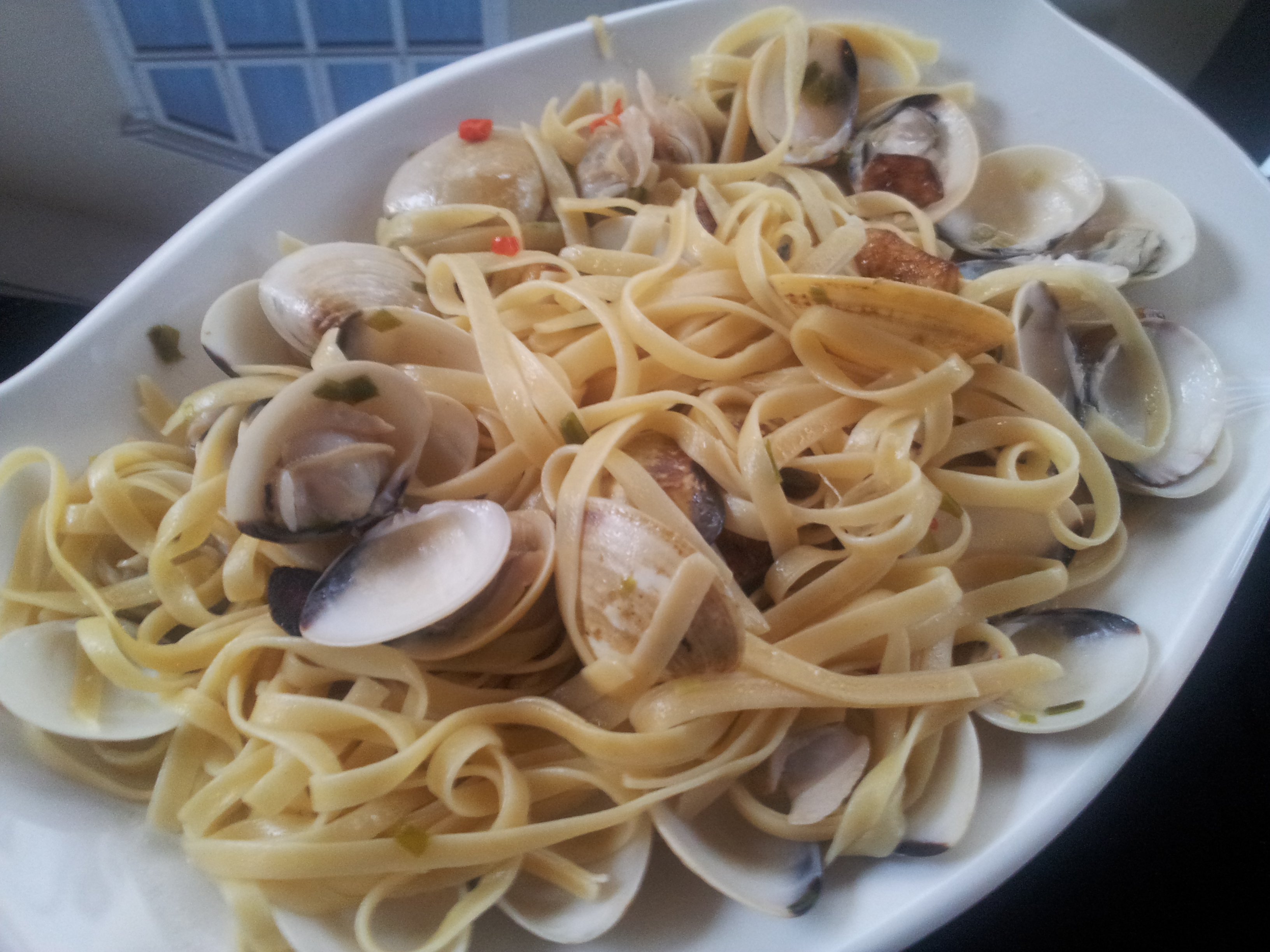
spicy vongole fettucine with white wine

I bought “la la” (littleneck clams – see here for interesting write-up about littleneck, topneck clams etc) from Sheng Shiong today. I have never cooked vongole before but since I do pretty ok in the pasta department, I thought I give it a go. Here comes my first vongole! 🙂

There’s only my eldest daughter Su Min at home for dinner, so I cooked just enough vongole fettucine for 2 of us, PLUS trying out a grilled sotong (squid) recipe.

My preferred pasta is spaghetti but since there is an opened yet unfinished packet of fettucine, I used that instead.  I did the usual browning of peeled garlic cloves in olive oil over low fire and soaked in the aroma. I then emptied the olive oil & browned garlic into a bowl. I added some salt & oil to water in a sauce pan and bring it to boil and put a bunch of (say 200g) fettucine in the boiling water for 11 minutes according to the timing instructions. I tested the texture to make sure it is just al dente & transferred the fettucine to a colander & set aside. In the pan still greased with olive oil I added 15g butter & threw in cut chilli padi & cut spring onions (green onions). I transferred the bowl of olive oil with browned garlic back into the pan. I then turned the fire high & put in the clams. Next I added 1.5 cups of white wine & 1 teaspoon sugar, cover the pan & let it reduced for few minutes. The clams opened up when cooked. I added the fettucine, turned off the fire, tossed and added sea salt to taste.

Image

spicy vongole fettucine with white wine

The shellfish broth, sweetness of the white wine, fragrance of garlic & olive oil, & the spicy kick from the chilli padi all combined very nicely to make this a very tasty dish.

c.h.e.f andy

Ingredients:

  • 200g fettucine (or liguine or spaghetti)
  • 700g littleneck clams
  • 15g butter
  • 3 stalks spring onions chopped
  • 1-2 chilli padi
  • 4 tbsp olive oil
  • 1 whole bulb of peeled garlic cloves
  • 1.5 cups white wine
  • 1 tsp sugar OR to taste
  • sea salt to taste

Directions:

  • Prepare the pasta – add salt & oil to water in a saucepan & bring to boil. add fettucine and boil according to timing instructions. test to make sure the pasta is just al dente & empty into colander & set aside.
  • Cook the vongole pasta – brown whole bulb of peeled garlic cloves in olive oil in a pan over low heat. empty oil & garlic into a bowl. add butter to the pan & throw in cut spring onions & cut chilli padi. add the clams, turn up the fire, add the white wine & sugar, cover while the clams cook. The clams will open up when cooked. add in the fettucine, turn off the fire, toss & add sea salt to taste. serve.
Skin-on Pan-roasted Brined Duck Breast

pan-roasted brined duck breast with wingstick

pan-roasted brined duck breast with wingstick

My success in brining chicken & the pan-roasted brined chicken breast recipe did much to encourage me. 🙂 Also, one friend. in particular, has been egging me to make duck a l’orange but I was NOT excited over a nice orange sauce but not-so-great duck breast as the main fare!
So I thought I should at least try brining duck since it works so well on chicken. And my, my, did it work well! My daughter Su Lin just loves the duck breast. It is moist, tender and tasty from the brining and the slow cooking.

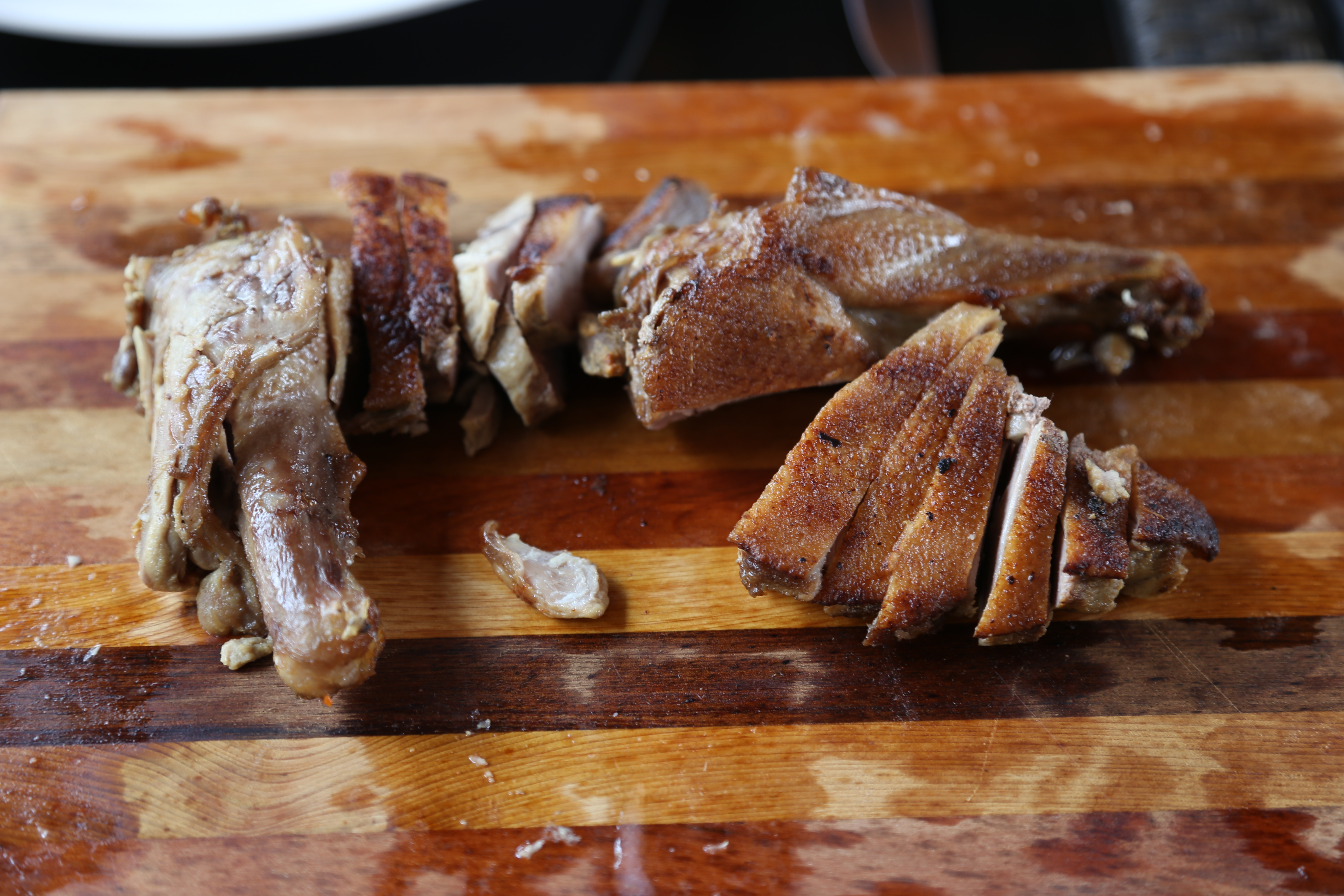
skin-on pan-roasted brined duck breast

skin-on pan-roasted brined duck breast

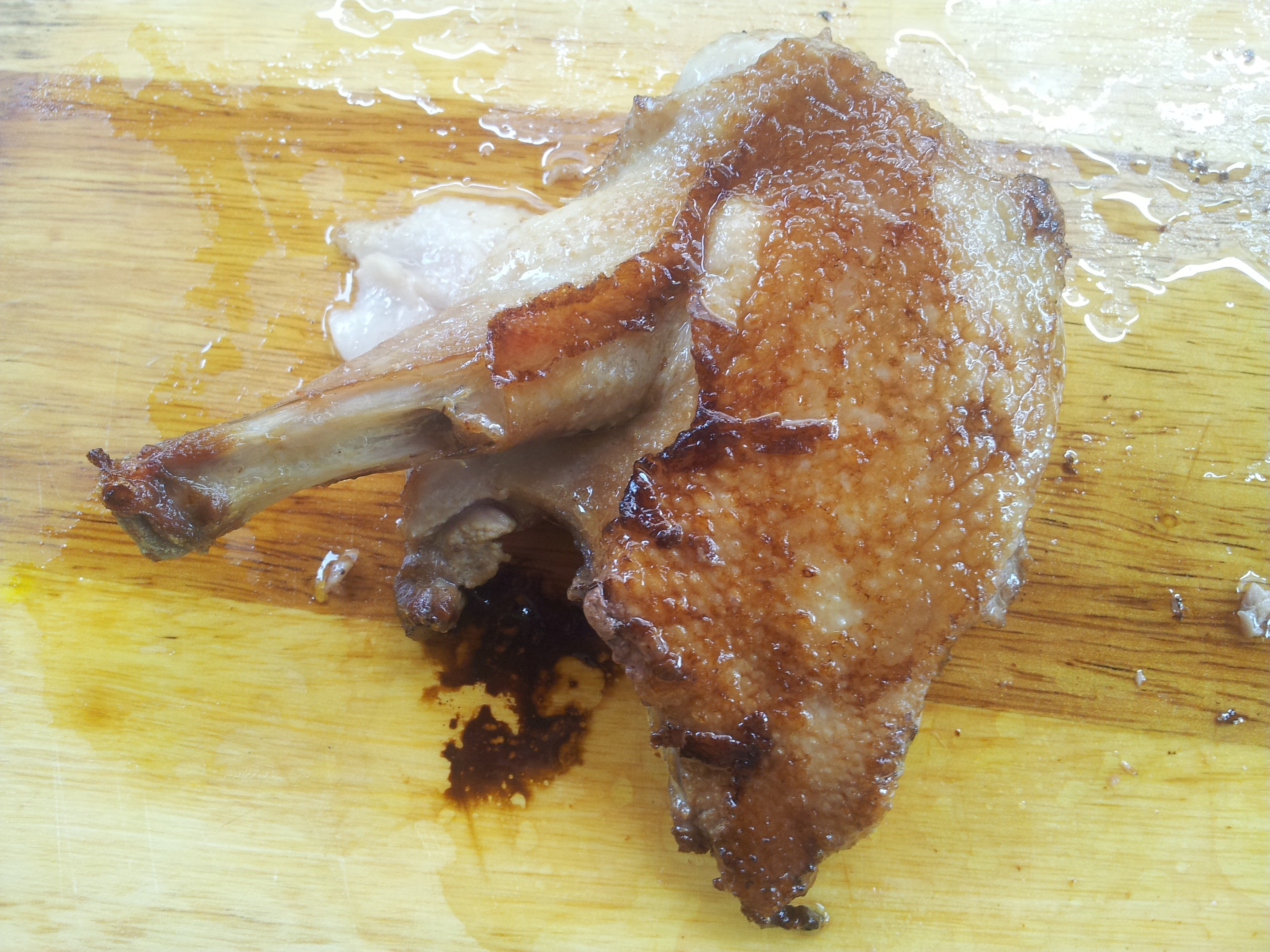
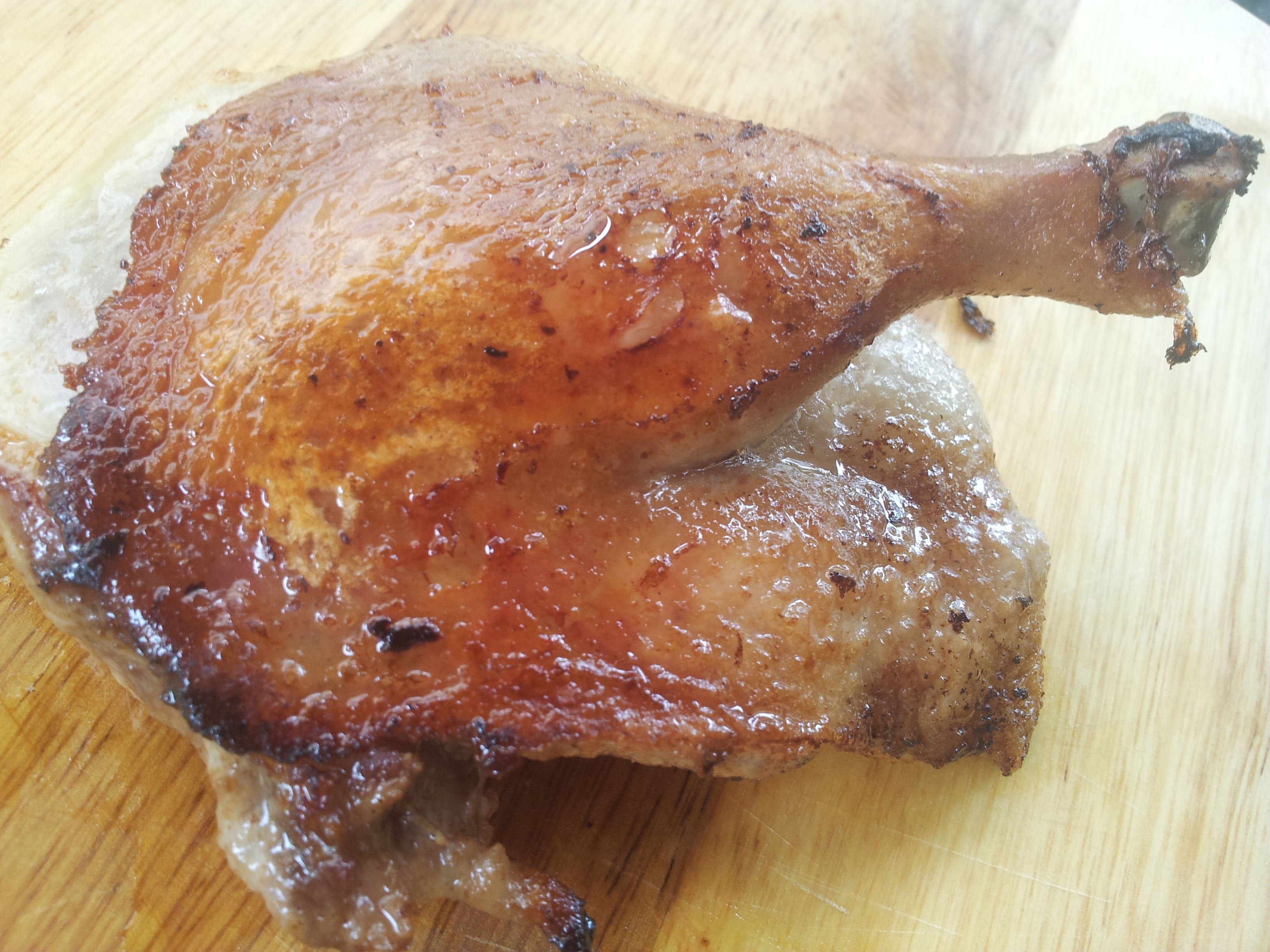
First, I brine the duck breast & drumstick in 1 litre water with 3 tablespoon salt, 2 tablespoon sugar and 5 limes (squeezed) for 24 hrs. I then wash thoroughly in slow running water, and place them on a rack & air-dry for 24hrs in the fridge (you can just use a kitchen tower to dry them instead). Before cooking, I take the duck out of the fridge for at east 1/2hr to get it to room temperature. I then place them on a cold non-stick pan & turn on the fire to low, and leave w/o turning for 10 minutes. This will render out the fat & make the skin crispy (as in the 2 pictures above). 🙂 I then turn over the duck, spoon out the fat, and then turn off the fire.

skin-on pan-roasted brined duck drumstick

skin-on pan-roasted brined duck drumstick

I was experimenting with 2 different cooking methods so I kept the duck breast in the oven-proof pan & removed the duck drumstick & put it is a separate baking dish.

  1. For the duck drumstick, I tried the pan-roasted brined chicken recipe & place the duck skin-down on the baking dish and place it in the oven preheated to 250degC for 10minutes. I then remove it from the baking dish, let it rest on a serving board, and then carve & serve. It was very good BUT the slow-cooked duck breast which came after was even better!
  2. For the duck breast, I tried Foodwishes.com chef John’s prime rib method (on the duck instead of prime rib). estimating my duck drumstick to be <400g, I did 4minutes on 250degC, left the duck in the oven w/o opening the oven door, and set the timer to 45minutes. there was no need to rest the duck as it had already been rested for 45minutes, and voila! this was easily 1 of the best duck breast I had, even when c/w good restaurants.

c.h.e.f andy

Ingredients:

  • 2xduck breasts with wingstick (I use a 1.9kg to 2.1kg duck from Shop n Save or Giant Hyspermarket)
  • 1 litre water
  • 5% salt (about 50g)
  • 3% sugar (about 30g)
  • 5 limes (or about 30ml bottled lime juice)

Directions:

  1. Preparing the duck breasts with wingstick – use kitchen scissors to cut chicken in 1/2, then cut around the drumstick into 1/4 (breast with wingstick & drumstick quarters) – use a heavy knife or chopper if required,  then cut away & remove the bones under the breast completely, then cut away the fat, wash & clean.
  2. Brining – add 1 litre water in a large plastic container, mix in about 3 heap tablespoon salt & 2 heap tablespoon sugar & stir to dissolve, then pour in 30ml bottled lime juice or squeeze juice from about 5 limes. Put 2x cleaned duck breasts with wingstick into the container and place container in fridge for 24hours. Remove & wash duck breasts thoroughly in slow running water & place on a rack to air-dry in fridge for 24hrs (can also skip this step & dry with kitchen towels)
  3. Cooking – Remove duck breasts from fridge & leave it at room temperature for at least 1/2hr. Place the duck breasts skin-down in a COLD oven-proof non-stick pan. turn the fire on and to low & fry for 10minutes to render out the fat and get a crispy skin. The oil will sputter a bit, turn to low heat after 1 minute. Preheat oven to 250degC. Place oven-proof pan in oven & let the duck cook for 4minutes. Leave the duck in the oven w/o opening the oven door and set the timer to 45minutes and let the duck slow-cook in the residual heat. Remove duck from oven & serve.