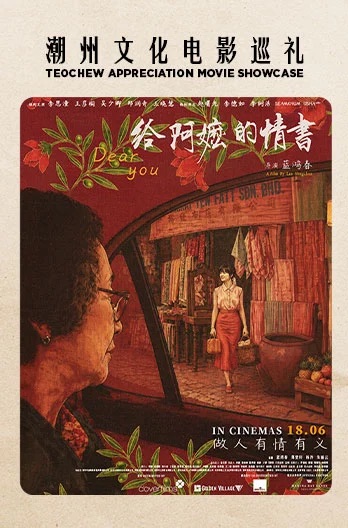
给阿嬷的情书
一个赤诚拼搏的
男孩
两个默默坚守的
女人
千千万万
下南洋华侨的
汗泪史
一份淳朴的共情
烈火中走出来的情义
撑起
两地
两个家庭
十八年的岁月
素未谋面
却系心底
活在心中的家人
褪色的旧照片
侨批落水
捡回的是
四十年的误会
戳心的背叛
直奔肺腑
刻入骨髓的伤痛
唤出一声——
这阵正共我讲……
(潮语:这时才跟我讲)
日子还是要过
人力车
拖着午夜疲惫的身影
迎面是
火光浓烟
整栋楼惊醒
木生冲上楼
看见枕下的钱盒
没有犹豫
背起南枝的父亲
奔出火场
南枝望着
木生重入火海
烈焰吞噬的钱盒
燃着
木生一个个午夜拉车攒下的
回乡钱
也燃着
淑柔
日夜盼木生回乡的梦
烈火
吞噬着楼房
南枝拔腿奔向后巷
声嘶力竭喊出
木生兄!……
人安好
家当没了
一切重来
日子还是要过
木生去行船
……再一次攒足了回乡费
却遭盗匪夜袭泊船
为救友中刀坠河
再没回来
七夕之夜
湄南河畔
读着
木生给“吾妻淑柔”充满希望的信
烧了讣告
烧了真相
用一生
无声践诺
「做人要有情有义」
扛起两家七口饭
侨批
夹着晒干的红木棉花
十八年
从未间断
四十年的误会
终得解开
「我去看看橄榄菜凉了没」
那被岁月腌制
跨越山海的
情义
注:《给阿嬷的情书》
《给阿嬷的情书》是当下热度极高的影片,一部质朴无华却充满人情、亲情与情义的电影。仅以人民币一千四百万的制作成本,中国大陆累计票房已突破19亿元,成为现象级作品。在新加坡,潮语原片更是一票难求。
诗意赏析|《给阿嬷的情书》
诗的开端以极简的句式铺陈人物结构:“一个赤诚拼搏的男孩 / 两个默默坚守的女人”,看似平淡,却迅速构建出三人之间的情感轴线与命运支撑关系。一个男孩在外拼搏,两位女性在两端守望,共同撑起跨越两地的家庭与生活。随后“千千万万下南洋华侨的汗泪史”,将个体命运推入历史洪流之中,使这段情感不再只是私人叙事,而成为一代华侨迁徙、谋生与牺牲的集体记忆。
“一份淳朴的共情 / 烈火中走出来的情义”,点明三人关系的核心。南枝对木生,延伸到淑柔全家的情感,是淳朴的共情——这种情义,是在苦难与责任中生长出的互相承担。虽与淑柔素未谋面,却已在心底把淑柔当成家人。南枝和木生,又因为木生从火中救出她父亲,是共患难、从烈火中走出来的情义。
因为侨批落水,信件遗失,捞回的只有褪色的旧照片,导致淑柔误以为木生已在异乡另组家庭。信息的错位,使等待变成漫长达四十年的误会。
“戳心的背叛 / 直奔肺腑 / 刻入骨髓的伤痛”,将情绪推至极致,而后落下一句——“这阵正共我讲……”,潮语的插入,使情绪突然收束为现实的瞬间理解:原来一切的痛,在“这时才跟我讲”的迟到中爆发,但日子还是要过……
另一条叙事线回到木生。人力车拖着夜色与疲惫,象征底层劳动的重复与沉重;而“火光浓烟 / 整栋楼惊醒”,则将平凡劳作的生活推入灾难现场。
木生冲入火海救人,看见钱盒却无力挽回。这个钱盒,不只是积蓄,更是回乡的希望,是对团圆的具体化承载。而它在烈火中焚毁,也象征命运对“归途”的一次残酷阻断。眼看钱盒被大火吞噬,而淑柔盼木生回乡的团圆梦也随之燃去。
南枝拔腿奔向后巷
声嘶力竭喊出
木生兄!……
这“拔腿”瞬间的爆发力,源于她对木生安危的牵挂,也因她深知木生为救她父亲而舍弃的钱盒,是他努力拼搏、回乡的希望。
人被救出,家当尽毁,生活被迫重启——
“日子还是要过”,成为诗中反复出现的现实底色。
木生之后行船,再次积攒回乡费,却因救人丢了性命。
南枝本写好了噩耗讣告,准备给淑柔寄侨批,然而在银信局,目睹那一封封侨批(信、物、钱)如何紧系着国内一家的生计活路,她动摇了。她深知,噩耗一旦寄出,就不只是一封信,而是淑柔一家人的绝路。
于是,在七夕之夜,湄南河畔,她做出了抉择——
一边读着木生给“吾妻淑柔”充满希望的信,一边烧了讣告,也就烧了真相……从那刻起,她以一生无声地扛起两家七口饭……
“做人要有情有义”在此不是口号,而是以沉默、劳动与承担兑现的长期实践。侨批中夹着晒干的红木棉花,是木生与淑柔的定情物,使爱情不只是记忆,更是被时间保存的信物与见证。
跨越四十年的误会最终被解开,淑柔只说了一句:「我去看看橄榄菜凉了没」
橄榄菜的“腌制”,成为情义的隐喻:时间没有冲淡一切,而是把它们慢慢保存下来,跨越山海,仍然留有余温。
c.h.e.f andy
=======================
published on 2.7.2026
给阿嬷的情书 A Love Letter to Grandma
One young man
sincere and determined
Two women
steadfast in silence
Countless
Chinese migrants to Nanyang
their history
of sweat and tears
A pure, heartfelt empathy
A bond of loyalty
forged in fire
Holding up
two lands
two families
eighteen years
Never having met
yet bound at heart
family
living in the heart
A faded old photograph
a qiaopi
fallen into the water
What was recovered
was
forty years of misunderstanding
A betrayal
that pierced the heart
A pain
carved into the bone
drew forth these words—
“And you’re only telling me now…”
Yet life must go on
A rickshaw
dragging its weary figure
through the midnight streets
Ahead—
flames and billowing smoke
The whole building jolted awake
Mu Sheng rushed upstairs
Seeing
the money box beneath the pillow
Without hesitation
he lifted Nan Zhi’s father onto his back
and ran out of the fire
Nan Zhi watched
as Mu Sheng entered the flames once more
The money box
devoured by the flames
burned with
the money
Mu Sheng had saved
pulling his rickshaw
night after night
for the journey home
the fire also consumed
the dream of reunion
Shu Rou longed for day and night
The raging fire
engulfed the building
Nan Zhi
bolted towards the back alley
crying out
“Brother Mu Sheng!…”
Everyone was safe
The home was gone
Everything had to begin again
Yet life must go on
Mu Sheng went to sea
Once again
he had saved enough to return home
But while his boat lay at anchor
bandits struck in the night
Trying to save a friend
he was stabbed
fell into the river
and never returned
On the night of Qixi
by the Chao Phraya River
reading
the hopeful letter
Mu Sheng had written to “My beloved wife, Shurou”
Nan Zhi burned the obituary
she burned the truth
For a lifetime
she silently fulfilled his vow—
“A person must be compassionate and righteous.”
Supporting
two families
seven mouths to feed
qiaopi
each with sun-dried kapok blossoms
For eighteen years
without interruption
Forty years of misunderstanding
were finally cleared
“I’ll go and see if the olive vegetable has cooled.”
That emotion
slowly preserved by time
a bond of kinship
crossing mountains and seas
Note: A Love Letter to Grandma
A Love Letter to Grandma is currently a highly popular film—a modest, unadorned production rich in human warmth, familial affection, and bonds of loyalty and compassion. With a production budget of only RMB 14 million, it has surpassed 1.9 billion RMB in cumulative box office revenue in mainland China, becoming a phenomenon. In Singapore, tickets for the original Teochew-language version are extremely hard to come by.
Poetic Commentary | A Love Letter to Grandma
The poem opens with an extremely concise structural framing of its characters: “a sincere, striving boy / two quietly steadfast women.” Though seemingly plain, it quickly establishes the emotional axis and structural support of their relationships. A boy struggles away from home, while two women stand guard at both ends, together sustaining a family and life across two lands.
Then, “the sweat-and-tears history of millions of Nanyang Chinese migrants” pushes the individual fate into the torrent of history, turning this emotional story from a private narrative into a collective memory of an entire generation’s migration, survival, and sacrifice.
“A simple, pure empathy / a bond forged in fire” defines the core of their relationship. For Nan Zhi toward Mu Sheng—and extending to Shu Rou’s family—it is a pure, unadorned empathy, a bond born of hardship and responsibility. Though she has never met Shu Rou, she has already accepted her as family in her heart. Between Nan Zhi and Mu Sheng, the bond is deepened further by shared suffering—Mu Sheng having rescued her father from a fire, their relationship forged through flames and crisis.
Because the overseas remittance letters (qiaopi) were lost in water, only a faded old photograph was recovered, leading Shu Rou to mistakenly believe that Mu Sheng had started a new family abroad. This distortion of information turns waiting into a misunderstanding that stretches across forty years.
“A betrayal that pierced the heart/A pain
carved into the bone” pushes emotion to its peak, followed by the line—“And you’re only telling me now…” The insertion of the dialect phrase abruptly compresses emotion into a moment of realization: all pain erupts in the belatedness of “only telling me now,” and yet life still has to go on…
Another narrative thread returns to Mu Sheng. The rickshaw dragging through the night symbolizes the repetitive heaviness of working-class life; while “flames and thick smoke / the entire building jolted awake” thrust everyday existence into a disaster scene.
Mu Sheng rushes into the burning building to save others, seeing his money box but unable to recover it. This money box is not merely savings—it is the hope of returning home, a tangible embodiment of reunion. Its destruction in the fire symbolizes the cruel severing of the journey home. The box that held his dream of return is consumed by flames, burning with it Shu Rou’s hope of his coming home.
Nan Zhi bolted towards the back alley
crying out
“Brother Mu Sheng!”
That sudden burst of motion—her bolting towards the back alley—comes from her deep concern for Mu Sheng’s safety, and from her awareness that the money box he sacrificed to save her father was the hope born of his long struggle to return home.
The rescued are safe, their possessions are completely destroyed, and life is forced to restart—“Life still has to go on” becomes a recurring background truth of the poem.
Mu Sheng later goes to sea, once again saving enough for his return journey, but dies after being injured while saving someone during a night attack.
Nan Zhi had already written a letter bearing the bad news, preparing to send it to Shu Rou through the qiaopi system. At the remittance office, she witnessed how each qiaopi (carrying letters, goods, and money) was tightly bound to the very survival of families back home. She wavered. She knew that once the bad news was sent, it would no longer be just a letter, but the end of hope for Shu Rou’s family.
So, on the night of Qixi, by the banks of the Chao Phraya River, she made her decision—
While reading Mu Sheng’s hopeful letter addressed to “my wife Shu Rou,” she burned the letter bearing the bad news, and with it, she burned the truth… From that moment on, she silently carried the burden of feeding two families of seven for the rest of her life.
“One must be compassionate and righteous” here is not a slogan, but a devotion sustained through silence, labor, and responsibility. The qiaopi letters, with dried red kapok flowers enclosed, serve as tokens of Mu Sheng and Shu Rou’s love—making love not merely a memory, but a keepsake and witness preserved by time.
After forty years, the misunderstanding is finally resolved. Shu Rou simply says, “I’ll go see if the pickled olives have cooled down.”
The “pickling” of the olives becomes an image of affection: time does not wash everything away, but preserves it slowly—across mountains and seas, still carrying a lingering warmth.
 c.h.e.f