齐鲁访今怀古篇
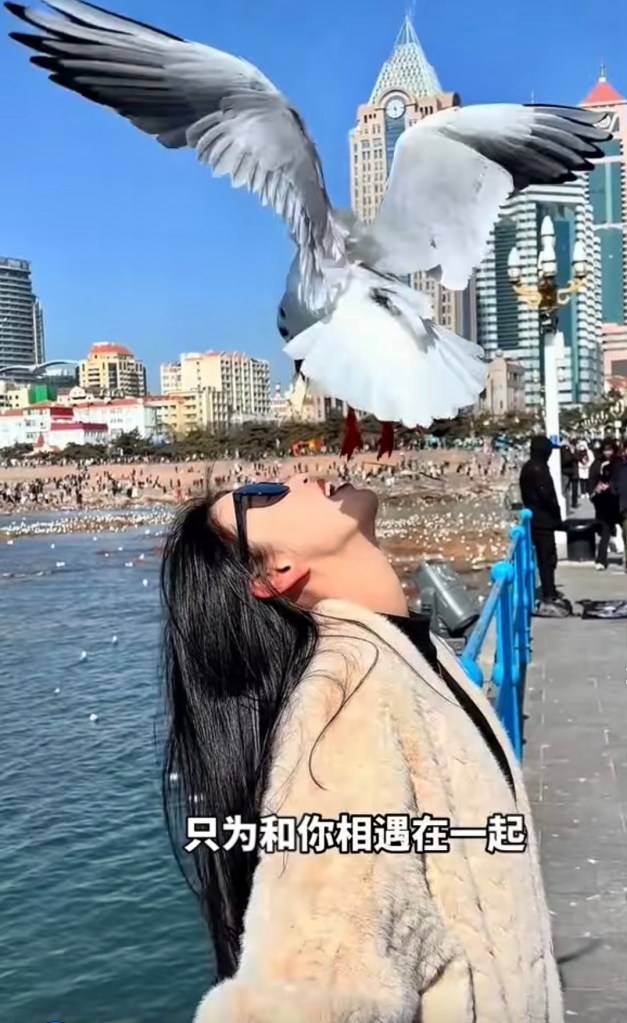
海鸥悬空戏游人,
栈桥攒动人海波。
泰山趵突钟灵秀,
一山一水一圣人。
二安青史留风骨,
婉约豪放相辉映。
绿肥红瘦梦初醒,
梦回吹角纵马行。
红瓦绿树勾旧忆,
鱼山孤影独凭栏。
红墙今沦为打卡,
昔日风情成流量。
秦皇汉武问仙路,
耐冬降雪绛白颤。
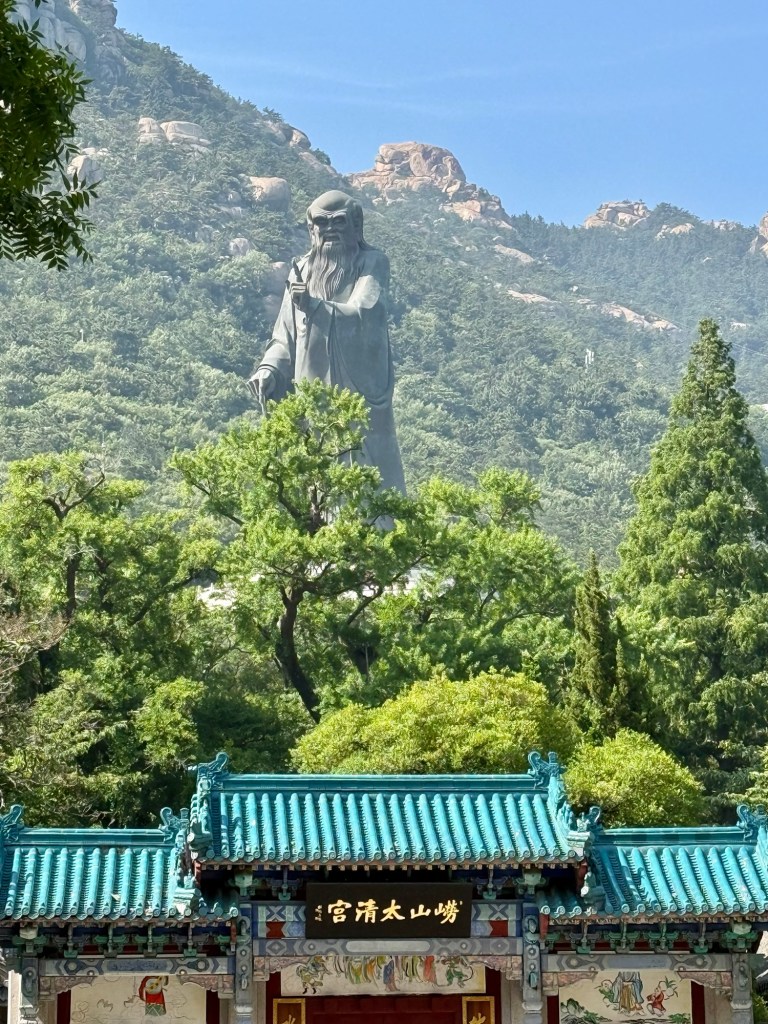
老子巍立观沧海,
手指天地问道心。
诗意赏析
1
栈桥是青岛最具代表性的海滨景观之一,长约440米,延伸入海。每逢季节更替,海鸥成群翱翔,与碧海蓝天相映成趣;桥上游客人海波动。
泰山素有“五岳之尊”之称,自古为帝王封禅之地;趵突泉则享有“天下第一泉”美誉,为济南泉文化的象征。“钟灵毓秀”意为汇聚天地灵气,孕育俊彦贤才。
“一山一水一圣人”是山东广为流传的文化概括:山指泰山,水指趵突泉,圣人则指孔子。短短七字,道出了齐鲁山川与儒家文化相互交融的精神特质。
2
李清照与辛弃疾,因号中皆有“安”字,后世并称“二安”,分别代表宋词婉约派与豪放派的巅峰成就。
“二安青史留风骨”指出二人不仅以词名世,更以人格与时代际遇共同构成文化风骨。李清照历经国破家亡,其词风由早年的清丽婉约转向晚年的沉郁悲凉;辛弃疾则一生志在恢复中原,词中充满报国壮志与壮志难酬之慨。
“绿肥红瘦”出自李清照《如梦令》:
知否?知否?应是绿肥红瘦。
原本描写暮春时节叶茂花残之景,经词人凝炼后,成为时间流逝与情绪流动的经典审美意象。
“梦回吹角”化用辛弃疾《破阵子》:
醉里挑灯看剑,梦回吹角连营。
梦境之中,号角长鸣,铁骑奔腾,重现沙场征战的壮阔场景。词人将报国理想与现实失落交织于梦境之中,形成悲壮苍凉而又豪情激荡的艺术张力。
3
小鱼山为青岛著名观景胜地,登高远眺,可见红瓦绿树、碧海蓝天,素有“最能代表青岛风貌的观景台”之誉。
“红瓦绿树”是青岛城市风貌的经典概括,承载着百年城市记忆与独特的人文气息。
诗中的“红墙”,指位于青岛市南区大学路与鱼山路交汇处的网红打卡地。其所属建筑为青岛市美术馆的一部分。随着网络传播的发展,这里逐渐成为游客拍照留念的热门地点。
“红墙今沦为打卡,昔日风情成流量”借助当代网络语汇,表达对城市文化景观被消费化、符号化现象的感慨。在快速传播与流量经济的时代背景下,许多原本承载历史记忆与文化情感的空间,被重新塑造为社交媒体中的视觉符号。
4
崂山自古被誉为“海上名山第一”,也是中国道教文化的重要圣地。相传秦始皇与汉武帝均曾东巡至此,寻访仙山、求药问道,因此崂山被赋予浓厚的求仙文化色彩。
太清宫内尚存两株五百余年古耐冬。耐冬即山茶花,因四季常青、凌冬不凋而得名,花期横跨冬春两季,是青岛市市花之一。
“降雪”典出聊斋志异《香玉》。故事中,白牡丹花仙“香玉”与耐冬花仙“降雪”情谊深厚,共同构成蒲松龄笔下充满诗意与灵性的花仙世界。
“绛”意为深红、大红之色,用以表现耐冬花浓郁饱满的色彩。诗中“耐冬降雪绛白颤”,既写红色耐冬与皑皑白雪红白相映之景,亦借《聊斋志异》中红耐冬与白牡丹花仙的意象,形成另一重红白辉映。现实花木与文学传说相互映照,使诗境更添灵秀与空灵。
太清宫前的老子圣像高约五十米,一手指天,一手指地,象征天地大道与道法自然之理。诗中“老子巍立观沧海,手指天地问道心”,“沧海”富有历史感、时间感和苍茫感;有胸怀如沧海、沧海桑田、渺沧海之一粟——既描绘崂山实景,也借老子形象表达对人生本源与内在精神世界的思考。
c.h.e.f andy
======================
published on 2.6.2026
齐鲁访今怀古篇 Qilu: Visiting the Present, Remembering the Past
Seagulls drift above, amusing those below;
The long pier teems, a tide of human waves.
Mount Tai and Baotu Spring, blessed with nature’s grace and nurturing excellence—
One mountain, one spring, one sage define the land.
The Two Ans’ noble spirit are edged in history;
The graceful and the heroic shine side by side.
“Green grows lush while red flowers fade” as one awakens;
“War horns revisit in dreams”, steeds charging across battlefields.
Red roofs and emerald trees awaken old memories;
Alone on Fish Hill, leaning by the railing.
The famous red wall now serves as check-in landmark;
The charm of former days reduced to the currency of clicks.
Qin and Han emperors sought the path of immortals;
Crimson camellias quiver against the white of falling snow.
Laozi stands towering, surveying the vast sea;
His gesture toward heaven and earth invites the heart to seek the Dao.
Poetic Appreciation
1. Mountains, Sea, and the Spirit of Qilu
Zhanqiao Pier is one of Qingdao’s most iconic seaside landmarks. Stretching about 440 meters into the sea, it extends gracefully into the bay. With the changing seasons, flocks of seagulls soar above the blue sea and sky, creating a lively coastal scene, while waves of visitors ebb and flow across the bridge.
Mount Tai, revered as the “Foremost of the Five Great Mountains,” has long been the site where emperors performed the sacred Fengshan rites. Baotu Spring, celebrated as the “Number One Spring Under Heaven,” is the symbolic heart of Jinan’s renowned spring culture. The phrase “endowed with nature’s grace and nurturing excellence” refers to a place blessed with the spiritual essence of heaven and earth, producing outstanding talents and cultural achievements.
“One mountain, one spring, one sage” is a well-known cultural summary of Shandong. The mountain refers to Mount Tai, the spring to Baotu Spring, and the sage to Confucius. In just seven characters, the phrase captures the unique fusion of Qilu’s natural landscape and the enduring influence of Confucian civilization.
2. The Two Masters of Song Ci Prose Peotry
Li Qingzhao and Xin Qiji are collectively known as the “Two Ans” because both literary names contain the character An(安). Together, they represent the highest achievements of the two major schools of Song lyric poetry: the Graceful (Wanyue) and the Heroic (Haofang).
The line “The Two Ans noble spirit are etched in history” emphasizes that they were celebrated not only for their literary brilliance, but also for the strength of their character and the historical circumstances they endured. Li Qingzhao experienced the collapse of her homeland and the loss of her family, causing her poetry to evolve from youthful elegance to profound melancholy. Xin Qiji devoted his life to the restoration of northern China, and his works are filled with patriotic passion as well as the sorrow of unrealized aspirations.
The phrase “green grows lush while red flowers fade” comes from Li Qingzhao’s lyric “Ru Meng Ling” (Like a Dream):
“Do you know? Do you know?
It should be that the green is lush and the red is fading.”
Originally describing the late-spring scene of flourishing leaves and fading blossoms, it became a timeless poetic image expressing the passage of time and the subtle flow of human emotion.
The phrase “war horns revisit in dreams” alludes to Xin Qiji’s “Po Zhen Zi” (Breaking the Battle Array):
“Drunk, I lift the lamp and gaze upon my sword;
In dreams I hear the war horns sounding through the camps.”
Within the dream, horns resound and cavalry charge across the battlefield, recreating the grandeur of military campaigns. By intertwining patriotic ideals with the frustration of reality, Xin Qiji creates an artistic tension that is at once heroic, tragic, and deeply moving.
3. Qingdao: Memory and Modernity
Xiaoyushan (Little Fish Hill) is one of Qingdao’s most celebrated viewpoints. From its summit, visitors can overlook the city’s iconic red-tiled roofs, green trees, blue sea, and clear sky. It is often praised as the observation point that best represents Qingdao’s unique character.
“Red roofs and green trees” has become the classic description of Qingdao’s urban landscape, embodying more than a century of city memories and a distinctive cultural atmosphere.
The “red wall” mentioned in the poem refers to the famous photo spot at the intersection of University Road and Yushan Road in Qingdao’s Shinan District. Part of the wall belongs to the Qingdao Art Museum. With influencers and the rise of social media, it has gradually become a popular destination for photographs and online sharing.
The lines “The famous red wall now serves as check-in landmark;
The charm of former days reduced to the currency of clicks” employ contemporary internet vocabulary to express concern over the commodification and symbolic consumption of cultural spaces. In an age driven by rapid media circulation and attention economies, many places once rich in historical memory and cultural sentiment are increasingly reshaped into visual symbols for social media.
4. Laoshan: Seeking the Dao
Laoshan has long been known as “the foremost famous mountain by the sea” and is one of the most important sacred sites of Chinese Daoism. According to tradition, Qin Shi Huang and Emperor Wu of Han both traveled eastward to this region in search of immortals, elixirs, and spiritual wisdom. As a result, Laoshan became deeply associated with the culture of immortality-seeking.
Within Taiqing Palace stand two ancient camellia trees over five hundred years old. Known locally as Naidong (“enduring winter”), the camellia earns this name because its evergreen leaves remain vibrant through the cold season. Its blooming period spans both winter and spring, and it is one of Qingdao’s city flowers.
“Jiangxue” (Descending Snow) is an allusion to the story “Xiangyu” from the Strange Tales from a Chinese Studio. In the tale, the white peony fairy Xiangyu and the camellia fairy Jiangxue share a profound friendship, together forming one of the most poetic and spiritually evocative flower-fairy narratives in Chinese literature.
The character jiang (绛) denotes a deep crimson or rich scarlet hue, capturing the luxuriant color of the camellia blossom. In the line “The crimson camellia and descending snow quiver in red and white,” the imagery operates on two levels. On the literal level, it portrays the vivid red camellias standing against pure white snow. On the literary level, it evokes the red camellia fairy and the white peony fairy from Strange Tales from a Chinese Studio, creating a second layer of red-and-white resonance. Through this interplay, real flowers and literary legends reflect one another, lending the poem an added sense of elegance, spirituality, and ethereal beauty.
Standing before Taiqing Palace is a towering statue of Laozi, approximately fifty meters high. One hand points to heaven and the other to earth, symbolizing the Great Dao and the principle of following nature. In the poem, “Canghai” evokes not merely the sea itself, but also a sense of history, time, and majestic vastness. Hence the expressions “a heart as vast as the sea,” “the sea and mulberry fields” (the world’s transformations through ages), and “a grain in the vast sea” (human insignificance before the infinite). the lines “Laozi stands majestic, gazing across the sea; one hand points to heaven and earth, questioning the Dao within” depict not only the physical landscape of Laoshan but also a philosophical reflection on the origins of life and the inner spirit.

