掌释乾坤
掌释乾坤
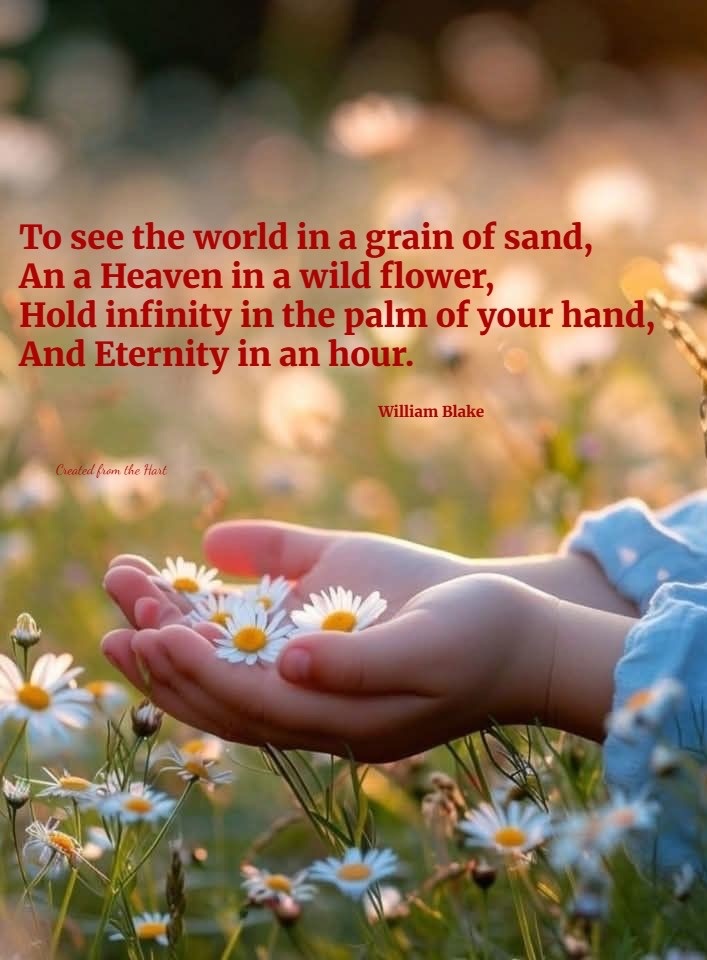
开出了十方繁花
一花一界
一鬓一世
你在花中洞视人间万念
回顾鬓尖归处
指拈岁月
轻落一粒尘埃
一岁一枯荣
一月一圆缺
我欲弹指窥视古今
触不到宇宙尽头
心渡轮回
千世舟行忘川水间
一念情生
一世渡劫
你我日月星辰
无须追问始终
神回空灵
繁花终将归于沉寂
无念无灭
如镜如空
你我指间星河
万物皆一,空而不寂
c.h.e.f andy
散文解读篇 —— 掌释乾坤
—《掌释乾坤
开出了十方繁花
一花一界
一鬓一世
你在花中洞视人间万念
回顾鬓尖归处》—
掌心虽小,乾坤广大,却由掌中“释”出,意识个体的觉悟、意志或灵性,足以揭示宇宙本质。
“开出”指从虚无中、从空性中化生;从顿悟、慈悲、轮回中的美丽绽放。“十方”是佛家宇宙空间。“繁花”是“万象”的诗性表达,指宇宙的万千世界、轮回的显现。
你若能从掌中参透乾坤,
便能在虚空中绽放繁花万象;
每一朵花都是一个世界,
如同每一缕白发,藏着一整个人生。
通过观照审视万念,回望人生。你身在花的空性中、万象中,以慧眼观世间万念,穿透万象。你看遍了万象,心返自我,最终回顾转向的,是自己渐白的鬓发,是一世的归宿。
—《指拈岁月
轻落一粒尘埃
一岁一枯荣
一月一圆缺
我欲弹指窥视古今
触不到宇宙尽头》—
轻轻地捻起时间,从容沉静,仿佛岁月可被观照。“尘埃”是因果、宿命、肉身、归土,也呼应“繁华”之终。轻描淡写的放下了。岁月之枯荣、圆缺 —— 是宇宙循环,人世起伏,是情的悲欢离合。
“弹指”是动作,也是极短的时间。“我欲窥视古今”,是一种想穿越历史、俯瞰文明,自知无法达成的野望。明白了即便拥有觉知、也无法触碰 “宇宙的尽头” 的极限,是一种悟后的谦卑:知道世界浩瀚,知见有所不及。
—《心渡轮回
千世舟行忘川水间
一念情生
一世渡劫
你我日月星辰
无须追问始终》—
心已超越轮回。身仍依世间法经历千世的重生,忘却前世记忆。因一念,有了意识,成了“有情众生”,一世承受因果的自然法。
“你我”是有情众生,“日月星辰”是无情天体,个体(你我)与宇宙(日月星辰)并列,显见的是“平等心”与“合一感”。当你意识到万物同在、你我一体,一切起始与终结就不再重要。
—《神回空灵
繁花终将归于沉寂
无念无灭
如镜如空
你我指间星河
万物皆一,空而不寂》—
神识回归无执无碍,自由解放。十方繁花皆为空相,将“归于沉寂”, 可解为热力学第二定律 (the second law of thermodynamics)。心无执念,也就空无生灭。是镜子如实映出觉知真身,也是终极的空性。
“你我”是两个人,也是“有情众生”。“指间”象征微小、举手投足之间;“星河” 象征浩瀚、宇宙、万象。浩瀚星河,就在指间。宇宙合一,表明“空非灭、寂非空”,反而有无限生机。
======================
published on 7.6.2025
see my English translation👇🏻
掌释乾坤 The Palm Releases the Cosmos
The palm releases the cosmos,
from which bloom tenfold realms of flowers.
Each flower reveals a world;
Each silver strand, a lifetime.
You gaze through the blossoms at the countless human desires,
then look back towards where silvered hair returns.
Fingers hold lightly the passing years,
and gently let fall a single speck of dust.
Each year — withering, blooming anew;
Each moon — full, then fading.
I would snap my fingers to glimpse time’s quiet unfolding,
yet cannot touch the ends of the universe.
The heart transcends the cycle of rebirths.
A thousand lifetimes traversing the River of Forgetfulness.
From a single thought, sentience awakens;
One life bears the trials born of feeling.
You and I — sun, moon, and stars —
need not seek to know beginning or end.
The spirit returns to emptiness.
All blossoms must fall into silence.
No thought, no ending —
Like mirror, like void.
You and I — with galaxies upon our fingertips:
All things are one. Emptiness is not absence.
Prose Interpretation of ——掌释乾坤 The Palm Releases the Cosmos
—《The palm releases the cosmos,
from which bloom tenfold realms of flowers.
Each flower reveals a world;
Each silver strand, a lifetime.
You gaze through the blossoms at the countless human desires,
then look back towards where silvered hair returns》—
Though the palm is small, the cosmos vast, it is from the palm that the universe is released. It suggests that an awakened individual consciousness — through insight, will, or spirit — is sufficient to reveal the very nature of existence.
The word “bloom” points to creation from emptiness — the flowering from sudden realization, compassion, and from the cycles of rebirth. “tenfold realms” comes from Buddhist cosmology, symbolizing all space. The “blossoms” are a poetic image of all phenomena — representing the manifold worlds, the illusory appearances of samsara.
If one can perceive the cosmos in the palm,
then one can also bloom a myriad worlds within the void.
Each blossom is a world in itself,
just as each silver hair contains the passage of an entire life.
By observing, you contemplate the world’s countless longings —
you dwell within the emptiness of the flowers, among all phenomena.
With awakened insight, you penetrate the desires of the world.
And after seeing all, the gaze turns inward —
toward your own silvered temples,
toward the place where your life will finally return.
—《Fingers hold lightly the passing years,
and gently let fall a single speck of dust.
Each year — withering, blooming anew;
Each moon — full, then fading.
I would snap my fingers to glimpse time’s quiet unfolding,
yet cannot touch the ends of the universe》—
Time is lifted gently, as if between two fingers — quiet, composed —
as if years themselves can be held in contemplation.
The “speck of dust” symbolizes karma, fate, the body, and eventual return to earth —
an echo of the blossoms’ impermanence. It is released as if lightly, effortlessly —
as though even destiny can be let go.
The cycles of decay and renewal, of fullness and waning —
this is the rhythm of cosmos, of life and of human emotions.
The snapping of fingers is a conscious action, also suggesting a brief moment,
with the wish to glimpse time’s quiet unfolding — an impossible desire to look into past and future, to comprehend civilization and being in one breath.
But the poem recognizes the humility that comes after awakening:
no matter the insight, one cannot touch the edge of the universe.
To know this is already a form of wisdom.
—《The heart transcends the cycle of rebirths.
A thousand lifetimes traversing the River of Forgetfulness.
From a single thought, sentience awakens;
One life bears the trials born of feeling.
You and I — sun, moon, and stars —
need not seek to know beginning or end》—
The heart has moved beyond the turning wheel of reincarnation,
yet the body, bound by worldly law, still passes through a thousand lifetimes —
drifting on the River of Forgetfulness, where memory of past lives are forgotten.
One single thought gives rise to awareness —
thus is sentience born.
And with that awareness comes feeling, and with feeling, trial —
karma, grief, love, and loss.
“You and I” are sentient beings,
while sun, moon, and stars represent the insentient cosmos —
yet the two are placed side by side.
In that equality lies the heart of nonduality — the sense that you, I, and the stars are made of the same dharma.
In this realization, there is no longer any need to question where it all began,
or how it will end.
—《The spirit returns to emptiness.
All blossoms must fall into silence.
No thought, no ending —
Like mirror, like void.
You and I — with galaxies upon our fingertips:
All things are one. Emptiness is not absence》—
The awakened mind returns to spaciousness —
free of clinging, free of form.
The ten thousand blossoms — manifestations of all things —
must fall into stillness.
This echoes the Second Law of Thermodynamics —
that all things drift toward entropy, to silence.
But when there is no thought,
there is also no cessation of thought.
It is not extinction — it is clarity.
The mind is a mirror,
emptiness is not lack, but infinite openness.
“You and I” are again two people — or all living beings.
“Fingertips” represent the delicate, the intimate.
“Galaxies” evoke the infinite, the vast.
To hold the galaxies at one’s fingertips
is to know that the immeasurable is found in the immediate.
All things are one.
Emptiness is not absence —
it is the womb of boundless existence.
 c.h.e.f