Do not cry because it’s over, smile because it happened. The beauty of the world, is all before our eyes. Let not the longing for what is not, make us miss what is.
Not for what is lost do I grieve, But for what I hold, I rejoice. Success and failure, gain and loss— all drift like clouds. Let not failure entangle the heart, nor steal the sweetness of success.
Not for others’ brilliance do I fret, but for my own achievements,I cheer. True worth lies within the soul, not in another’s gaze. Let not petty disputes dim your inner light.
Not for fading youth do I despair, but for the rising sun, I give thanks. Through joy and sorrow, coming together and apart, I’ve lived it fully, with grace. Let not what slip away bring sorrow, and make you forget to live this moment.
Not for aging looks do I sigh, but for the strength to live unassisted, I am glad. Though youth may fade, the spirit sinks deep. Let not yesterday’s silent passing, make you lose life’s delights.
Not for life’s brevity do I despair, but for each moment of beauty and brilliance, I hold dear. The truth, the good, the beautiful— they sing of why life is worth living. Let not desires and delusions, steal away eternity in a moment.
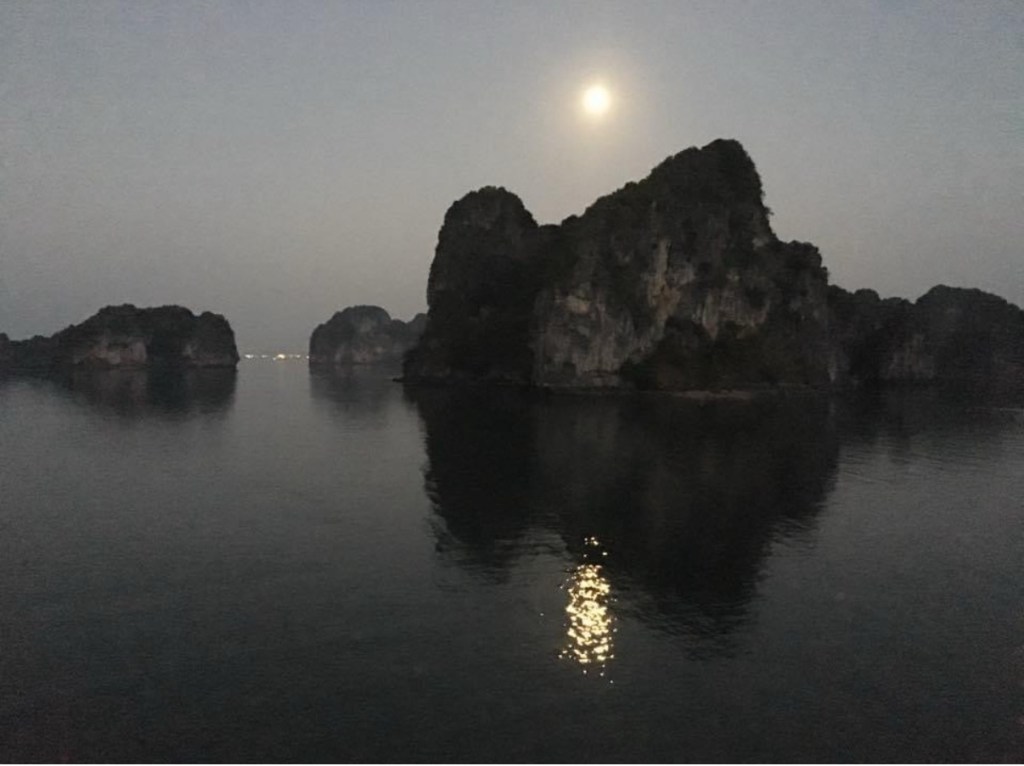
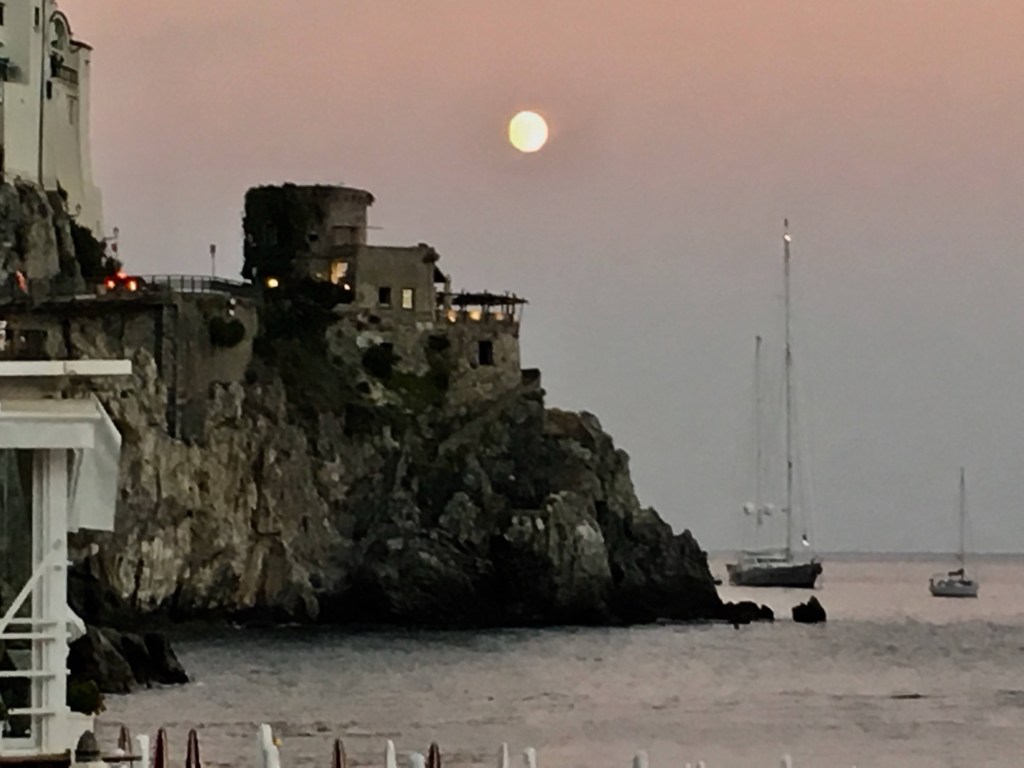
下龙湾,halong bay, Vietnam 25.12.2015索伦托 Sorrento Italy 23.9.2018
皎皎我心
明月弯弯, 普照九州。 五千载荣辱浮沉, 百年砥砺,五代图强。 负千辛,破万难, 血与汗写就辉煌。
昭昭明月, 寸土泛光。 千秋风骨耀青史。 经济腾飞,科技突破, 勤耕耘,心不息, 万世薪火映中华。
朗朗乾坤, 照耀世人。 江山万里英才出, 二弹一星,震慑寰宇。 神不屈,梦不休, 智械翱翔技争锋。
皎皎我心, 侃侃胸襟。 长风破浪正当时, 脚踏大地,胸怀星海。 学不辍,思不歇, 青春筑梦照乾坤。
c.h.e.f andy
=========================
published on 26.6.2025
see my English translation 👇🏻
皎皎我心 Bright Is My Heart
The moon arcs gently, Its silver light bathing all Nine Provinces. Five millennia of honour and disgrace, rise and fall, A hundred years of toil, five generations striving. Bearing countless hardships, breaking myriad trials, blood and sweat have written our brilliance.
The radiant moon still shines, its light glimmers on every inch of land. The unyielding spirit of a thousand years shines across our chronicles. The economy soars, science breaks through, we labor diligently, our hearts tireless— the eternal flame of a people lights up China.
The vast heavens, clear and bright, illuminate all beneath. Across ten thousand miles, heroes arise; Our twin bombs and satellite shook the world. Unbending in spirit, unending in dreams, with AI and drones we soar and compete.
Bright is my heart, and open is my soul. With the wind behind us, this is the time to ride the waves—— grounded on earth, our hearts embrace the stars. We never cease to learn, nor rest our thoughts, as youth forges dreams to light the sky.
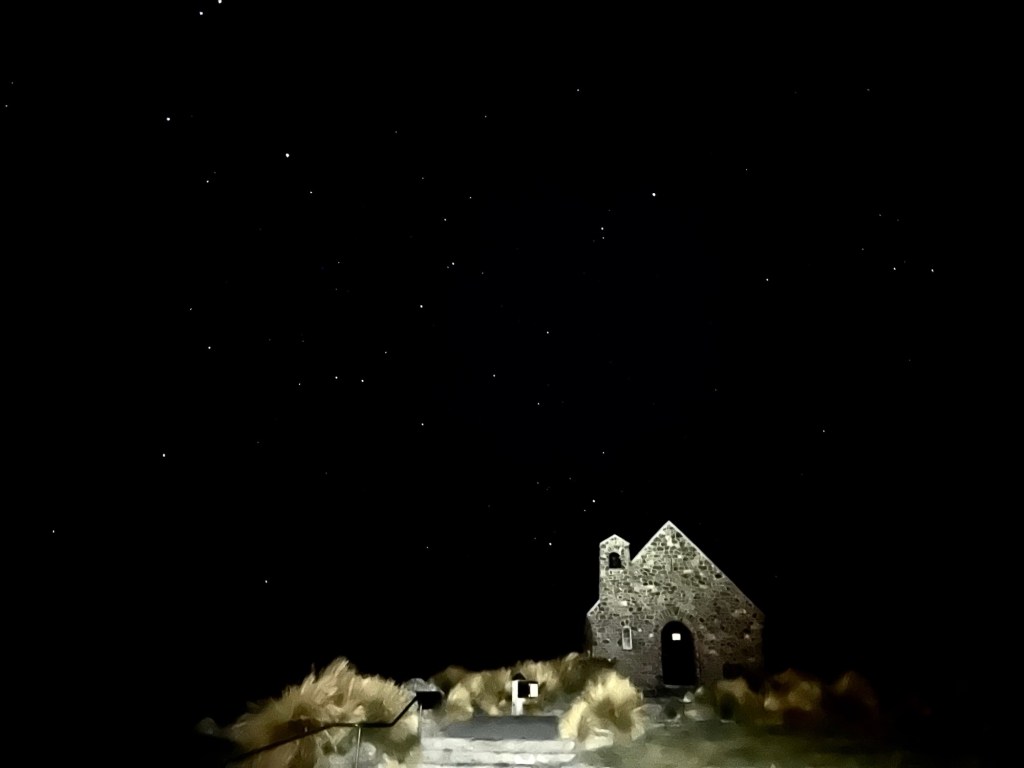
Starlight, the heart’s whisper in the night sky, a secret that glimmers and fades, a flickering confession in the silence.
Once, beneath the moon, we pointed our fingers to count the stars— they were the edge of our ideals, the place where dreams first began.
Back then, stardust glowed between our brows. We believed time was ours to hold—like stardust between our fingers. We watched the stardust fall, each a dream we never spoke aloud.
When did the stars draw their curtain? It was because— the dust of living veiled the starry sky, the heart forgot how to dream, and time lost its heartbeat.
The path through time, draped snow over the fire in our hearts. Our original heart rekindled the light. What we long to guard against is not the end of life, but the end of dreams.
Wind scatters the fragrant dust – the fading scent of blossoms, and shadows lose their way home. They say the tears have long dried in the wind, yet memories rise, one by one, and slip quietly into the heart’s door.
Rain strikes the plantain leaves— the heart, without a home. For a moment, the rain hastens flowers to fall; I long for the waters in spring and fragrance of flowers of the past, all eventually return to the flowing stream.
Where do the clouds drift? I long to spread my wings and soar, to glide across ten thousand miles of sky, free and at ease leaving the bonds and dreams once held, letting love fall into the dust of the world.
Still, youth lingers in the mountains, though time flows like the river. I sit beneath the enduring green hills, watching flowers fall, clouds return to their rightful rhythm. My heart holds no more clinging— only the echo of the wind between my brows.
✦ Notes on Translation Choices:
“眉间的风” → “The wind between my brows” A literal yet poetic rendering, keeping the mystery and intimacy intact.
“情落九尘” → “letting love fall into the dust of the world” Evokes the image of letting go, returning to earth, transcending desire.
“我坐在青山之下” → “I sit beneath the enduring green hills” “Enduring” echoes the idea of “芳华青山在” — beauty that persists.
眉间的风 The Wind Between My Brows · Prose Reflection
The Wind of Memory
The wind rises, lifting the “fragrant dust” — the fading scent of blossoms, the fragments of memory, the echoes of once-was. “Shadows” appear — shadows of people, shadows of the heart, shadows of longing. There is confusion, a loss of direction, nowhere to return.
They say the tear stains have long dried in the wind — as if time had sealed the past. One thought it was forgotten, but in truth, it never left — the memories were etched deep within. The phrase “they say” reveals the undercurrent of emotional upheaval.
The tide of emotion cannot be held back. Memories rise like waves, scene after scene resurfacing, until at last they slip into the door of the heart — emotions entering the soul again, old dreams softly knocking on the door of the spirit.
The Rain’s Attachment and Letting Go
Rain taps the plantain leaves — a sound like quiet weeping, knocking directly on the heart. The rain outside unsettles the world within; emotions lose their weight and balance, the self feels adrift in the world, without anchorage or belonging.
In a moment, the rain hastens the fall of blossoms — a natural image mirroring the quiet unraveling of love. There remains a lingering yearning for the past beauty — the spring waters, the days of flower blooms — all that were once perfect, all that now remains unforgettable. But those once-beautiful moments flow away with the current, returning to emptiness, to tranquility. Like “falling flowers carried by the spring stream”, when emotion runs its deepest, it must eventually be released, gracefully, a tinge of sorrow, yet never drowning the self.
The Cloud’s Ascension
Where do the clouds go? Where do thoughts, emotions, the soul —this drifting self —find their way beyond the past, beyond confusion, toward a true home? Once all is let go without clinging, where will I go? A desire stirs — to spread wings and soar, a conscious resolve to break free from entanglement and memory. This is the rising of awareness, the act of letting go. To soar freely through the vast skies —unbounded, expansive, open. To let go of old loves, past entanglements, dreams no longer clung to. This is not escape, but a turning — a quiet flipping of the page.
Emotion falls into the nine layers of dust —it has been completely released, returned to the myriad veils of the mortal world that once burdened the heart. They can no longer.
The Everlasting Green Hills
芳华 — youth, memory, affection, beautiful days. The green hills — steadfast, unmoved by time. Though we age, though feelings soften and settle, the green hills remain. The beauty of youth, the ones we loved, the heart once stirred —though we no longer have it, they remain within, as unshifting as the mountain. youth lingers in the mountains, though time flows like the river. mountains and flowing rivers — one constant, one ever-changing; one still, one in motion. In the poem, wind, rain, clouds, and flowing water all merge into one. All memories, tears, and attachments ultimately drift away with the river’s current. Now I sit beneath these mountains —not in retreat, but in stillness. I observe, reflect, no longer chasing, fleeing, or clinging. I quietly watch: flowers fall, clouds return —all things finding their place. A gentle parting, free of attachment. My heart holds no longer clings. Once I felt deeply — now, I am free. No longer tethered.
And still, echoes the wind between my brows. The brow — the most sensitive bridge of emotion. The wind — a bearer of love, of sorrow, of tenderness, of memory… Now, it no longer aches, no longer entangles, but lingers softly in my soul —a whisper, a resonance. It is not longing. It is the warmth that remains, when all else has been set free.
You did not forget —you simply set it down. You were not emotionless — you just stopped clinging on. Emotion is no longer a burden. It becomes wind. It becomes light. It becomes a soundless echo.
Time flows on, Splendor fades away. Sixty swift years have passed— Yet a blade of grass feels like yesterday.
In a fleeting moment, beauty comes and goes. As light sinks into dusk, the original heart still softly glows.
Nightfall brings a gentle chill, autumn frost colours the temples. Love is tucked into every sleeve, unfaded by the brush of time.
Grandchildren at play, family joy in full bloom. Affection seeps through the sleeves we wear, and heritage is cherished, generation to generation.
The sun and moon take turns, light and shadow in seamless flow. Storms hasten the passing years, the moon’s waxing and waning follow its own rhythm.
寸草犹昨日 A Blade of Grass, Feels Like Yesterday (Prose Reflection on the Poem)
This title draws from a line in Meng Jiao’s Tang-dynasty poem “Song of the Wandering Son”: “Who says the heart of a blade of grass can repay the warmth of spring in full?”
Parental love is like the sun in spring — warm, constant, and nurturing. Even if a child holds a heart as sincere as a blade of grass, how could it ever truly repay the boundless care poured forth over countless springtimes? “A blade of grass, feels like yesterday” becomes a meditation on life, on memory, and on the enduring ties of family.
Time flows without pause, slipping silently through the gaps between fingers. The splendor of the past has long since faded; sixty swift years have passed in the blink of an eye. Life, like grass, is fragile and humble. And yet — even after all these years — the heart of that single blade still feels vividly present, as if it were only yesterday. This is a heart of filial devotion, of original intent, of tender affection — or more broadly, the enduring warmth of human love. It is the feeling that, though time rushes by, memory clings close.
The word “xuyu” means a very brief moment. Like a spark of lightning or a flicker of thought, it reflects how swiftly life can pass. Beauty, like spring blossoms, comes and goes in that fleeting instant. Brilliance stands for life’s dreams and glories, while dusk marks the entrance into our later years. Even as radiance fades, the heart’s original light remains — a soft and enduring glow that gently warms the soul.
Evening brings a subtle chill; autumn enters, and with it, life’s twilight. Frost now touches the temples — strands of hair quietly turning white. Night, cool air, and autumn itself all become subtle notes in the music of time. The sleeves are filled with love — so much that even time cannot brush it away. Love lies hidden in the sleeves—though the temples grey with autumn frost, the heart’s deep affection has never faded.
Laughter rings from playing children; generations gather in joy. This is the richness of life renewed — as one life approaches its twilight moments, many others bloom. Affection overflows from the heart, seeping through the collar. From generation to generation, it is cherished and passed on—preserving the spirit, the bonds, and the traditions.
The sun and moon take turns; light and shadow flow in endless succession — the very rhythm of time and the laws of the cosmos. Winds of change stir and hasten the passing years. The moon waxes and wanes, just as human life ebbs and rises — each with its own appointed rhythm. There’s no need for clinging or regret. Every life has its luminous moments — each one, in its time, full of brilliance.
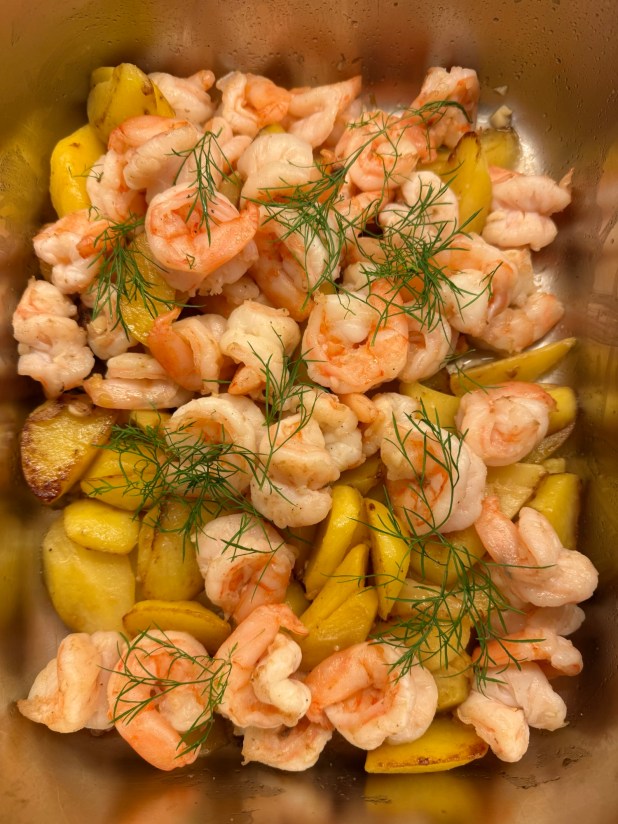
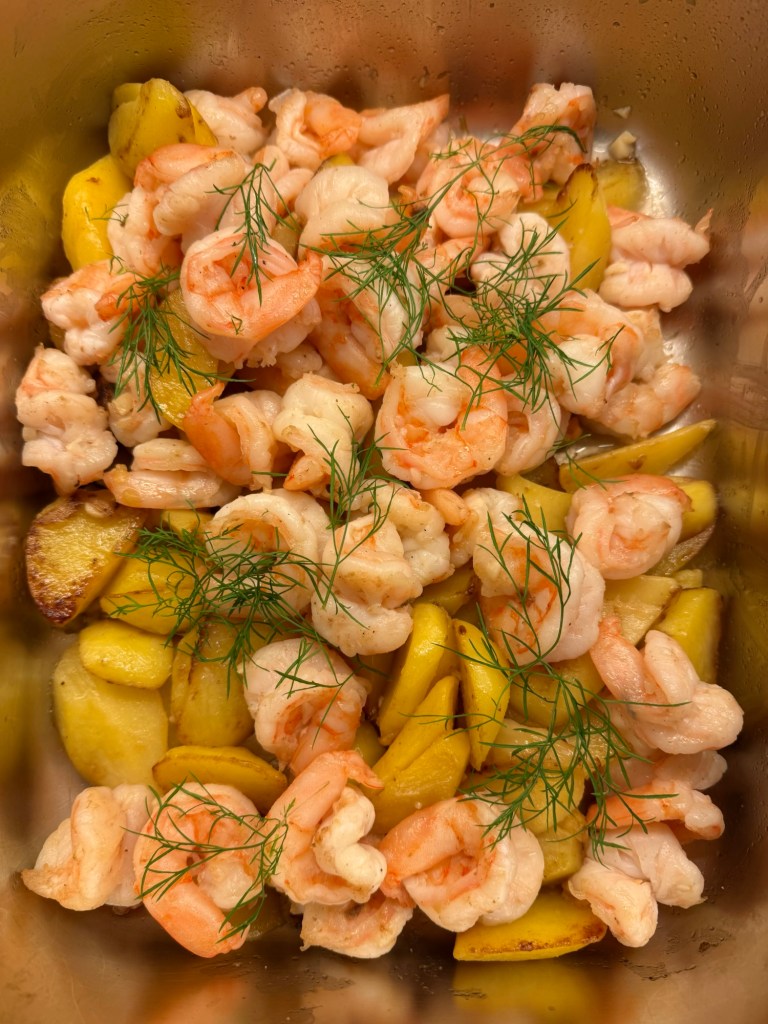
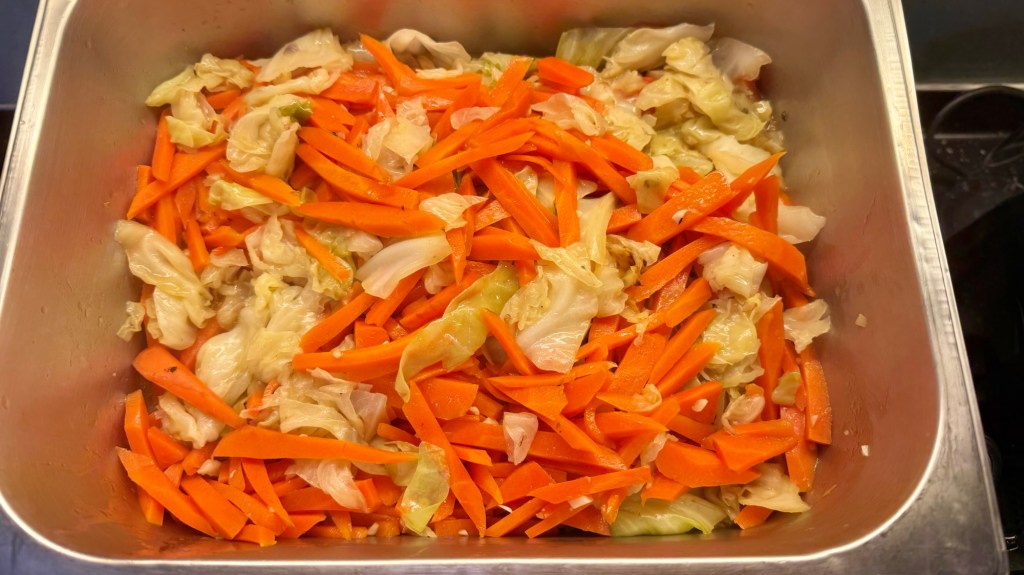
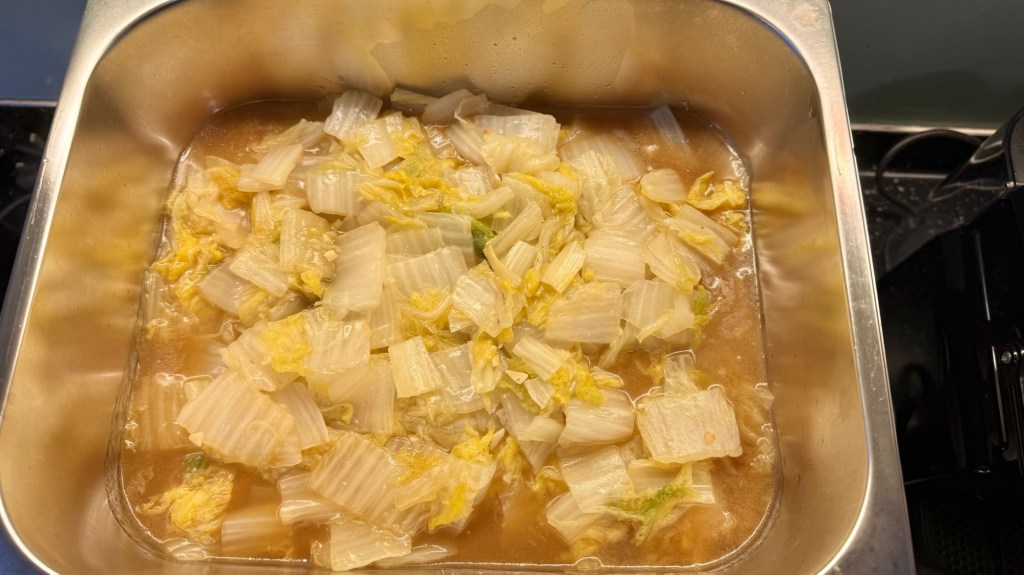
You are relaxed and unhurried, never rushed, never flustered. Your spatula moves with grace—like rolling clouds and swirling wind. as carrots, cabbage, napa cabbage, and potatoes leap and dance in the wok. The colors gleam, the oil gently shimmers, and oyster sauce draws out the vegetables’ sweetness— a wok of wafting fragrance, awakening slumbering appetites.
Two hours of effort serves a delicious lunch for forty-five. The aroma wafts through the house, lingering, refusing to leave. Four tasty dishes— bright in color, rich in flavor, greens and reds, meat and vegetables, all delicately balanced— a tenderness of craftsmanship, a silent gift of love.
Huadiao Braised Chicken— gleaming, glazed, a single glance makes mouths water. Prawns with potatoes— bouncy and tender, each bite a happy surprise. Chicken, prawns, two vegetable dishes— they stir layer upon layer of appetite. The more you smell, the more you crave; the more you look, the hungrier you grow. Fragrance teases the taste buds, summoning a longing—bite after bite, endlessly.
At Oasis @ Outram Day Hospice we wait in quiet anticipation—— These twice-monthly meals are a sharing of warmth and deliciousness, a heartfelt remembrance of our patients.
The palm releases the cosmos, from which bloom tenfold realms of flowers. Each flower reveals a world; Each silver strand, a lifetime. You gaze through the blossoms at the countless human desires, then look back towards where silvered hair returns.
Fingers hold lightly the passing years, and gently let fall a single speck of dust. Each year — withering, blooming anew; Each moon — full, then fading. I would snap my fingers to glimpse time’s quiet unfolding, yet cannot touch the ends of the universe.
The heart transcends the cycle of rebirths. A thousand lifetimes traversing the River of Forgetfulness. From a single thought, sentience awakens; One life bears the trials born of feeling. You and I — sun, moon, and stars — need not seek to know beginning or end.
The spirit returns to emptiness. All blossoms must fall into silence. No thought, no ending — Like mirror, like void. You and I — with galaxies upon our fingertips: All things are one. Emptiness is not absence.
Prose Interpretation of ——掌释乾坤 The Palm Releases the Cosmos
—《The palm releases the cosmos, from which bloom tenfold realms of flowers. Each flower reveals a world; Each silver strand, a lifetime. You gaze through the blossoms at the countless human desires, then look back towards where silvered hair returns》—
Though the palm is small, the cosmos vast, it is from the palm that the universe is released. It suggests that an awakened individual consciousness — through insight, will, or spirit — is sufficient to reveal the very nature of existence.
The word “bloom” points to creation from emptiness — the flowering from sudden realization, compassion, and from the cycles of rebirth. “tenfold realms” comes from Buddhist cosmology, symbolizing all space. The “blossoms” are a poetic image of all phenomena — representing the manifold worlds, the illusory appearances of samsara.
If one can perceive the cosmos in the palm, then one can also bloom a myriad worlds within the void. Each blossom is a world in itself, just as each silver hair contains the passage of an entire life.
By observing, you contemplate the world’s countless longings — you dwell within the emptiness of the flowers, among all phenomena. With awakened insight, you penetrate the desires of the world. And after seeing all, the gaze turns inward — toward your own silvered temples, toward the place where your life will finally return.
—《Fingers hold lightly the passing years, and gently let fall a single speck of dust. Each year — withering, blooming anew; Each moon — full, then fading. I would snap my fingers to glimpse time’s quiet unfolding, yet cannot touch the ends of the universe》—
Time is lifted gently, as if between two fingers — quiet, composed — as if years themselves can be held in contemplation. The “speck of dust” symbolizes karma, fate, the body, and eventual return to earth — an echo of the blossoms’ impermanence. It is released as if lightly, effortlessly — as though even destiny can be let go.
The cycles of decay and renewal, of fullness and waning — this is the rhythm of cosmos, of life and of human emotions. The snapping of fingers is a conscious action, also suggesting a brief moment, with the wish to glimpse time’s quiet unfolding — an impossible desire to look into past and future, to comprehend civilization and being in one breath.
But the poem recognizes the humility that comes after awakening: no matter the insight, one cannot touch the edge of the universe. To know this is already a form of wisdom.
—《The heart transcends the cycle of rebirths. A thousand lifetimes traversing the River of Forgetfulness. From a single thought, sentience awakens; One life bears the trials born of feeling. You and I — sun, moon, and stars — need not seek to know beginning or end》—
The heart has moved beyond the turning wheel of reincarnation, yet the body, bound by worldly law, still passes through a thousand lifetimes — drifting on the River of Forgetfulness, where memory of past lives are forgotten.
One single thought gives rise to awareness — thus is sentience born. And with that awareness comes feeling, and with feeling, trial — karma, grief, love, and loss.
“You and I” are sentient beings, while sun, moon, and stars represent the insentient cosmos — yet the two are placed side by side. In that equality lies the heart of nonduality — the sense that you, I, and the stars are made of the same dharma.
In this realization, there is no longer any need to question where it all began, or how it will end.
—《The spirit returns to emptiness. All blossoms must fall into silence. No thought, no ending — Like mirror, like void. You and I — with galaxies upon our fingertips: All things are one. Emptiness is not absence》—
The awakened mind returns to spaciousness — free of clinging, free of form. The ten thousand blossoms — manifestations of all things — must fall into stillness. This echoes the Second Law of Thermodynamics — that all things drift toward entropy, to silence.
But when there is no thought, there is also no cessation of thought. It is not extinction — it is clarity. The mind is a mirror, emptiness is not lack, but infinite openness.
“You and I” are again two people — or all living beings. “Fingertips” represent the delicate, the intimate. “Galaxies” evoke the infinite, the vast.
To hold the galaxies at one’s fingertips is to know that the immeasurable is found in the immediate.
All things are one. Emptiness is not absence — it is the womb of boundless existence.
Time is bleeding, drop by drop— from the sniper barrel of a war criminal, from a child’s shattered skull. it drips down, staining the blasted ruins, and shattering the shameless lies.
Empty dead eyes— don’t understand: What happened? Why is there a devil in human skin aiming at young life, and shooting? Simply because—he begged for a scrap of food at the ration station, he was wiped off the face of the earth.
Humanity is tearing apart, bit by bit, stripping away the last shreds of conscience, ripping out the executioner’s soul. In the end— senseless slaughter, erases what little fragile humanity remained.
A desperate young life, unable to find—a refuge to hide, to stay alive. Whom have I wronged? Why the ruthless purge? Must it end in— massacre? Just because you are drunk on the power to decide who lives and dies, you reduce human life to mere weeds beneath your feet.
The human heart is weeping, dying slowly— in brutality, deceit, injustice, and lawlessness, bit by bit by bit.
The whole world watches— genocide, broadcast daily, a mockery of that costume called morality and virtue. And beneath it— is exposed, the hideous face of Western hegemonic exploitation.
What kind of treachery can unleash upon defenseless civilians—women and children— a massacre so cruel, so inhumane?
what kind of despicable fake can be so deranged as to claim that genocide is an act of self-defense?
What kind of double standard can lie through open eyes, betray all conscience, and watch life reduced to ashes?
what kind of evil can make one bereft of all conscience, devoid of humanity, that it leaves the innocents in rivers of blood, their bodies scattered?
what kind of plague of warmongers can ignore the world’s thousand accusing fingers, spittings and scoldings, massacre cities, and let the bones of unjustly murdered souls laid waste, piled up like mountains
what kind of ignorance and prejudice can poison the heart, turn right and wrong upside down, bury kindness and righteousness, and strip away the last trace of humanity?
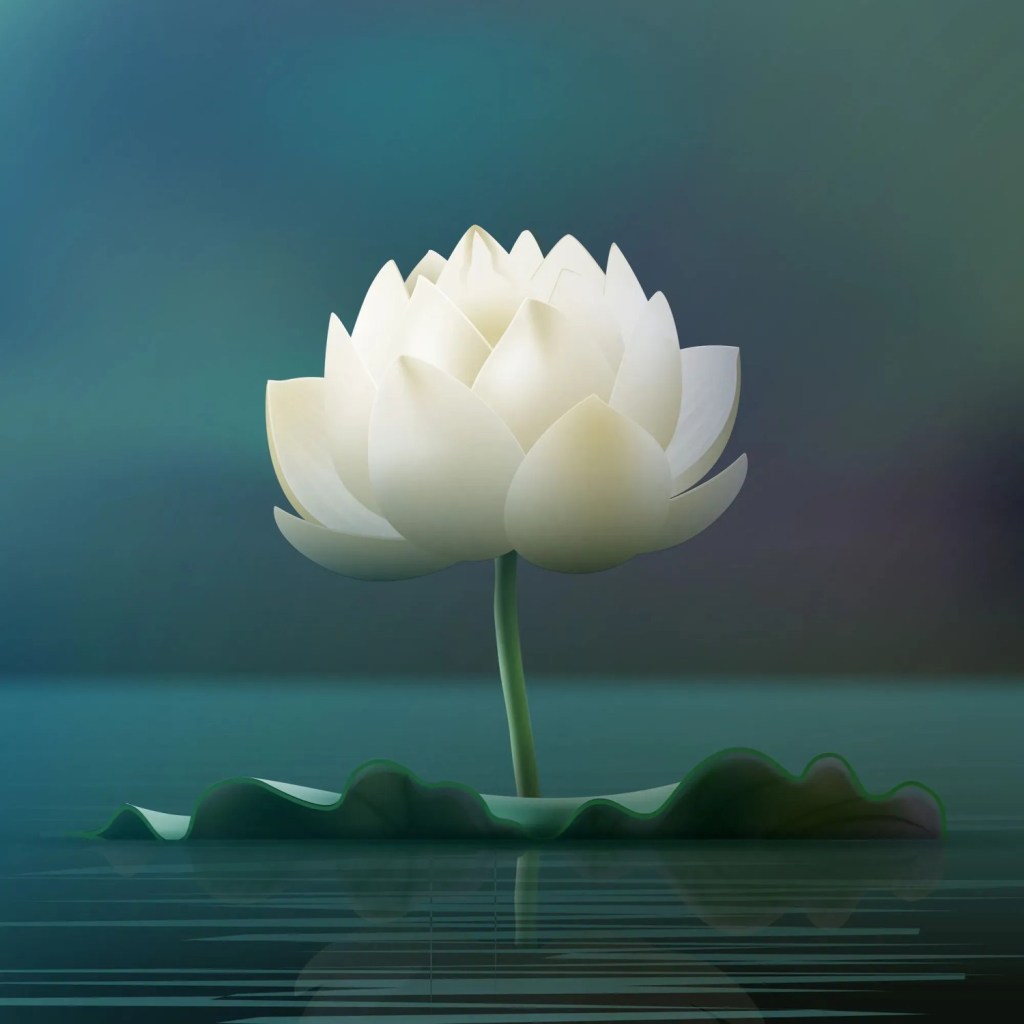
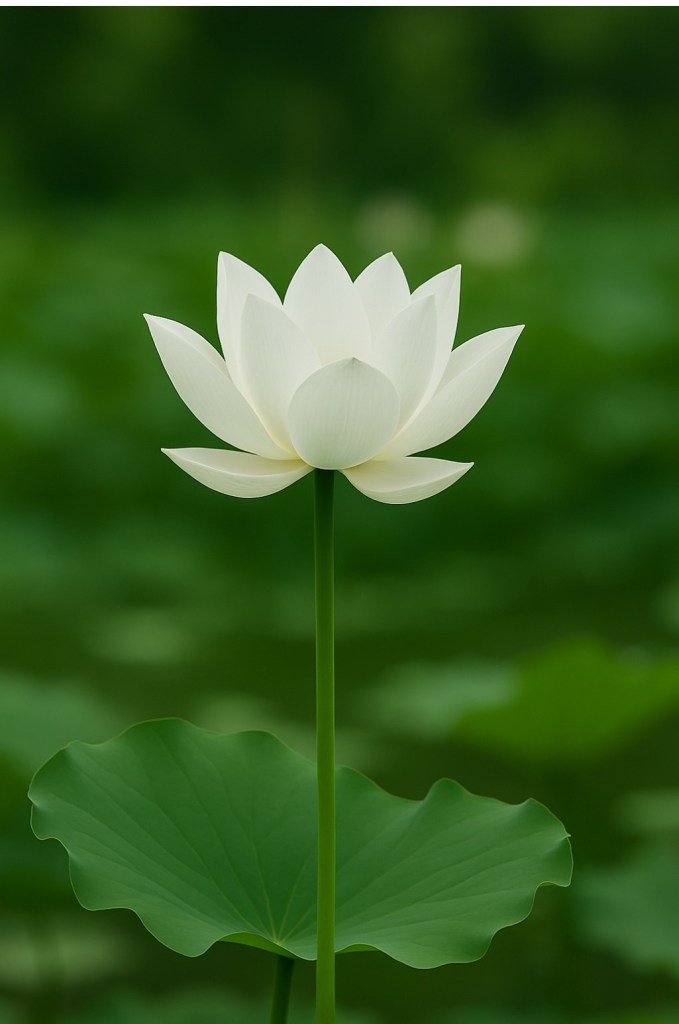
When disaster gives birth to a white lotus, you see not a single tear. A wound you never touched, nourishes the blossoming of snow (the white lotus), feeds the roots and stems, makes them strong.
When the wind stirs, branches sway; mess up an old dream, brushing away a past connection of fate. You never saw— the nursing (of the lotus) by the tears, the rebirth from the wounds.
A flower spirit breaking free, receiving light, and giving off light. The brilliance of new life, rises from the ashes of a past life—— a body shaped by trials, forged into steel.
You summoned the rain, to wash clean the mud of wounds. The murky water cannot obscure my name. It is I! You didn’t forget, and neither did I.
When the years put on new clothes, we recover both our old and new selves. Emerging from the long night, the spring sun waves at us. Time is smiling—— disaster, rebirth, and flourishing glory, last but only an instant.
Postscript:
The white lotus symbolizes rebirth—snow, and the blossoming of purity. From the mud of disaster and trauma, emerges an awakening born of adversity. You did not see, nor did you touch, my tears and wounds. old dreams and past bonds of fate are fading in the wind. What you didn’t see was that it was my tears nourishing, nurturing— The white lotus is the rebirth from my pain and trauma.
The flower spirit marks a transition from gentleness to resilience: not only pure and beautiful, but also empowered by suffering, it gains the strength, not just to receive light, but to give back light unto others. From white to steel—from innocence to strength.
You called forth the rain to wash my wounds clean. And you recognized my name in the mud. Time, and the long night, will eventually pass. We still remember each other— and in doing so, we recover both our old and new selves, in the same body. Rebirth and hope reside in the space of a single thought.
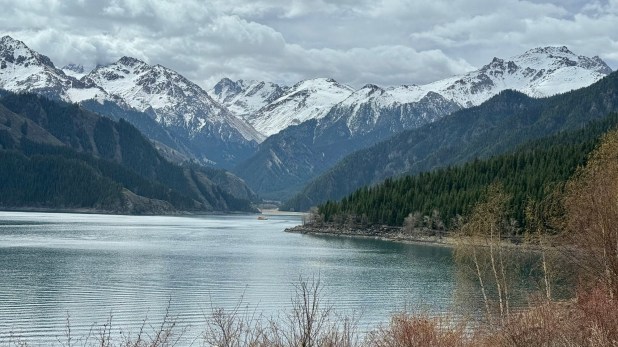
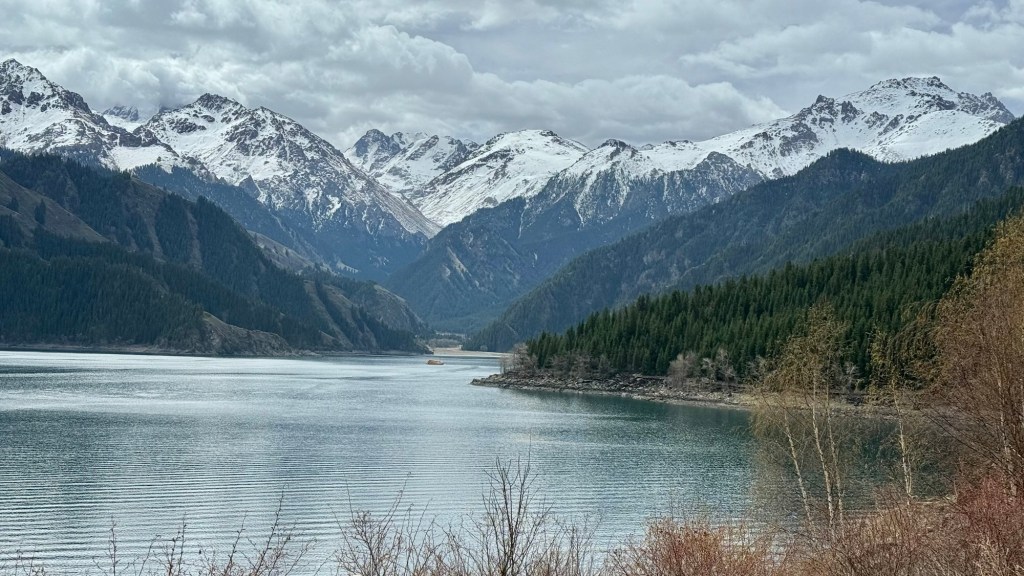
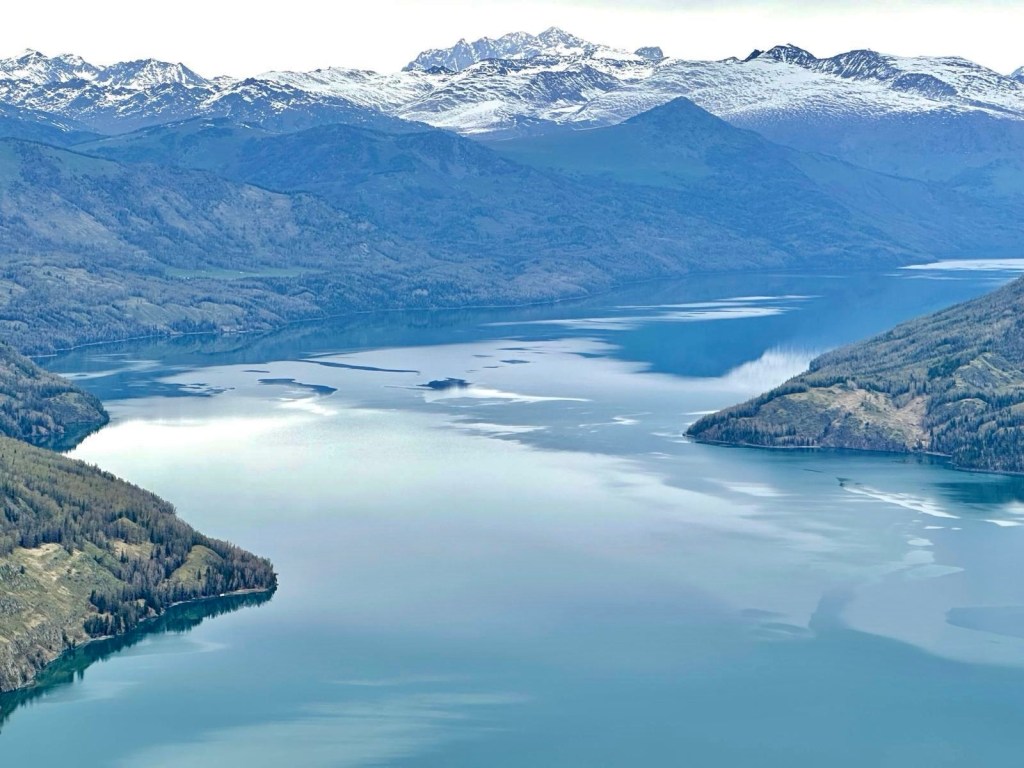
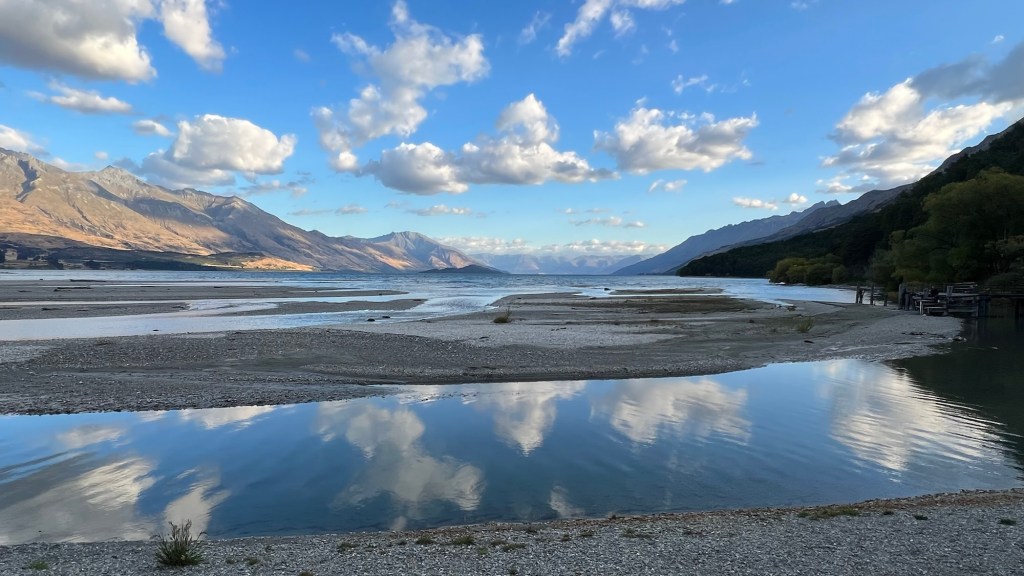
喀纳斯湖,北疆 Kanas Lake, north Xinjiang 10.5.2025格伦诺基三角洲,Glenorchy delta 15.2.2023
执念·空相
一粒微尘 念起时,情生 念灭处,空寂 在时空之外 坐化成一枚石子
忘川未冷 舟行间沏一壶茶 前世的牵挂 温热心中 封了一万年的雪
是谁在水镜中回首? 是你,也是我 心念的倒影,忘情的回声 水无形,镜有情 有的真容,无的万象
我把三千世 化作一缕执念 无声无相的 落在你眉间心上 有的执着,无的释放
本无永恒的世界里 存有一份放不下的心念 执念与空寂 却在诗中相遇 爱而不执,无相不灭
c.h.e.f Andy
注:
1 坐化成一枚石子 – 情已化道,主动进入寂静、无言、无求的境界
2 “忘川” 是轮回之河,也是忘却前世记忆的边界;“雪”是时间封印的情,因一壶茶被唤醒
3 有的真容,无的万象 – 有形的是你我的情念,无形的是时间流动、生命轮回、念起念灭
4 有缘的执着,无缘的释放
5 爱而不执,无相不灭 – 是曾经,亦是永恒
======================
published on 1.6.2025
see my English translation👇🏻
执念·空相 Obsession · Emptiness
A single speck of dust, When thought arises, sentience is born; When thought extinguishes, emptiness remains. Beyond time and space, It sits in meditation, becoming stone— silent, unmoved, eternal.
The River of Forgetfulness has not yet turned the memories cold. A pot of tea brews mid-voyage, longings from a former life, warm the heart once more; melting ten thousand years of snow.
Who turns to glance from within the mirror of water? It is you, it is also me. A reflection of the heart’s intent, an echo of love forgotten. Water has no shape or form; the mirror, reflects feelings from its depth. That with form shows the face of truth; that which is formless, envelopes all.
I turned three thousand lifetimes, into a single thread of obsession, soundless, formless falling lightly between your brows and onto your heart. Where there is connection there is fixation, where there is not, release.
In a world where nothing lasts, there lingers one thought that cannot be set down. Obsession and emptiness, come to meet in this poem. To love without clinging; to be formless, yet never extinguished.
Notes:
“To sit in meditation, becoming stone” — symbolizes emotion transformed into the “Way”; a conscious entry into a state of stillness, silence, and freedom from desire.
“The River of Forgetfulness” refers to the river of reincarnation and the threshold where past-life memories are left behind (“turned cold”). “Snow” symbolizes emotion sealed by time, reawakened by a single pot of tea.
What has form is the emotion connection between you and me. What is formless is the flow of time, the cycle of life and death, and the arising and cessation of thought.
Where there is connection by fate there is fixation, where there is not, release
To love without clinging; to be formless, yet never extinguished — is to know what was a part of our past, is also the eternal.


 c.h.e.f